
In the year 2020, as physical distance became a new reality for many, the digital world experienced an unprecedented surge in connection. Online communities flourished, and the desire for shared experiences from the safety of home propelled multiplayer gaming into a new golden age. The year delivered a remarkable spectrum of titles, from cozy cooperative islands to intense competitive arenas, proving that virtual spaces could host everything from casual socializing to high-stakes esports. This period wasn't just about playing games; it was about finding new ways to be together, compete, and share adventures in a world that had suddenly grown smaller and more connected through screens.
🚀 The Social Deduction Phenomenon
While not originally a 2020 release, Among Us became the undeniable social phenomenon of the year. Its explosion in popularity, fueled by content creators and a global audience seeking online interaction, was a defining moment. The game's genius lay in its accessibility—running on nearly any device—and its deceptively simple premise. Beneath its cute, colorful exterior lay complex psychological mind games, creating endless stories of betrayal and deduction that friends and strangers shared across the globe. It transformed living rooms and Discord servers into tense spaceship meeting rooms, proving that a timeless formula could find new life in a world craving connection.
🌴 A Peaceful Virtual Retreat
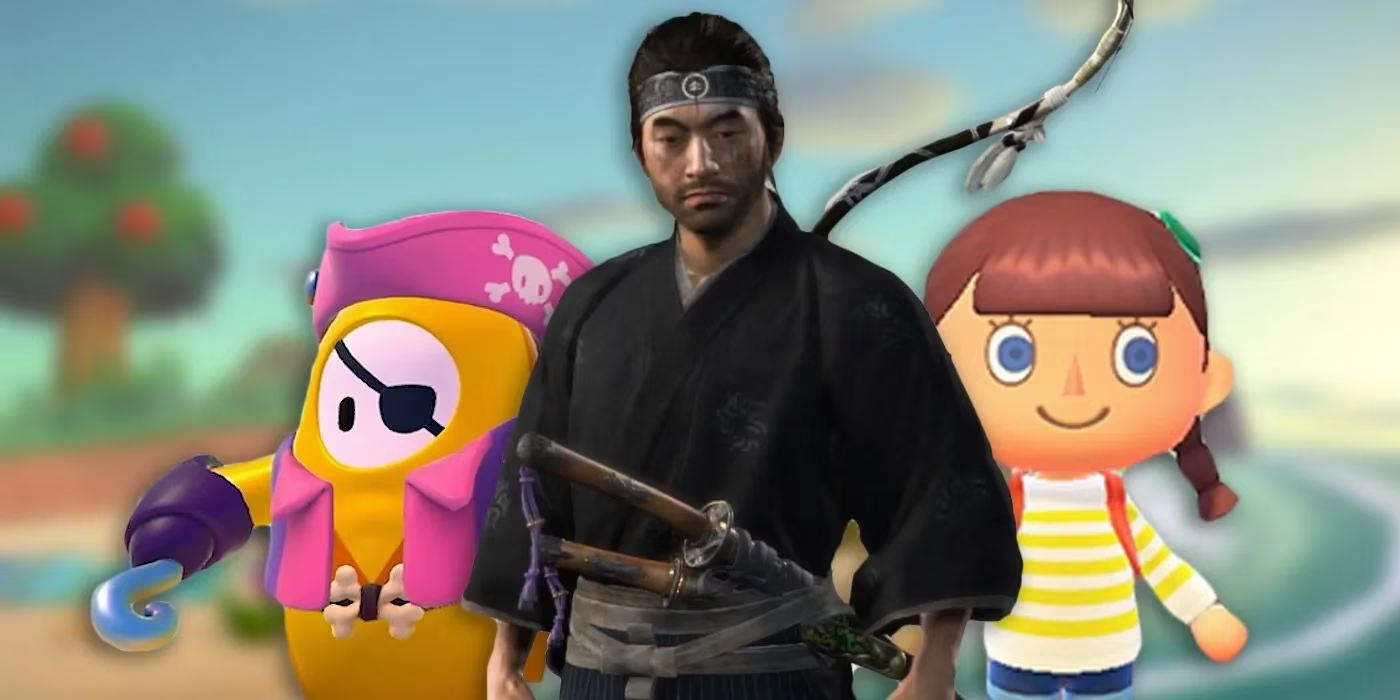
For those seeking solace rather than suspense, Animal Crossing: New Horizons offered the perfect digital sanctuary. It provided a calm, rewarding, and deeply customizable space for players to express themselves. Its most significant contribution, however, was its robust multiplayer. Friends could visit each other's meticulously crafted islands, trade resources, and complete tasks together. Whether through local co-op or online visits via the in-game airport, it created a low-stress, highly social environment where the simple joys of fishing, decorating, and exploring were shared experiences. It was less a game and more a virtual park where memories were made.
💥 Mastering the Battle Royale Blueprint
The competitive landscape was forever changed by Call of Duty: Warzone. Launching in March 2020 as a free-to-play companion to Modern Warfare, it didn't just enter the battle royale genre—it refined it. Warzone took Infinity Ward's masterful gunplay, smooth movement, and progression systems and dropped them into a massive, tactical playground. Its innovative Gulag respawn system kept the action intense and players engaged. By 2026, its legacy is clear: Warzone became the unifying platform for the Call of Duty universe, blending content from various titles and setting a nearly insurmountable standard for production value, content volume, and tactical squad-based gameplay that competitors still strive to match.
🥚 Whimsical Chaos and Obstacle Courses
Pure, unadulterated fun arrived in the form of Fall Guys: Ultimate Knockout. This whimsical, battle royale-style game show captured hearts with its bright colors, goofy physics, and intentionally clumsy controls. Players, as jelly-bean-like characters, navigated hilarious obstacle courses and competitive mini-games. Despite early challenges with hackers, the game's support team acted swiftly, allowing its community to flourish. It struck a perfect balance between skill and chaotic luck, creating a non-stop stream of shared laughter and memorable, ragdoll-filled failures. It was competitive gaming that never took itself too seriously.
👺 The Surprise Cooperative Masterpiece
One of the year's most unexpected and celebrated multiplayer additions came from a single-player crown jewel. Ghost of Tsushima was acclaimed for its stunning world and solo campaign, but Ghost of Tsushima: Legends revealed a completely different side. This cooperative multiplayer mode transported players into a supernatural version of Tsushima for missions, survival waves, and demanding raids. With distinct classes like the Samurai, Hunter, Ronin, and Assassin, it offered deep, tactical team-based gameplay that stood proudly on its own. It proved that a narrative-driven epic could also house one of the most satisfying and visually striking cooperative experiences of the era.
✈️ The Joy of Shared Exploration
Microsoft Flight Simulator (2020) achieved the unthinkable: it made a hyper-realistic simulation a global phenomenon. Using satellite data and Azure AI, it rendered the entire Earth with breathtaking detail, allowing players to fly anywhere. The multiplayer aspect transformed this technical marvel into a social experience. While formal co-pilot modes were still in development, the open skies became a shared space. Players could meet by chance at airports, fly in formation over landmarks like the Eiffel Tower or the Grand Canyon, and create their own journeys together. It was less about competition and more about the shared awe of virtual tourism and the serene beauty of flight.
⚔️ Nostalgic Dogfights Reborn
For pilots seeking adrenaline over awe, Star Wars: Squadrons delivered intense, cockpit-based space combat. It was a triumphant, faithful return to the classic X-Wing vs. TIE Fighter style of dogfighting. The game excelled in creating immersive, white-knuckle matches where team coordination and piloting skill were paramount. With distinct factions (New Republic and Galactic Empire), objective-based fleet battles, and crisp controls, it carved out a unique niche in the competitive scene. Post-launch support, including new ships, showed a commitment to the community, allowing this love letter to classic Star Wars games to sustain its player base.
🦎 The Pokemon-Style MMO Realized
Temtem answered a long-standing dream for many creature-collection fans: a true, massively multiplayer online game in the genre. While initially compared to Pokémon, it distinguished itself with its always-online world, the Airborne Archipelago. Here, players could see each other in real-time, team up for cooperative adventures, battle other tamers, and participate in a player-driven economy. Features like Clubs (guilds) and housing fostered a persistent community. Temtem wasn't just an imitation; it was an evolution, demonstrating how social infrastructure could breathe new life into a familiar and beloved genre formula.
🛹 A Perfectly Executed Comeback
Tony Hawk's Pro Skater 1 + 2 was a masterclass in remastering classics. It faithfully rebuilt the iconic levels, soundtracks, and feel of the original games with stunning modern visuals and buttery-smooth controls. Its multiplayer offered both competitive and social joy. Players could compete for high scores on global leaderboards, challenging the world's best in classic trick attacks. Perhaps more importantly, the addition of private lobbies allowed friends to simply hang out, skate together, and create their own lines in the park without pressure. It catered to nostalgic veterans and introduced a new generation to the pure joy of virtual skateboarding.
🔫 Defining a New Competitive Era
As established tactical shooters aged, VALORANT emerged from Riot Games to define the next generation. It expertly blended the precise, lethal gunplay of Counter-Strike with the character-based abilities of hero shooters like Overwatch. Each Agent brought unique utility to the tactical, round-based planting/defusing gameplay. With a focus on strategic depth, clear communication, and high-skill shooting, VALORANT was built from the ground up as a competitive esport. Its stylized, performance-friendly visuals ensured accessibility, while its tight map design and constant meta-shifts kept the professional and ranked scenes fiercely dynamic and engaging from its launch onward.
Looking back from 2026, the multiplayer landscape of 2020 stands as a pivotal chapter. It was a year that met a unique moment in time with an incredible diversity of experiences. The titles that rose to prominence did more than entertain; they provided vital spaces for socialization, competition, and shared escapism. From the peaceful shores of Animal Crossing to the tactical executions in VALORANT, these games offered a digital venue for every mood and player. They demonstrated that whether through cooperation, competition, or simple coexistence in a virtual world, games had become an essential fabric of our social lives. The legacy of 2020's multiplayer surge is a richer, more connected, and endlessly varied gaming ecosystem that continues to evolve today.