
I can't believe I'm writing this, but in 2025, I found myself in a situation I never imagined. I was lying in a hospital bed, IV lines attached to my arm, with my gaming laptop precariously balanced on a rolling tray. The sterile smell of disinfectant filled the air, a stark contrast to the intense focus I needed for the match about to begin. My team, ODU Varsity Esports, was counting on me. We were in the quarter-finals of the College Valorant Circuit against a tough opponent, West Virginia Wesleyan Esports. A sudden, severe case of pancreatitis had landed me here just hours before the match. We requested a reschedule, but our opponents refused, leaving us with a choice: forfeit or have me play from the hospital. For us, there was only one option.
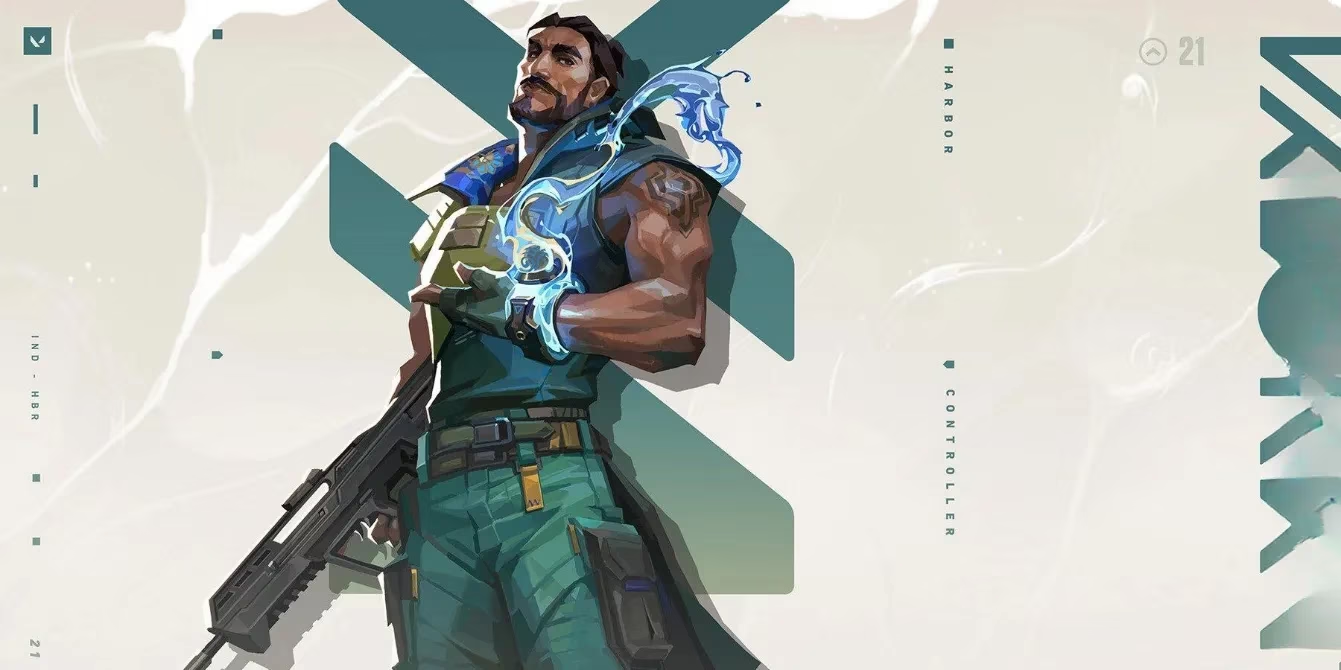
The Improvised Battle Station
My setup was, to put it mildly, less than ideal. My gear consisted of:
-
My trusty gaming laptop – The sole piece of proper equipment.
-
A laptop sleeve – This became my makeshift mousepad.
-
Hospital Wi-Fi – Which meant playing at a shaky 60 FPS and dealing with constant packet loss.
-
A dose of sheer determination – The most crucial component.
The nurses were incredibly understanding, dimming the lights in my room and posting a "Quiet, Gaming in Progress" sign on the door. As the match loaded, the familiar sounds of Valorant's menu were a bizarre comfort in the clinical environment.
The Match: Mind Over Matter
Once the first round started, the pain and the surroundings faded into the background. My role was controller, primarily playing Omen or Astra, where game sense and timing were as important as raw aim. I had to rely on my instincts and my teammates' calls more than ever. Every smoke placement, every astral pull, had to be calculated perfectly because my mechanical execution was hampered. My teammates were absolute legends, adapting their playstyle to support me. They took more aggressive duels to create space, knowing I couldn't always be the first to swing a corner. The BO3 series was intense, but somehow, we pulled through. Round by round, map by map, we fought our way to a 2-0 victory. The feeling of winning that final round was an incredible cocktail of relief, joy, and exhaustion.
The Community's Heartwarming Response 😊
I tweeted about the crazy experience after we won, not expecting much. To my astonishment, the story blew up. Esports reporter Jake Lucky shared it, and the Valorant community responded in the most amazing way.
| Supporter | Message / Gesture |
|---|---|
Former Pro Player drone |
Called me "goated" – a compliment I'll cherish forever. |
Streamer Flexinja |
Sent well-wishes for a speedy recovery on his stream. |
| Riot Games | The developers themselves sent me a care package with an exclusive gun buddy and Valorant Points! |
| Countless Fans | Flooded my socials with messages of support and admiration. |
It was overwhelming. The sense of community, from the highest levels of Riot to fellow players just starting out, made the entire ordeal feel worthwhile. It wasn't just about winning a match; it was a testament to the spirit that binds gamers together.
A Legacy of Resilience in Esports
My situation, while extreme, is part of a larger narrative in competitive gaming. Health challenges are a real threat to athletes whose performance hinges on peak mental and physical condition.
-
During the VCT (Valorant Champions Tour), players who tested positive for COVID-19 had to compete from isolated, on-site booths.
-
Teams like Sentinels faced last-minute scrambles when star players like TenZ fell seriously ill.
What my story highlighted, I think, is the evolution of that resilience. It's not just about playing through illness; it's about the ecosystem—teammates, organizers, and the community—adapting to support a player in need. The modern collegiate scene, like the official Riot-sponsored CVAL circuit, is fostering this next generation of dedicated competitors.
Reflections from 2026
Looking back now, a year later, the experience is crystal clear. I was discharged from the hospital soon after and made a full recovery. That gun buddy from Riot? It's permanently equipped on my favorite rifle, a constant reminder. That match taught me and many others several key lessons about competitive gaming:
-
Teamwork is everything. My teammates carried me not just in-game, but in spirit.
-
Preparation is key. Deep knowledge of agents and maps can compensate when mechanics are limited.
-
The community has a heart. The support was genuine and powerful.
Winning from a hospital bed wasn't a feat of individual skill, but a collective victory. It was about refusing to let my team down and proving that where there's a Wi-Fi signal and a will, there's a way. For any aspiring player out there facing their own obstacles, remember: your mindset is your most powerful weapon. Now, if you'll excuse me, I have a championship to prepare for—this time, thankfully, from my proper desk at home. 🎮