
As the 2025 competitive season unfolds, the topic of Chamber's place in the Valorant meta remains a fascinating point of discussion. While the character no longer holds the stratospheric 80% pick rate he once boasted during the 2022 VCT, his influence on agent design and the duelist/sentinel hybrid role is undeniable. Riot Games has consistently demonstrated a philosophy of iterative, careful balancing over drastic, game-breaking nerfs. This approach, articulated years ago by designers who emphasized avoiding the "kneecapping" of popular agents, has shaped the evolution of the entire roster. The goal has never been to destroy a character's core identity or viability, but rather to refine it, ensuring a healthy, diverse ecosystem where multiple strategies can thrive. Chamber's journey from an overwhelmingly dominant force to a more situational, yet still potent, pick serves as a prime case study in this long-term balancing ethos.
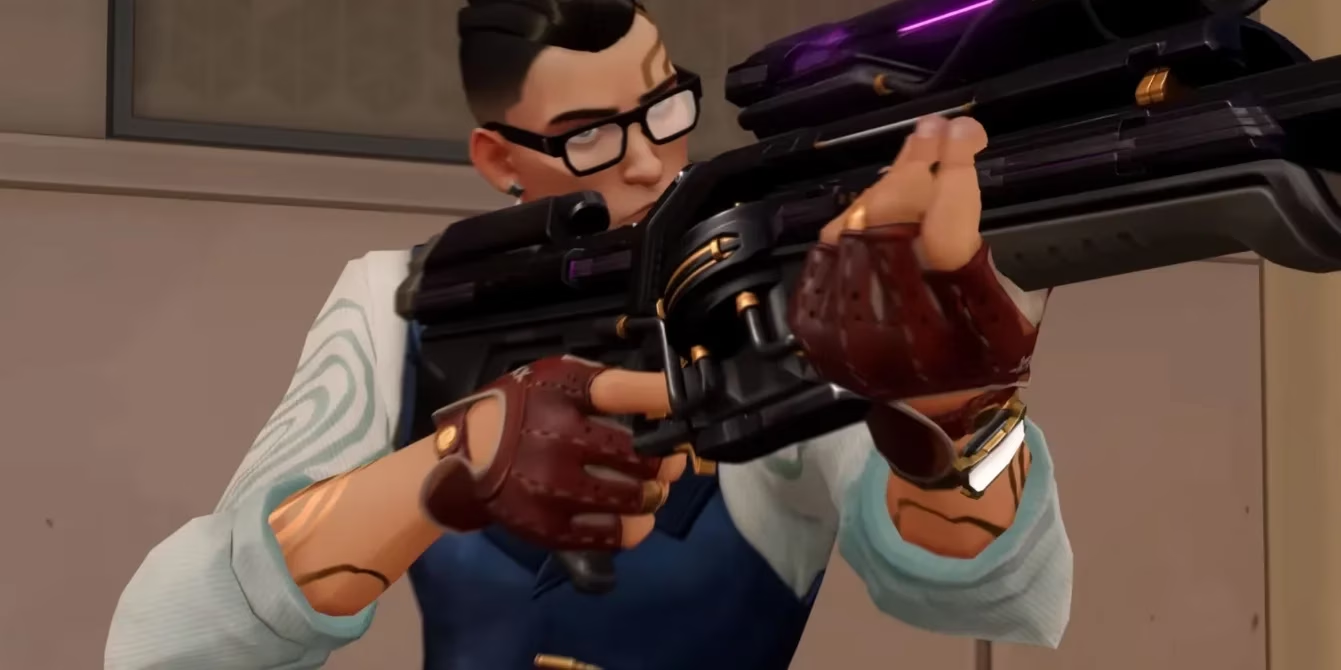
The Legacy of a Meta-Defining Pick
Looking back, Chamber's peak during events like Masters Copenhagen set a new standard for what a defensive agent could offer. His kit provided an unparalleled combination of:
-
Global Information & Control: The trademark trap (Trademark) allowed for flank security from a distance.
-
Aggressive Repositioning: Rendezvous (TP) enabled hyper-aggressive peeks with a near-guaranteed escape.
-
Economic Dominance: Headhunter (Pistol) and Tour De Force (Sniper) drastically altered the economy of rounds, making full saves far more dangerous for the opposition.
This package created a "must-pick" scenario that overshadowed many other sentinels and even influenced duelist play. The disparity was stark; at his zenith, his pick rate was leagues ahead of other top agents like Raze. While the raw numbers have been adjusted through multiple patches, the strategic imprint of that era persists. Players learned to play around—and with—a level of map control and economic pressure that was previously concentrated in different roles.
Riot's Deliberate Balancing Cadence
A key takeaway from the ongoing balance conversation is Riot's intentional timing around major tournaments. The developer has historically avoided major, destabilizing changes immediately before flagship events like Champions. This ensures the competitive integrity of the tournament, allowing teams to compete on a stable patch they have extensively practiced. The commitment is to "shipping more balance changes... over the coming months" rather than reactive, knee-jerk reactions. This methodical pace allows changes to be tested, iterated upon, and integrated into the meta organically. It’s a philosophy that prioritizes long-term health over short-term fixes, even if it means a dominant agent remains in the pool for a premier tournament. The message has always been clear: balance is a continuous process, not a single event.

The Modern Landscape: Chamber in 2025
Fast forward to 2025, and the agent landscape is vastly more diverse. Chamber's tools have been meticulously tuned. Cooldowns on his Rendezvous anchors are longer, the range of his Trademark has been adjusted, and the cost-effectiveness of his ultimate has been reevaluated. These changes succeeded in pulling him back from an automatic pick to a strategic choice. He is now often selected on specific maps or in compositions built around his unique strengths, particularly on long-sightline maps like Breeze or certain areas of newer maps. He no longer defines the meta by himself but exists as a powerful component within it. Other sentinels like Killjoy, Cypher, and the more recently introduced agents have found robust niches, creating a true rock-paper-scissors dynamic in team composition.
| Aspect | 2022 Peak | 2025 Status |
|---|---|---|
| Pick Rate (Pro Play) | ~80% (Dominant) | Situational, Map-Dependent |
| Trademark (Trap) | Long Range, Quick Redeploy | Adjusted Range & Cooldown |
| Rendezvous (TP) | Very Fast Retrieval/Reposition | Longer Cooldowns |
| Meta Role | Near-Mandatory Sentinel | Specialist Choice |
Beyond Balance: A Thriving Ecosystem
The discussion around balancing popular agents like Chamber has unfolded alongside broader developments in the Valorant ecosystem. The competitive scene has expanded dramatically, with new teams and players emerging from regions like Turkey, Indonesia, and Brazil, and the integration of new teams into the expanding professional scene. The growing popularity of Valorant as a spectator sport, the integration of new teams into the competitive landscape, and the community's reaction to game updates can significantly shape how players perceive and interact with the game. The game's continued success hinges on maintaining a healthy balance, and the integration of new agents and maps to maintain a dynamic competitive environment. The community's passion for both the competitive integrity and the fun of the game remains the driving force behind all of Riot's design and balance decisions.
Ultimately, Chamber's story is not one of fall from grace, but of integration. Riot Games' approach—avoiding the hammer, seeking thoughtful tweaks—has allowed a phenomenally strong character to find a healthier, more sustainable place in the game's ecosystem. He stands as a testament to a balancing philosophy that values a character's unique identity while ensuring no single agent holds the keys to victory. In 2025, the question is no longer "Will they pick Chamber?" but "When and why will they pick Chamber?"—and that is a sign of a much healthier game. 😊
The evolution of agents like Chamber proves that maintaining a vibrant meta is a continuous journey of adjustment and refinement, ensuring Valorant remains strategically deep and perpetually engaging for both pros and casual players alike.