
For many players embarking on their Valorant journey, the ultimate thrill comes from watching their rank ascend. The climb is undeniably challenging, a true test of skill and perseverance, but it remains an achievable goal. The path to the upper echelons of this tactical shooter isn't paved with luck; it's built on a foundation of consistent, targeted improvement. Success hinges on a player's ability to honestly assess their weaknesses—be it in aim, game sense, or movement—and to adopt a growth mindset that embraces learning as a constant companion. This guide outlines the fundamental pillars for pushing your rank and solidifying your place among the best.
10: Mastering the Battlefield: Map Knowledge is Power
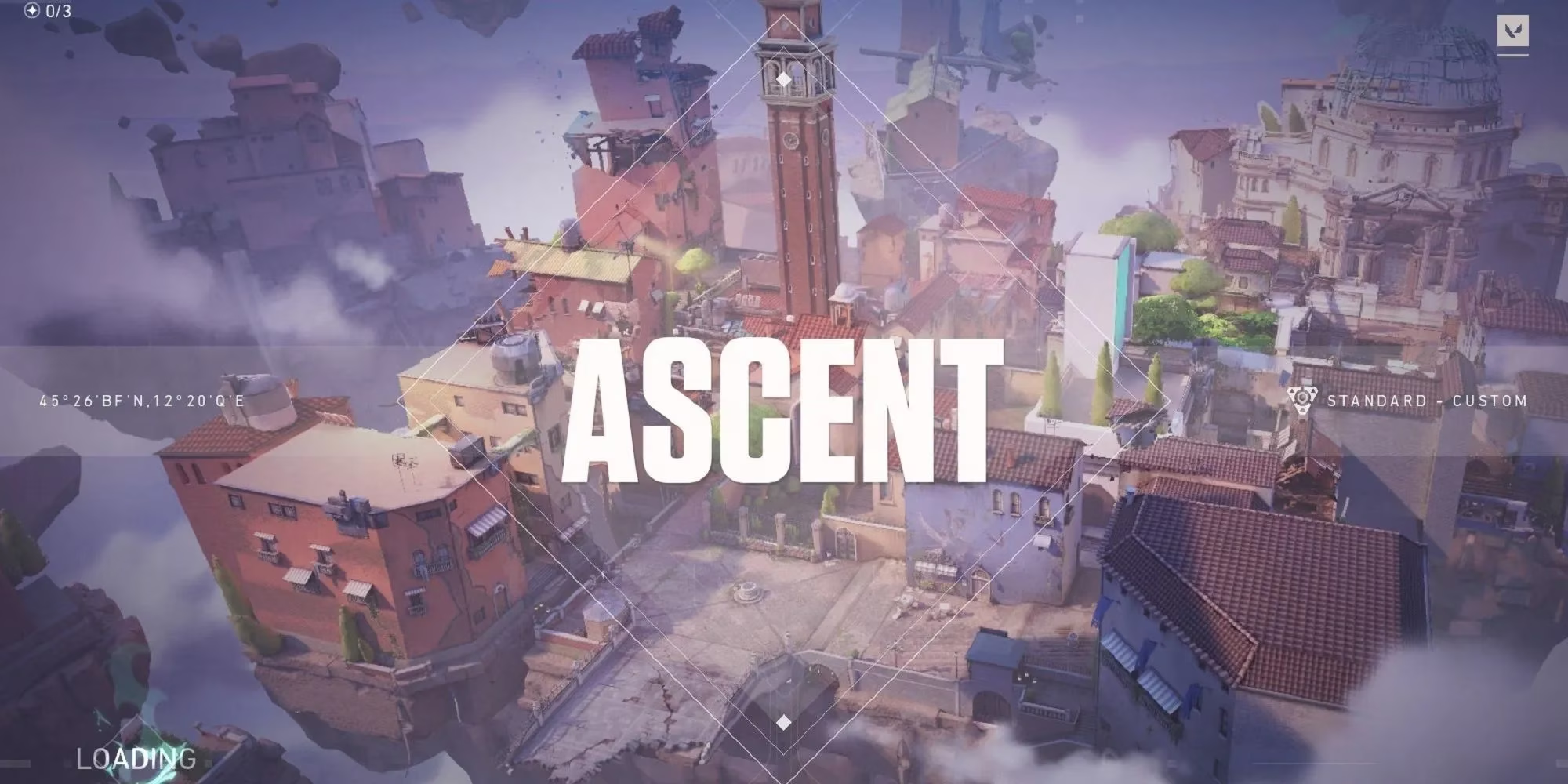
One of the most common hurdles for players is a lack of comfort across Valorant's entire map pool. Riot Games keeps the meta dynamic by introducing new arenas, and falling behind on map knowledge is a fast track to stagnation. True mastery means developing an intimate understanding of every corner, every angle, and every potential line of sight. Players must move beyond simply knowing the layout to predicting common strategies and rotations. A highly effective method is to spend time in custom games, either alone or with friends, to systematically explore callouts, post-plant positions, and defensive setups without the pressure of a live match. This deep, intuitive knowledge transforms a player from a participant into a commander of the terrain.
9: Breaking Bad: Identifying and Eliminating Negative Habits
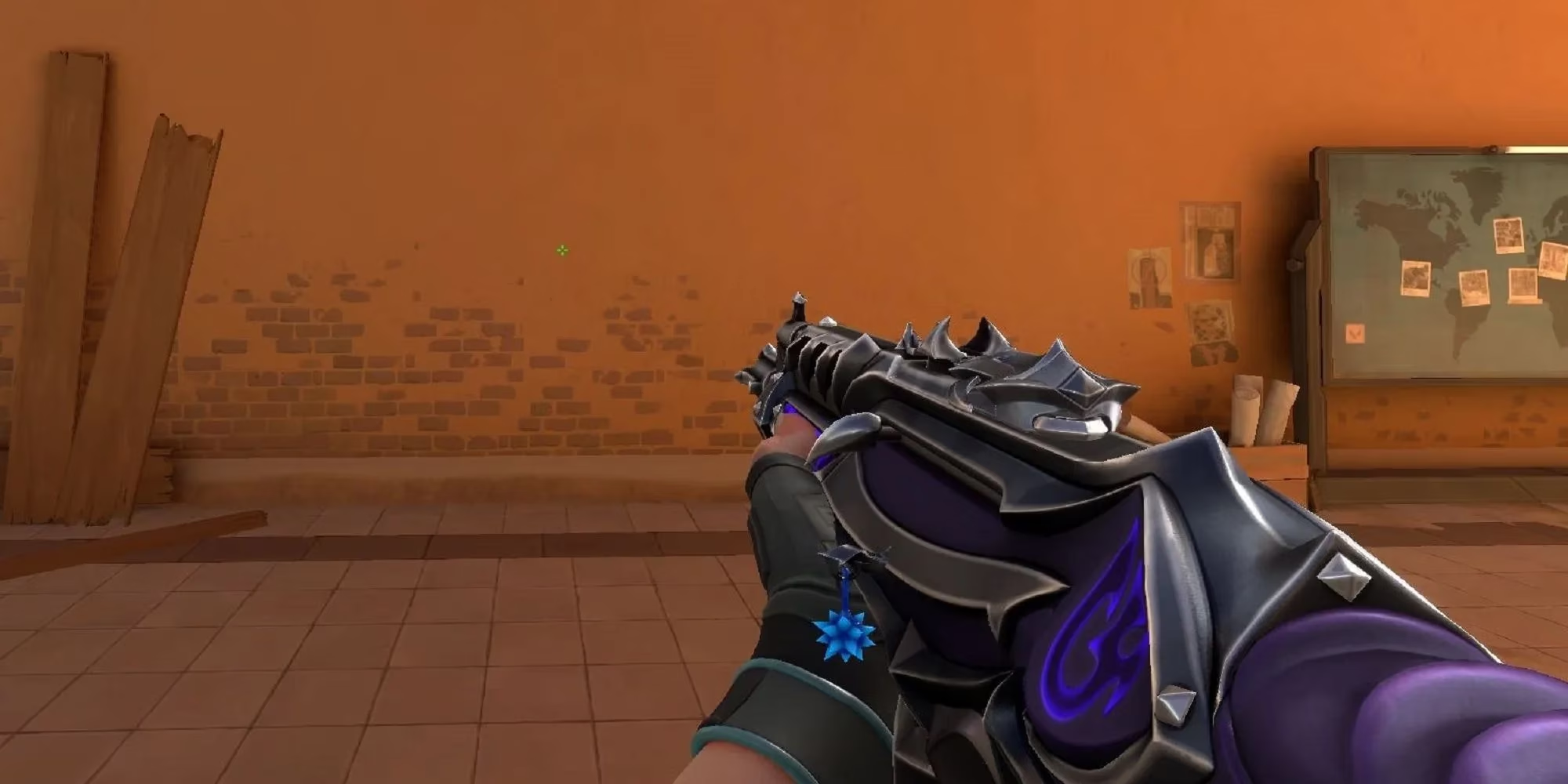
As playtime accumulates, so do ingrained habits—and not all of them are helpful. 🚫 A classic example is the over-reliance on crouch-spraying in every engagement, which can make you an easy, predictable target. Climbing the ranks requires ruthless self-auditing to identify and correct these detrimental patterns. The list of potential bad habits is long:
-
Instalocking agents without regard for team composition.
-
Tilting or rage-quitting after a bad round.
-
Neglecting communication, leaving your team in the dark.
-
Auto-piloting through games without active thought.
Consciously working to eliminate just one of these can lead to noticeable improvement. Recording and reviewing your own gameplay is a powerful tool for spotting these recurring issues that you might miss in the heat of the moment.
8: The Pre-Game Ritual: Never Skip Your Warm-Up
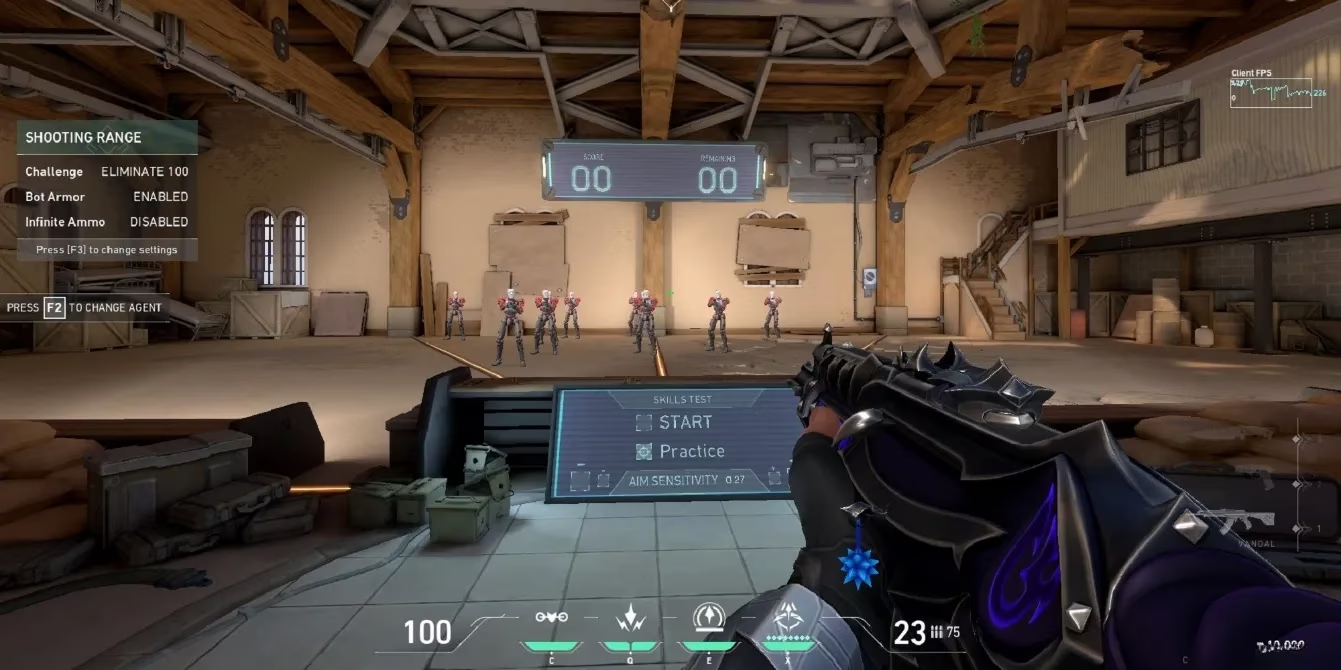
Jumping straight into a ranked match with cold hands and a stiff aim is a recipe for a frustrating start. Think of warming up as priming your engine before a race. A proper session gets your reflexes sharp, your mouse feel consistent, and your mind focused. Thankfully, players in 2026 have more tools than ever:
-
In-Game Range: Perfect for tracking bots and practicing flick shots.
-
Deathmatch: The best way to simulate real duels and practice crosshair placement against moving targets.
-
Third-Party Aim Trainers: Programs like Aim Labs offer structured, data-driven routines to isolate and improve specific aiming mechanics.
Even just 10-15 minutes of focused warm-up can dramatically increase your first-round impact and overall match performance.
7: The Symphony of Victory: Teamplay and Coordination
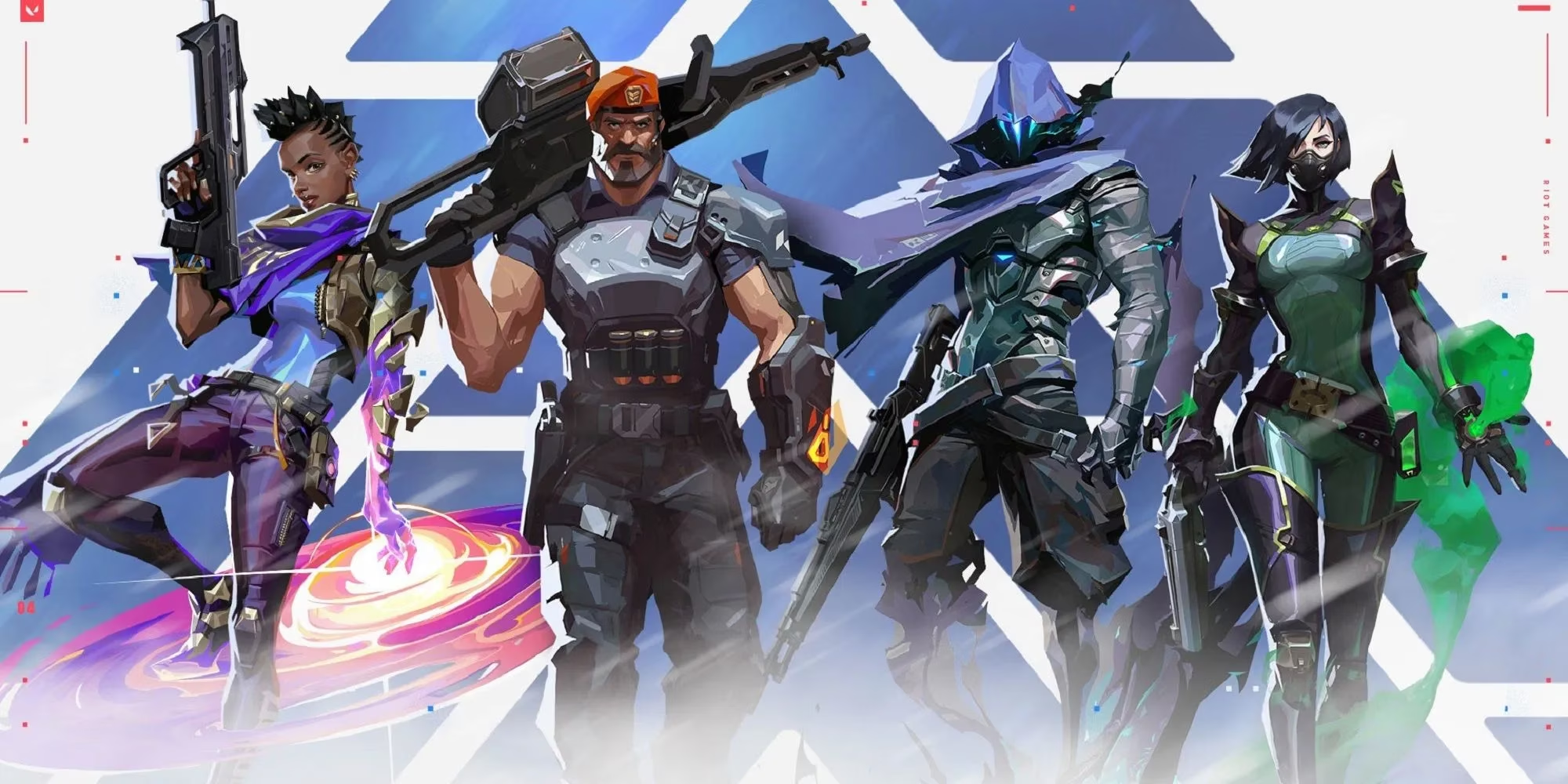
Valorant is, at its core, a team game. A superstar duelist can win rounds, but a coordinated team wins tournaments—and climbs ranks consistently. Excelling requires shifting focus from individual highlight plays to synergistic team execution. This means making decisions that serve the collective goal. Key aspects include:
-
Economy Coordination: Discussing and aligning buy rounds with your team to avoid force-buy disadvantages.
-
Utility Combos: Learning how your abilities (smokes, flashes, recon) can set up kills for your teammates.
-
Precise Communication: Providing clear, concise callouts (e.g., "Last seen A Main, 80 health") instead of vague frustration.
-
Support Play: Being willing to drop a rifle for a teammate or play a supportive role for the round's strategy.
A team that moves and thinks as one unit is exponentially more dangerous than a collection of skilled individuals.
6: The Dance of Combat: Mastering Movement
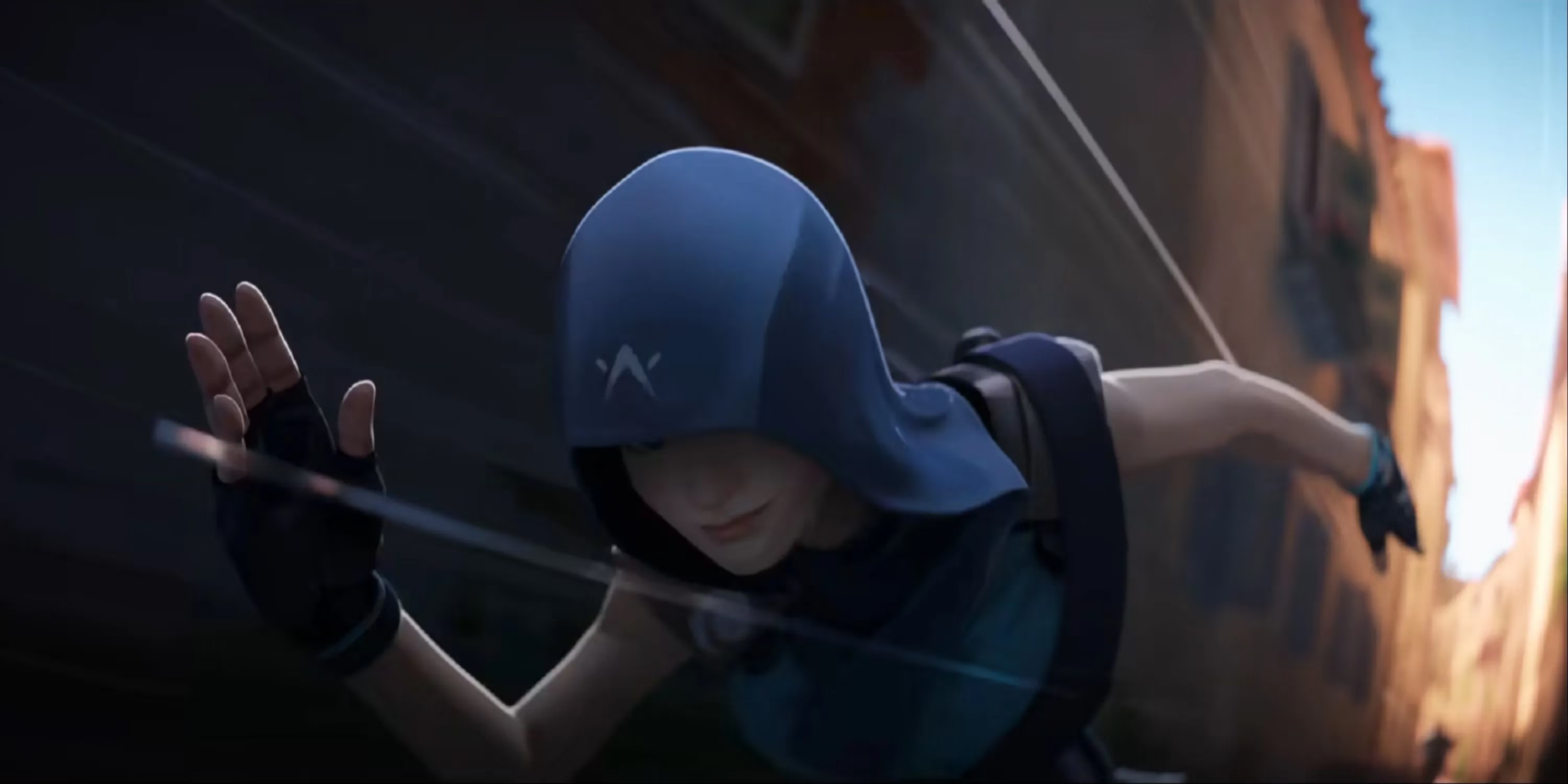
While everyone practices their aim, elite players distinguish themselves with elite movement. Good movement isn't just about getting from point A to point B; it's about doing so efficiently, safely, and unpredictably. It directly affects your survivability and dueling potential. Essential techniques to practice are:
-
Strafing: The art of using the A and D keys to make yourself a harder target to hit during gunfights.
-
Counter-Strafing: Stopping instantly to make your shots accurate after a strafe.
-
Jump-Peeking: Using a jump to gather information from a dangerous angle with minimal exposure.
-
Silent Hops/Walks: Moving quietly to mask your approach or reposition without giving away your location.
Integrating these movements fluidly into your gameplay creates a rhythmic, elusive style that is incredibly difficult for opponents to pin down.
5: Finding Your Foundation: Dialing In Your Sensitivity
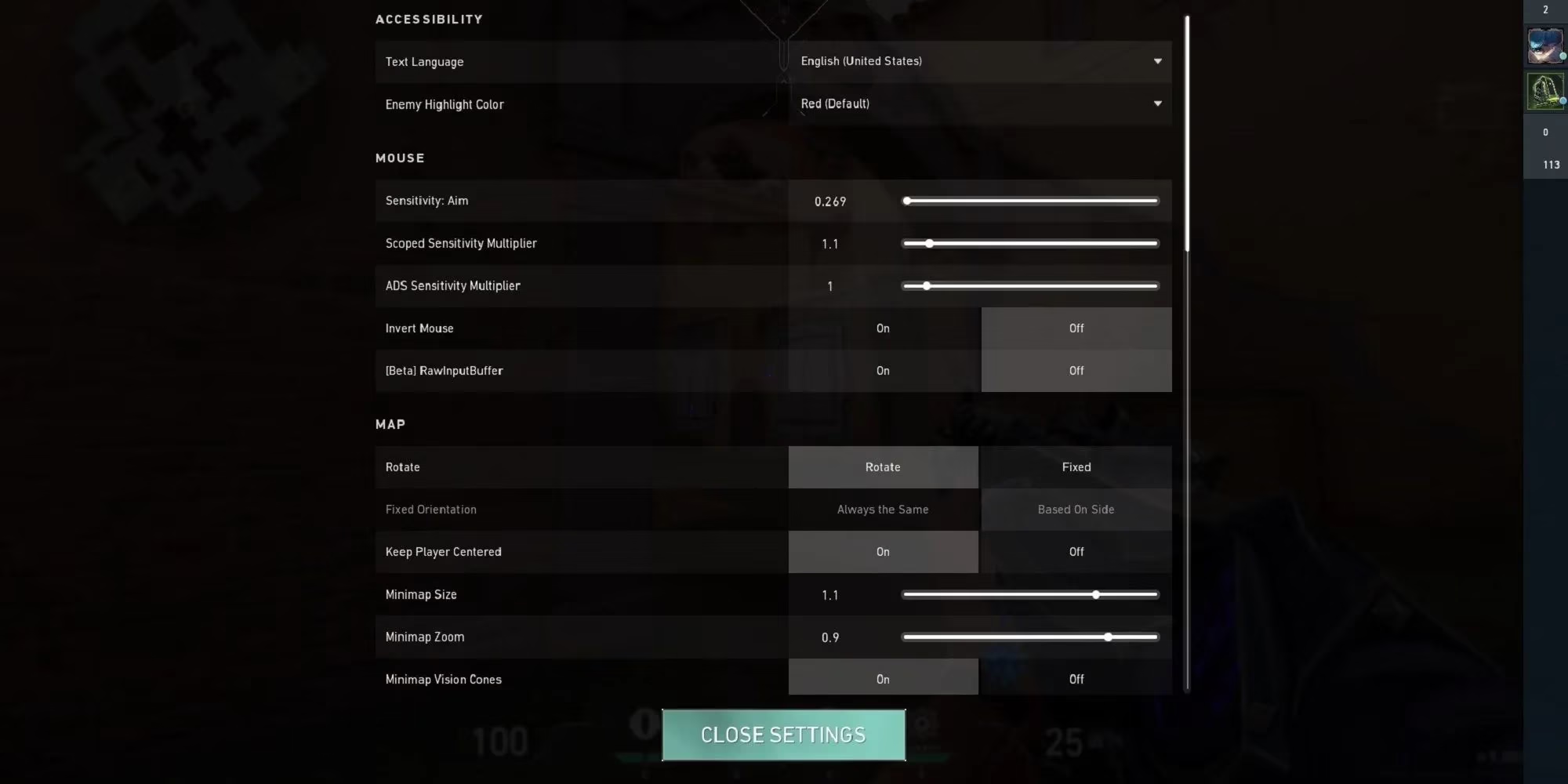
Your sensitivity setting is the fundamental link between your physical hand movement and your in-game aim. Finding your "true" sensitivity can feel like unlocking a new level of control. A common trend among lower-ranked players is using a sensitivity that is too high, leading to jittery, inconsistent aim. The professional consensus has long favored a lower effective DPI (eDPI = Mouse DPI * In-Game Sensitivity) for enhanced precision and muscle memory.
How to Find Yours:
-
Start in the Range with a sensitivity that feels moderately low.
-
Practice tracking a bot's head while strafing.
-
If you consistently over-flick, lower your sensitivity slightly. If you struggle to keep up, raise it slightly.
-
Repeat until micro-adjustments feel natural and effortless.
The goal is a setting that allows for both precise small adjustments and comfortable 180-degree turns. Once found, stick with it to build consistent muscle memory.
4: Expanding Your Arsenal: Building a Versatile Agent Pool
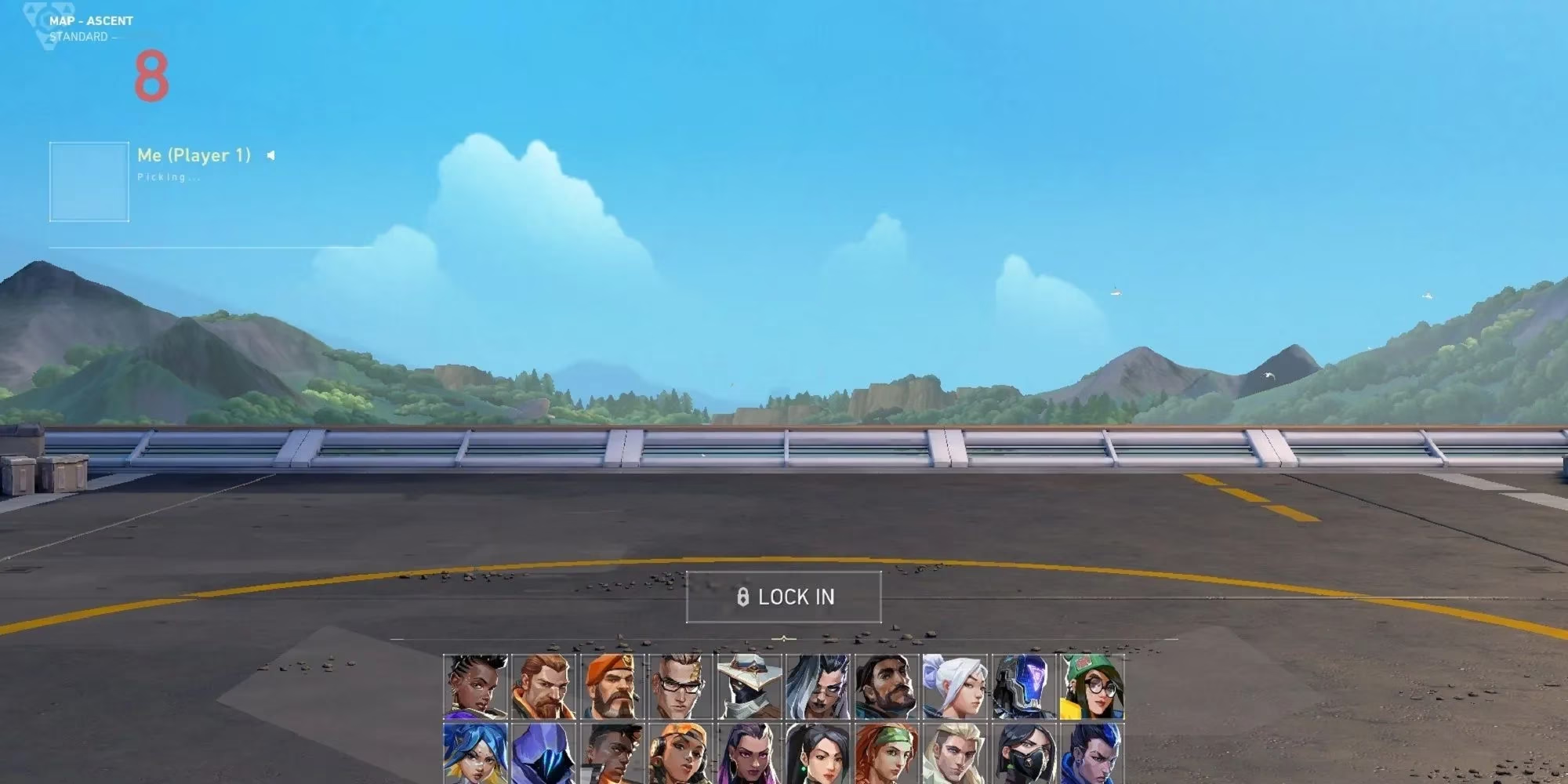
While having a main agent you've mastered is valuable, rigid one-tricking can be a liability in a team-based game. The meta evolves, maps have different optimal agents, and sometimes your team just needs a controller or an initiator. A versatile player is an invaluable asset. The goal isn't to master all 20+ agents, but to develop competency in at least one or two from each core role:
-
Duelist (e.g., Jett, Raze)
-
Initiator (e.g., Sova, Fade)
-
Controller (e.g., Omen, Viper)
-
Sentinel (e.g., Killjoy, Cypher)
This flexibility allows you to fill crucial gaps in your team's composition, adapt to map-specific strategies, and counter the enemy's picks. It turns you from a player who hopes their agent is available to a player who can ensure the team has a solid foundation.
3: The Headshot Guarantee: Perfecting Crosshair Placement
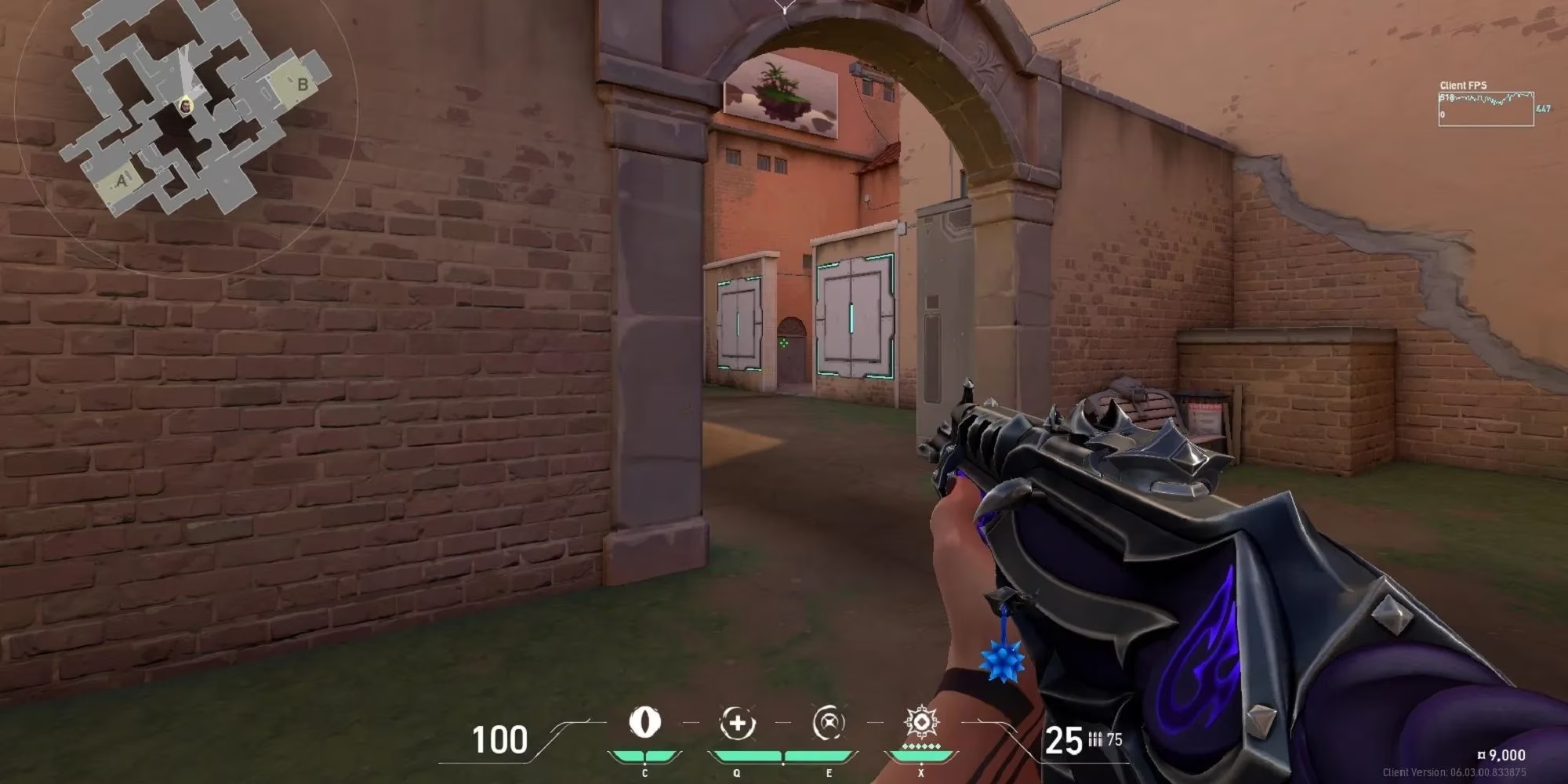
This is arguably the single most important mechanical skill for climbing in Valorant. Proper crosshair placement means your crosshair is already at the exact spot where an enemy's head will appear when you peek or hold an angle. When done correctly, securing a kill becomes a simple matter of clicking, rather than a large flick and adjustment. 🎯
Key Principles:
-
Head Height, Always: As you move through the map, constantly adjust your crosshair to standard head level relative to the ground and any boxes or elevation.
-
Pre-Aiming Angles: When clearing a site, place your crosshair at the edge of the next angle an enemy could be holding, not at the floor or the wall.
-
Predictive Placement: Based on sound cues and game sense, pre-aim common defensive or aggressive positions.
Developing this skill requires conscious effort in every match, but it pays dividends by dramatically increasing your Time To Kill (TTK) and winning you duels you have no business winning.
2: Strategic Utility: Using Abilities Correctly
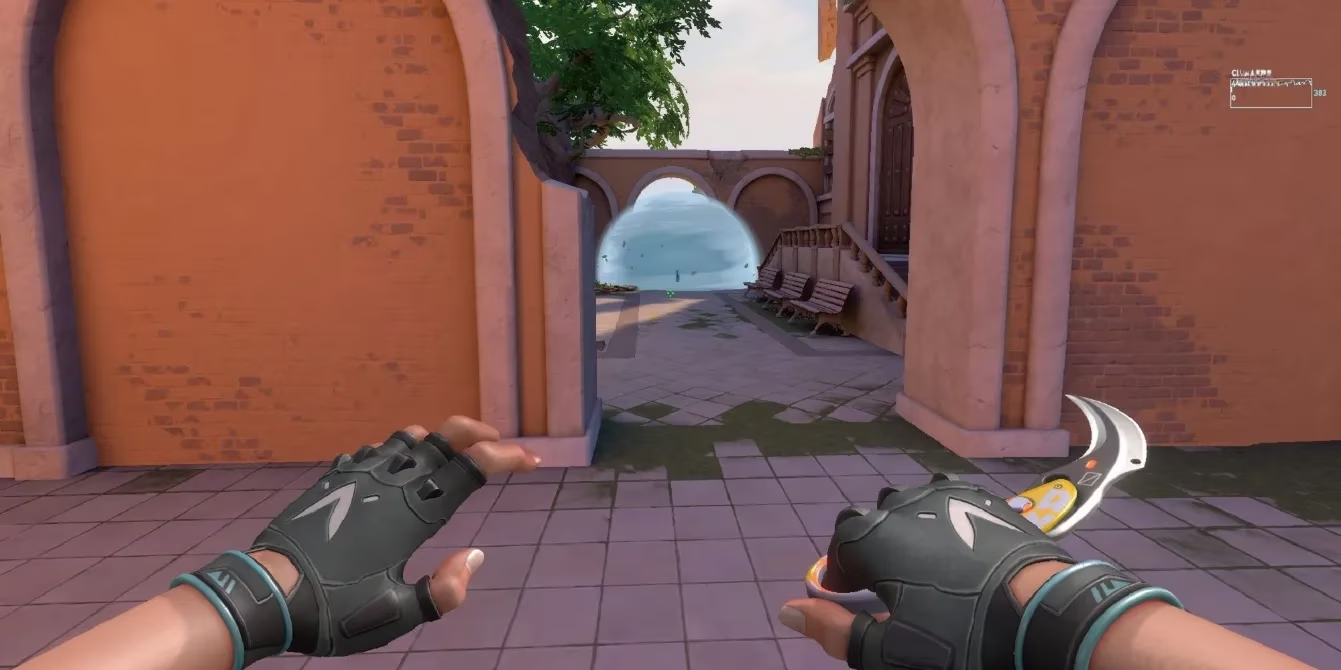
Abilities are what define Valorant and separate it from other shooters. However, using them is one thing; using them correctly is another. Every piece of utility has a strategic purpose: to gain information, deny space, secure a kill, or survive. Wasting a key ability early in a round can be catastrophic.
Path to Improvement:
-
Watch the Pros: Observe how professional players use their agent's kit in specific situations. Notice the timing and coordination.
-
Think in Combos: How can your flash set up your duelist? How can your recon dart combo with a teammate's grenade?
-
Review Your Misplays: After a lost round, ask yourself, "Could I have used my abilities better? Did I waste my smoke?"
Moving from using abilities on cooldown to using them with intention is a hallmark of a player ready for higher ranks.
1: The Unending Grind: Consistent Aim Training
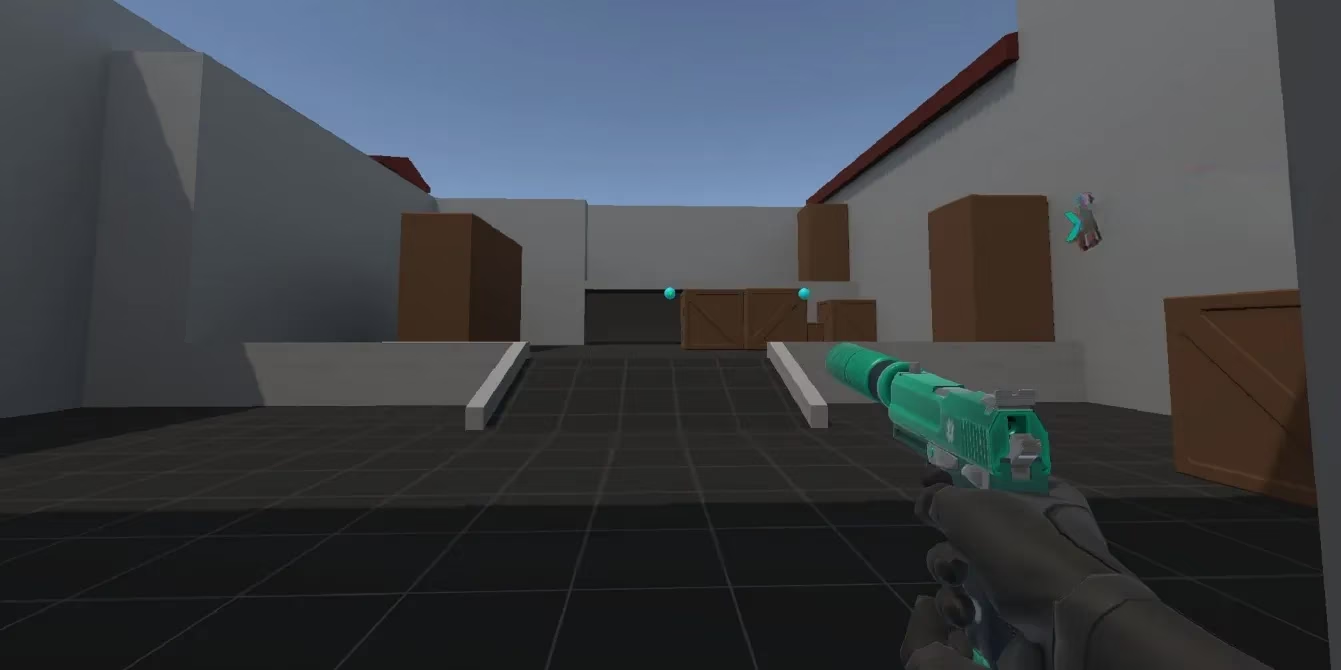
At the end of the day, Valorant is a first-person shooter, and your ability to click on heads remains paramount. While game sense can win rounds, raw aim often wins the crucial duels that decide matches. Aim is a perishable skill that demands regular maintenance. As you climb, opponents will punish hesitation and missed shots faster and more consistently.
Aim Training Philosophy:
-
Consistency Over Duration: Short, daily practice is far more effective than a marathon session once a week.
-
Isolate Weaknesses: Use aim trainers to work on specific areas like tracking, flicking, or micro-adjustments.
-
In-Game Integration: Follow a routine in the Range before jumping into matches. Practice bots, strafe shooting, and flicks.
Remember, aim training isn't about becoming a flicking robot; it's about building a reliable, confident foundation so that when the moment for a game-winning play arrives, your mechanics don't let you down. Combine this relentless focus on improvement with the other pillars listed here, and the climb through Ascendant, Immortal, and even to Radiant becomes a journey of rewarding progress, not an impossible dream.