
As I wander the digital canyons of Fracture in 2026, the echoes of past battles and the ghosts of design philosophies long celebrated in other arenas whisper to me. This map is not merely another battleground; it is a bold statement, a love letter to a different kind of tactical shooter, woven into the very fabric of Valorant’s ever-evolving competitive soul. Its corridors hum with a strange, familiar energy—a resonance that feels less like Counter-Strike’s tense, linear pathways and more like the sprawling, dynamic playgrounds of a Halo legend.
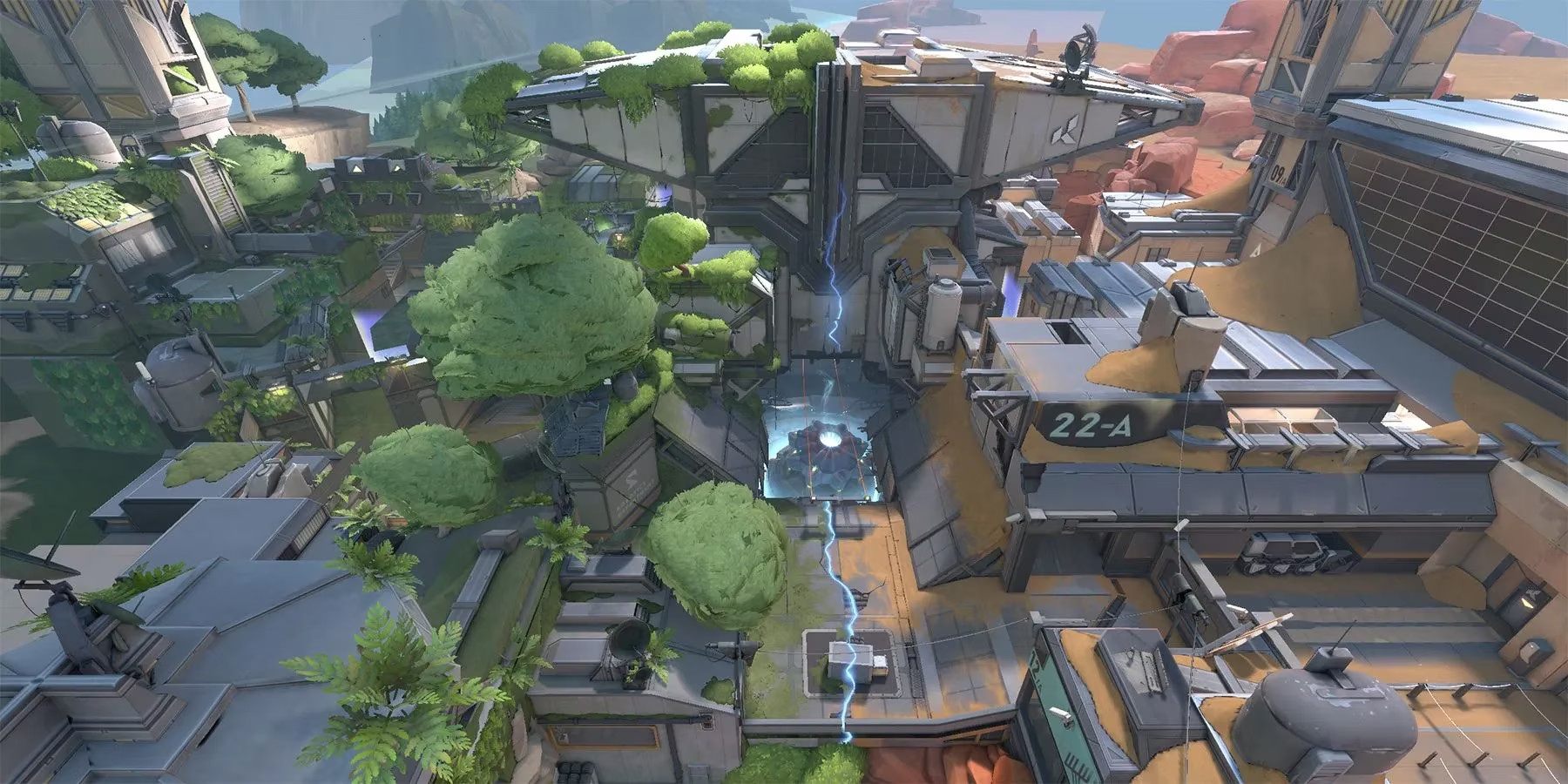
Fracture finds its identity in a beautiful contradiction. Valorant itself was born from this dance between the unconventional and the familiar. We all felt it—the crisp, punishing gunplay that pays homage to decades of Counter-Strike refinement, the delicate ballet between Phantom and Vandal, the decisive crack of the Operator. Yet, it’s the agents and their kaleidoscopic abilities that truly fracture the mold, transforming familiar firefights into spectacles of light and strategy. This map, this Fracture, embodies that dual nature more profoundly than any before it. Where Icebox and Breeze stretched boundaries, Fracture seemingly borrowed a page from a different playbook altogether, one written under a ringed world.
The genius, the sheer audacity of Fracture’s layout, still takes my breath away. Attackers spawn on the outer edges, cradling the sites, granted the gift of rapid mobility via ziplines that launch assaults from northern and southern flanks. Defenders? They are placed in the heart of the beast, the central spine, with direct but vulnerable access to both fronts. This is not a map that allows for split strategies; it demands them. It compels teams to fracture their very essence, to become two coordinated whispers moving through the labyrinth. This degree of strategic freedom, this embrace of unconventional angles and simultaneous pressure, feels less like a tactical shooter and more like the orchestrated chaos of a Halo objective play. It evokes memories of controlling the high ground, of pushing the beach, of dynamic rotations that were less about holding a chokepoint and more about controlling the flow of the entire arena.
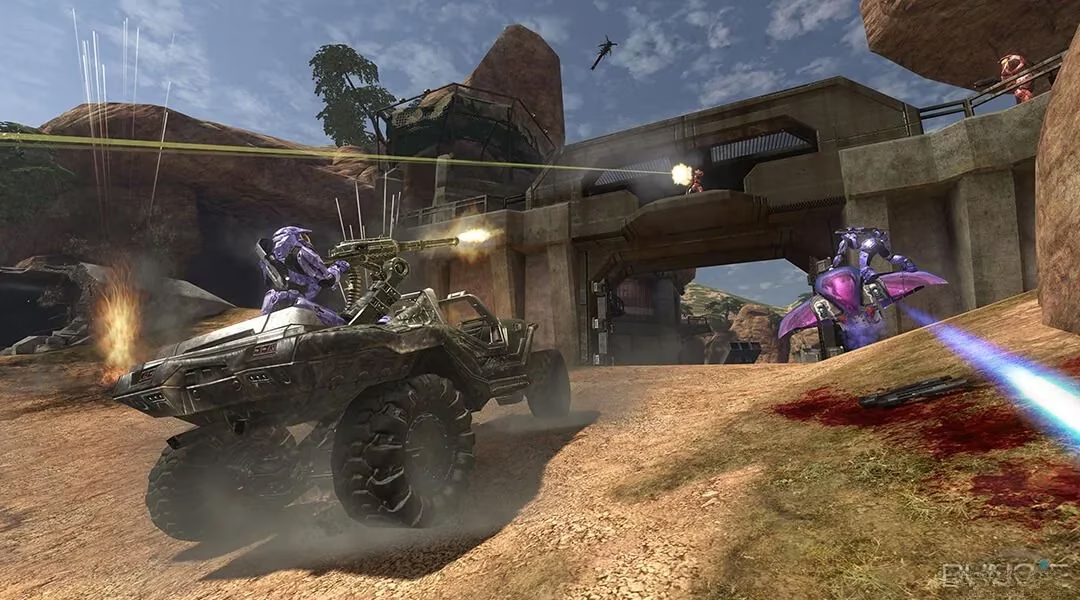
And that’s where the ghost of High Ground walks these halls. I remember that map—Halo 3’s masterpiece of asymmetrical balance. On its surface, the defenders on the high ground held every advantage: the turret, the sniper perch, the fortified gate. Yet, the map was riddled with cunning vulnerabilities—cracks in the armor, alternative routes through caves and trees that gave the attackers on the beach a fighting chance. It was a lesson in perceived imbalance creating true, dynamic balance. Fracture learns this lesson well. The defenders may hold the center, but it is a precarious throne. Rotating across the ziplines is a dangerous gambit, leaving sites exposed. Stacking a site feels like a prayer, and playing for retake is a high-stakes roll of the dice. The map forces defenders to split, to cover vast, intricate ground, mirroring the attacker’s dilemma. This shared burden of complexity is pure Halo design philosophy, adapted for a one-life, spike-planting world.
Clearing angles on Fracture is a unique symphony of paranoia. Pushing through A Hall or B Main is not a simple peek-and-clearing exercise; it’s a multi-layered puzzle. The map is a labyrinth, not necessarily in sheer size like Breeze, but in its intricate, interwoven pathways and verticality. Every corner could hide an enemy, every zipline hum could signal a flank. It rewards map knowledge and adaptive intuition over rote execution. In the years since its release, the competitive meta has woven itself into Fracture’s strange fabric. Teams that master its rhythm—the push and pull between the dual fronts, the timing of zipline rotations, the art of the split execute—can turn it into a powerful flex pick, a map where strategy can truly outshine raw aim.
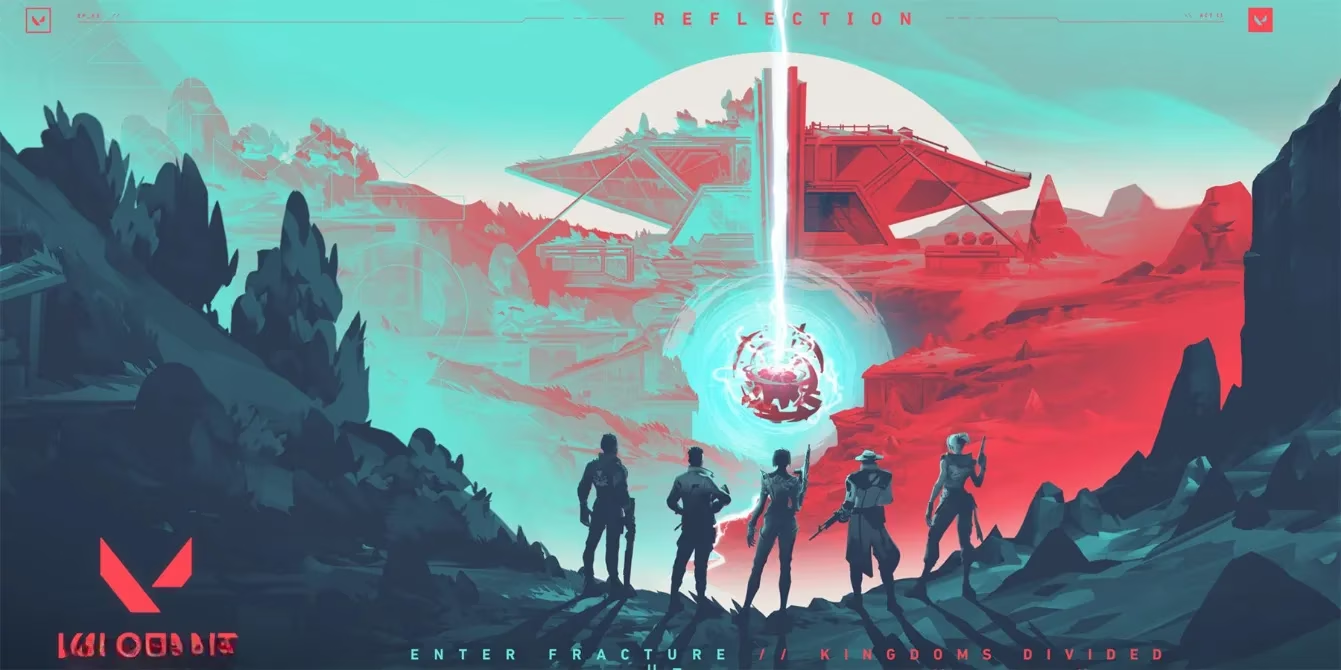
Fracture stands as a testament to Riot's courage to experiment. It is more than a map; it is a question posed to the player base. What can a Valorant map be? It proves the arena can be a canvas for inspiration drawn from anywhere, even from the hallowed, vehicle-strewn battlefields of a different generation of shooter. It embraces a chaotic, player-driven elegance that Halo maps mastered—the kind where the battle plan is fluid, where control is constantly negotiated, and where the environment itself is a weapon to be wielded through knowledge and daring.
As I stand on the zipline, ready to launch into the unknown, I don't just see a bomb site. I see a legacy. I see the shadow of a Spartan's silhouette on a distant ring, the echo of a Warthog's engine, and the timeless design principle that the best arenas are those that empower, challenge, and surprise you, no matter which side you spawn on. Fracture is Valorant's boldest step into that wider design universe, and it remains, years later, a breathtaking place to fight and to learn.
Fracture's Core Design Principles (Halo Inspiration):
| Valorant's Fracture | Halo's Influence (e.g., High Ground) |
|---|---|
| Asymmetrical Spawns (Attackers outer, Defenders center) | Asymmetrical Layout creating dynamic, not static, advantages. |
| Encourages Team Splits & multi-directional pressure. | Promotes map control & fluid rotations over static holds. |
| Labyrinthian, multi-route approaches to sites. | Multiple attack/defend avenues with strategic trade-offs. |
| Central defender position is powerful but vulnerable. | High ground advantage is strong but has exploitable flaws. |
| Rewards adaptive strategy & map knowledge over set plays. | Encourages player creativity & on-the-fly tactical shifts. |
The Fracture Experience, in essence:
-
🌀 A constant, beautiful chaos of split attention.
-
⚡ Heart-pounding zipline engagements across the chasm.
-
🧩 A tactical puzzle where clearing corners is a multi-stage process.
-
⚖️ A delicate balance where both attackers and defenders feel the pressure of the map's unique flow.
-
🎨 A proof that inspiration can cross genre boundaries to create something truly novel.
In the end, Fracture is not just a location in Valorant's world. It is an idea—a daring, successful experiment that expanded what we thought a tactical map could be. It taught us to look beyond the obvious inspirations and find brilliance in unexpected places. For that, it will always hold a special, fractured piece of this game's history.