
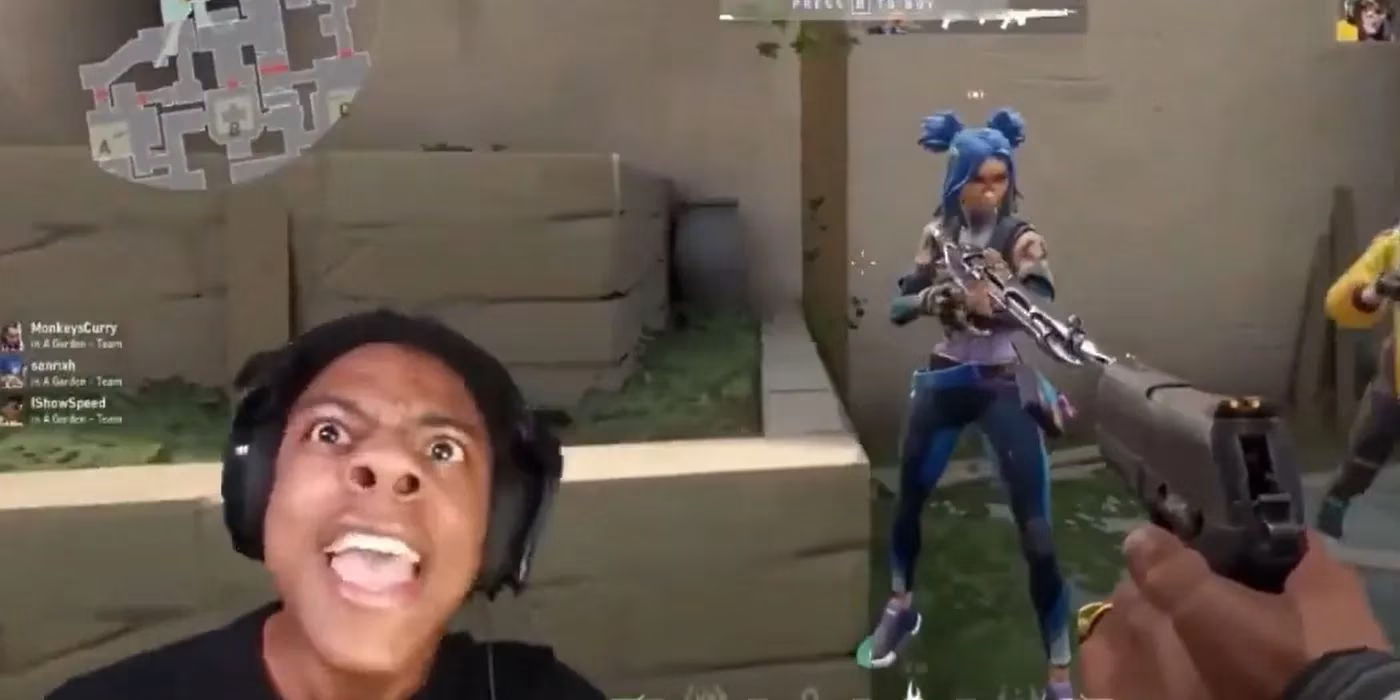
In the ever-evolving digital colosseum of online gaming, the line between competitive fire and toxic behavior can often blur. The year 2026 marks another pivotal moment in this ongoing struggle, as the fallout from a now-infamous incident continues to resonate. Popular streamer IShowSpeed found himself permanently exiled from the realms of Riot Games, including the tactical shooter Valorant, following a sexist tirade that spread across the internet like wildfire. This decisive action by Riot Games wasn't merely a punishment; it was a statement—a line drawn in the digital sand against the corrosive tide of hate speech that has long plagued online communities. The incident, stemming from a lost 1v1 clutch in Valorant, saw the streamer unleash a torrent of profanity and sexist remarks towards a female teammate, bluntly telling her to leave the game and attend to domestic chores. This outburst, captured and shared by esports commentator Jake Lucky, became the catalyst for a zero-tolerance response, highlighting a new era of accountability in the streaming world.
The Unraveling of a Streamer's Realm
The saga began not in a boardroom, but in the heat of a virtual battle. IShowSpeed, a figure whose online persona was built on high-energy, unfiltered content, faced a moment of frustration familiar to many gamers. However, his reaction crossed a critical threshold. When his team lost a crucial round, his disappointment mutated into a targeted, sexist attack. The specific comments, telling his female teammate to "get off the game and do her husband's dishes," were more than just rude; they were a relic of a gamer culture many are fighting to leave behind. The video clip, once released, didn't just circulate—it detonated. Shared by influential figures like Jake Lucky, it became a focal point for discussions about misogyny in gaming spaces. The response from Riot Games was swift and unequivocal. Sarah Dadafshar, a producer at Riot, publicly confirmed the permanent ban across all Riot titles, turning a viral moment of toxicity into a case study in consequences.
Riot's Evolving Battle Against Toxicity
For long-time observers of Riot Games, this decisive ban was not an isolated event but the latest salvo in a protracted campaign. The company's journey towards creating safer spaces has been a complex one, marked by both internal reckonings and technological innovations.
-
A Legacy of Learning: The shadow of a 2021 sexual harassment lawsuit against the company's then-CEO by his assistant acted as a painful catalyst. Since then, Riot has been on a very public mission to reform its culture, both internally and within its player communities. This context made IShowSpeed's sexist rant not just a violation of terms of service, but a direct challenge to the company's renewed values. Banning a high-profile streamer was a powerful way to demonstrate that these values were non-negotiable.
-
The Tools of Enforcement: By 2026, Riot's anti-toxicity arsenal had expanded significantly. Years prior, the controversial but crucial implementation of voice chat recording in Valorant laid the groundwork. This system, which required player consent via updated privacy policies, allowed for accurate verification of hate speech reports. While not the sole factor in every case, it represented a shift from relying solely on player reports to having tangible evidence—a move as significant as installing security cameras in a once-lawless town square.
Despite these efforts, the battle is ongoing. Hurtful language persists in live gameplay and on livestreams, a stubborn weed in the garden of online interaction. The permanence of IShowSpeed's ban serves as a stark reminder: the microphone is not a shield, and an audience does not grant immunity.
The Ripple Effect in the Streaming Ecosystem
The ban sent shockwaves far beyond IShowSpeed's own channel. It served as a precedent, clarifying the relationship between platform personalities and the games they play.
| Stakeholder | Likely Reaction & Impact |
|---|---|
| Other Streamers | Increased self-policing and hesitation before making offensive remarks, knowing clips can lead to game bans. |
| Game Developers | Validation of a hardline stance; may encourage similar policies from other studios. |
| The Player Community | A mixed response: relief from those seeking a better environment, and backlash from those viewing it as censorship. |
| Sponsors & Brands | Greater scrutiny of streamer conduct, associating with toxic personalities becomes a higher-risk venture. |
This incident underscored that a streamer's influence is a double-edged sword. While they can bring immense popularity to a game, their misconduct can also inflict significant reputational damage, forcing developers to act as custodians of their community's health.
Beyond the Ban: The Future of Online Interaction
The IShowSpeed ban is more than a disciplinary action; it's a reflection of the growing up of online gaming culture. Free-to-play games like Valorant have become the new-age social hubs, digital town centers where millions connect. Ensuring these spaces are welcoming for everyone is no longer a niche concern but critical to the long-term viability of the entire industry.
Riot's action is a warning shot, as clear as a sniper's bullet cutting through the fog of war. It aims to dissuade the toxic behavior that drives players away, behavior that can make a game's culture feel as hostile and impenetrable as a fortress guarded by silent sentinels. The hope is that such definitive consequences will encourage a cultural shift where respect becomes as integral to gameplay as strategy and aim.
Ultimately, the story of IShowSpeed's ban is a chapter in a much larger narrative. It's about the ongoing tension between unbridled expression and communal responsibility in digital worlds. As we move further into the 2020s, the expectation for safety and respect in online gaming will only intensify. Developers like Riot Games are signaling that they are willing to wield the banhammer decisively to shape that future, proving that in the arena of online conduct, there is no respawn for blatant toxicity. The community watches, learns, and continues to play, hoping the lesson resonates louder than any hateful rant.