
Hey everyone, let's take a trip down memory lane! As we sit here in 2026, with Valorant's esports scene having exploded into a global behemoth, it's wild to look back at where it all truly began to feel real. For me, the 2021 VCT Masters Reykjavik wasn't just a tournament; it was the moment Valorant shed its 'promising new game' skin and announced itself as a top-tier esport on the world stage. Riot Games took a massive gamble, hosting the first-ever international LAN in Iceland amidst a world still finding its footing. Ten teams, quarantined and then unleashed, all battling for that first global crown and a slice of that $600,000 prize pool. The hype was unreal, and looking back, it feels like watching the tectonic plates of the competitive scene shift in real-time. This was the crucible where legends were first forged on an international scale.
The Contenders: A Global Melting Pot
Back then, we had no idea how these regional styles would clash. It was like the first day of a culinary world fair, where everyone brings their secret family recipe, and you have no idea whose flavors will dominate. Let's break down the squads that made history.
North American Sentinels: The Prodigy & The Machine
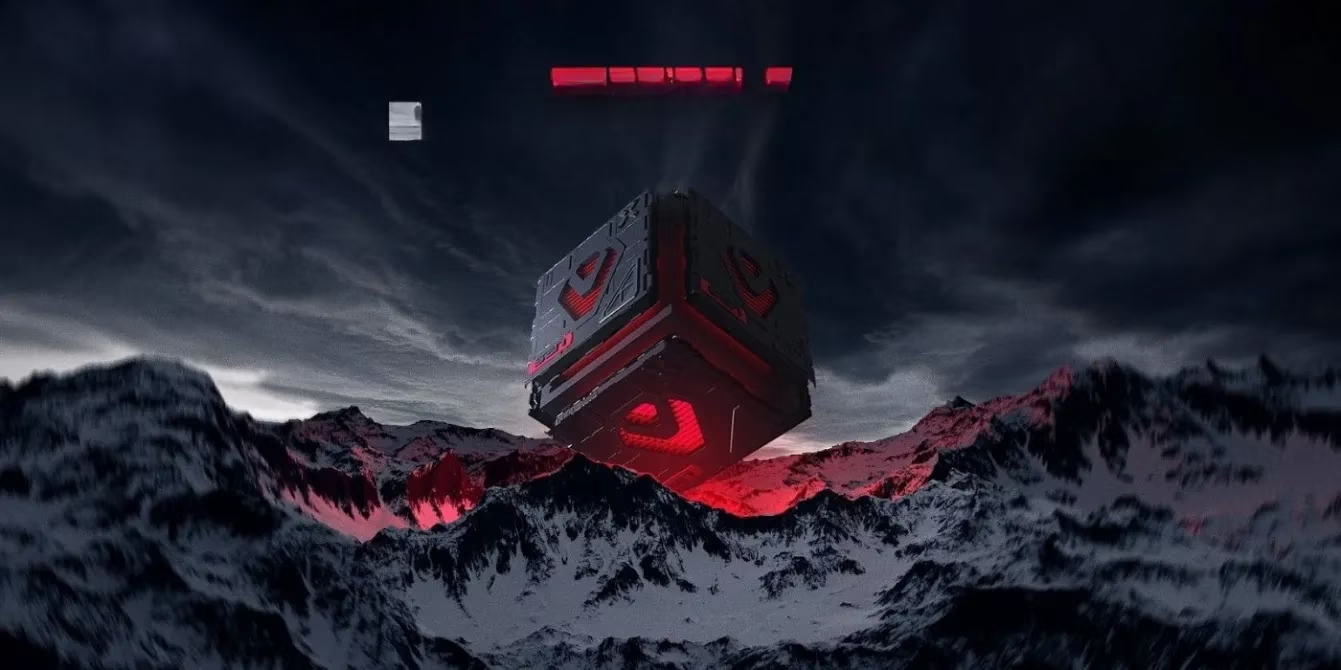
Man, who could forget Sentinels? The NA hype train was full steam ahead with this squad. After bringing in the prodigy TenZ (Tyson Ngo), the question wasn't if they were good, but how good they could be. The answer? A unit so synchronized they operated like a single, complex organism. ShahZaM's calls, dapr's clutch plays, SicK's flexibility, and zombs' rock-solid foundation—all orbiting the sheer star power of TenZ. They entered Reykjavik not with a defined playbook, but with a kind of intuitive, aggressive synergy that was terrifying to watch. They weren't just playing the meta; for a while, they were the meta.
Team Liquid & Fnatic: Europe's Tactical Titans
From Europe, we had the cerebral might of Team Liquid and the explosive synergy of Fnatic. Liquid, under Sliggy, played the game like a grandmaster chess match. Their early adoption of Astra gave their strategies a depth that felt two steps ahead. Then you had ScreaM, the 'headshot machine,' whose aim was so consistently surgical it felt like watching a metronome of precision.
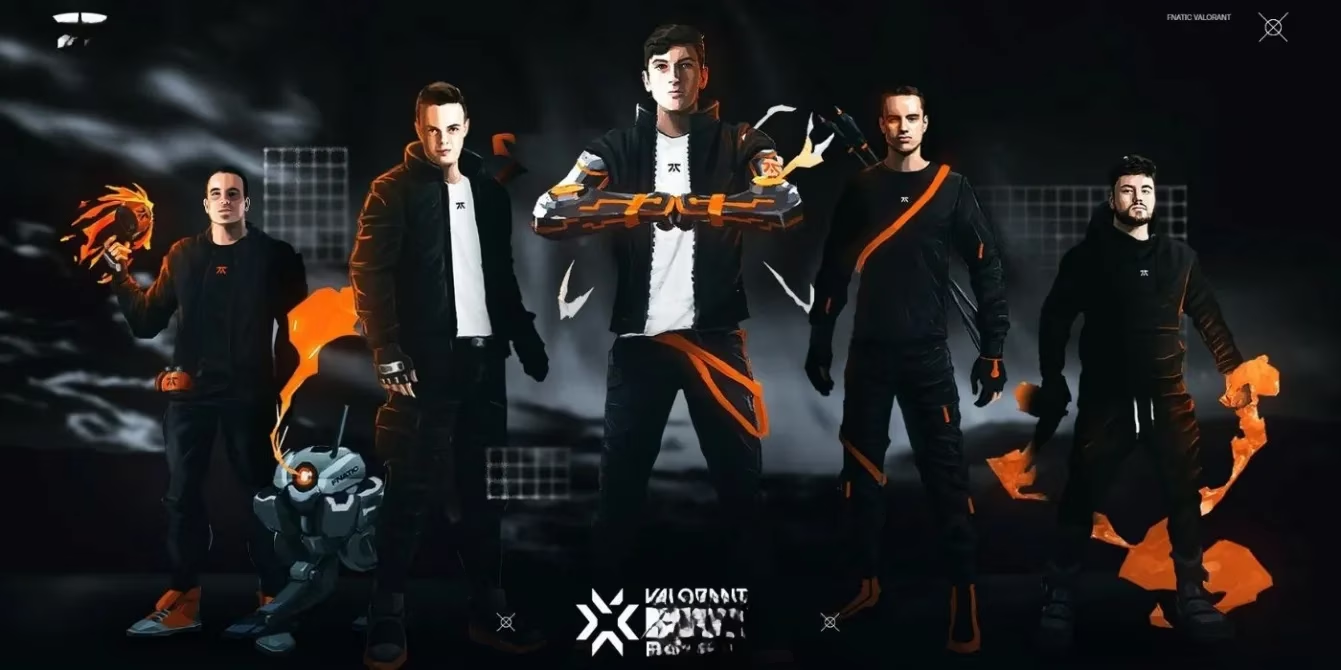
Fnatic, on the other hand, were the masters of controlled chaos. Led by the charismatic Boaster, their holds on maps like Bind were legendary—stubborn as ancient tree roots gripping stone. They played with a confidence that bordered on theatrical, and their team fights were a symphony of coordinated utility and aggressive trades. The potential for a Europe-vs-Europe showdown had everyone on the edge of their seats.
The International Wildcards
This is where it got spicy. We had styles from corners of the world many fans were seeing for the first time.
-
Brazilian Bravado: Team Vikings and YNG Sharks brought a fiery, relentless pace that was like a samba beat—fast, rhythmic, and impossible to ignore. Vikings' unique comps, often ditching the then-mandatory Jett, showed a fearless creativity.
-
Korean Precision: All eyes were on NUTURN Gaming, the giant-slayers who ended Vision Strikers' mythical 104-match win streak. Their playstyle was a masterclass in utility usage and avoiding unnecessary duels, a disciplined approach that felt like watching a perfectly engineered watch mechanism.
-
The Rising Sun: Japan's Crazy Raccoon, after early struggles, had clawed their way to the top. They were the dark horse, a team whose growth trajectory was as steep as a mountain peak, and everyone wondered if they could translate domestic dominance onto the world stage.
-
Regional Pride: From LATAM, KRU Esports carried the hopes of a continent with their meta-savvy play. From Southeast Asia, Thailand's X10 Esports relied on the dazzling Jett plays of Patiphan, a player whose agility was like watching a hummingbird navigate a thunderstorm.
The Legacy: More Than Just a Trophy
Reflecting from 2026, Reykjavik's impact was profound. It was the proof of concept. It answered the big questions:
-
Could Valorant sustain a global esport? Resoundingly, yes. The strategic diversity was staggering.
-
Were the storylines compelling? From regional rivalries to individual star-making moments, it had everything.
-
Did it create lasting legends? Absolutely. Careers were defined in that Icelandic studio.
The tournament was a cultural exchange. The methodical Korean style clashed with the explosive Brazilian approach. The structured European setups met the adaptive, star-driven NA play. It was the first true global meta conversation, and the game was forever richer for it.
Final Thoughts: The Foundation Stone
Watching those matches now feels like looking at the primordial soup from which today's titans evolved. The strategies have become more refined, the players even more skilled, but the essence—the clash of styles, the regional pride, the sheer will to win—was all born there in Reykjavik. It was the tournament that took Valorant from being a game we played to a sport we watched, debated, and loved. It wasn't just the first global LAN; it was the foundation stone for everything that followed in the Valorant Champions Tour. For us old-timers, it'll always hold a special place—the moment we knew this game was here to stay. 🏆✨