
As a dedicated player navigating the ever-evolving tactical landscapes of Valorant in 2026, Yoru remains one of the most fascinating and high-skill-capacity agents in the roster, even years after his initial release. His kit is all about mind games, misdirection, and creating opportunities where none seem to exist. To be honest, mastering him feels less like learning a character and more like learning a new language—the language of chaos and psychological warfare. When you get it right, it's an absolute blast; you're basically the phantom of the server, making the enemy team second-guess every single sound. Let's break down how to make this enigmatic duelist work for you.
🌀 Core Abilities: The Tools of Deception
Gatecrash (E Ability)
This is your bread and butter, your primary tool for mobility and unpredictability. In simple terms, Gatecrash is a two-part teleport. You send out a rift tether to a location, and later, you can activate it to instantly teleport there. The beauty of this ability in 2026's meta is its versatility. It's not just an 'oops, I messed up' button; it's a proactive tool for setting up flanks and gathering intel. You can send it through a smoke or a choke point to scout safely, or use it to fake a rotate, making the enemy think you're somewhere you're not. The key is to think outside the box—place it in unconventional spots where enemies won't immediately shoot it. Remember, if they destroy the tether, your 'get out of jail free card' is gone. It's a high-risk, high-reward playstyle that separates the good Yoru players from the great ones.
Fakeout (C Ability)
Ah, Fakeout. This ability is pure psychological warfare. You throw a device that creates a path of audible, illusory footsteps. In the heat of a round, with everyone's nerves on edge, a well-placed Fakeout can cause absolute pandemonium. The meta has evolved to use this not just for simple distractions, but for sophisticated setups:
-
Baiting Utility: Throw it towards a common angle to bait out an enemy Sova recon dart or a Killjoy turret.
-
Covering Sound: Use the footsteps to mask the sound of your own or a teammate's real rotation.
-
Post-Plant Mind Games: After planting the spike, throw a Fakeout in one direction while you hide in another. The enemy will often swing to clear the 'fake' player, exposing themselves.
It's all about making the enemy team paranoid. As they say, the greatest trick the devil ever pulled was convincing the world he didn't exist. With Fakeout, you're convincing the enemy that your entire team is somewhere it's not.
Blindside (Q Ability)
Your flashbang, Blindside, has a unique mechanic: it must bounce off a surface (like a wall or the floor) before it activates. This makes it incredibly versatile for popping flashes around corners without exposing yourself. The 2026 playbook for Blindside is all about creativity and precision.
-
Pop Flashes: Learn lineups for specific maps to throw quick, powerful flashes that peek and blind common defensive or offensive positions.
-
Self-Sufficiency: Unlike agents who need teammates to capitalize on their flashes, Yoru can flash for himself and immediately teleport or swing with Gatecrash for a devastating solo play.
-
Counter-Utility: You can use it to blind common post-plant positions or to clear out pesky utility like Cypher trips or Killjoy nanoswarms.
Mastering the angles and bounce physics is crucial. A poorly thrown Blindside can blind you and your teammates, turning a potential play into a complete disaster—a real 'facepalm' moment.
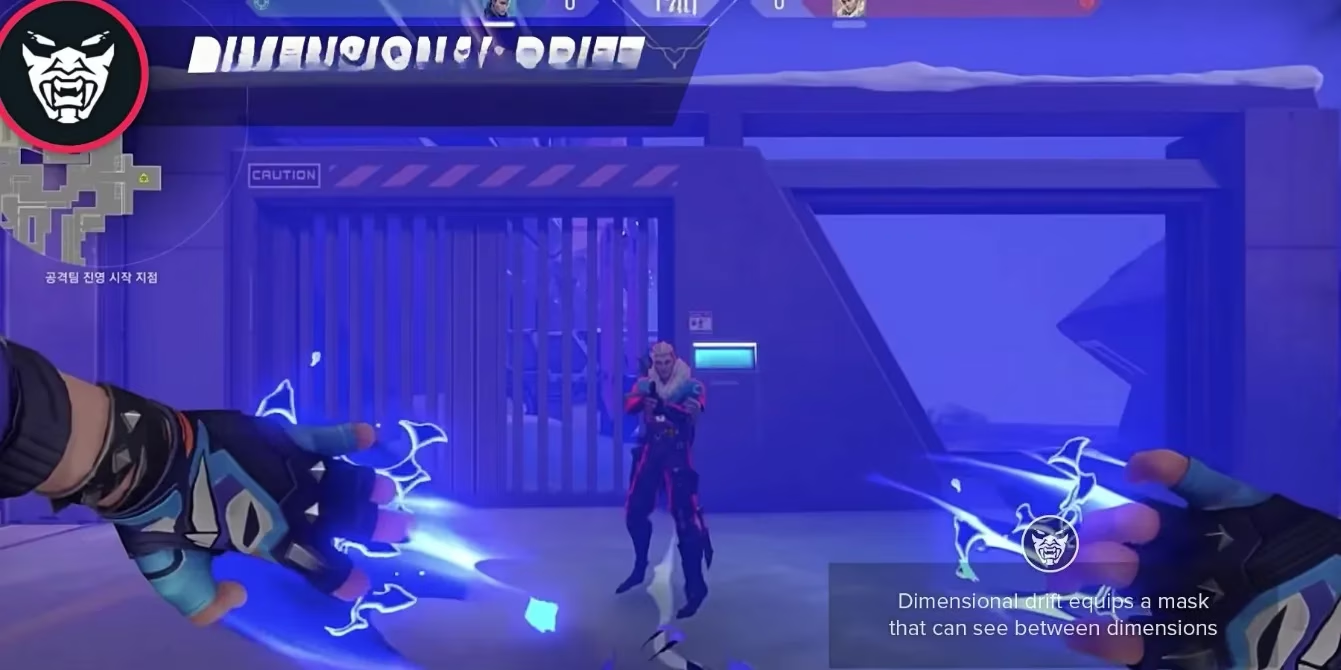
Dimensional Drift (X Ability - Ultimate)
Yoru's ultimate, Dimensional Drift, is the epitome of his theme. You become invisible, invulnerable, and move faster, but you cannot fire your weapons or use other abilities. You're essentially a ghost scouting the map. In 2026, its uses have been refined far beyond a simple escape tool.
| Primary Use Case | Description |
|---|---|
| Information Gathering | The most valuable use. Drift safely into contested territory to spot enemy positions, call out rotations, and locate the spike if you're defending. |
| Flank Setup | Use the ultimate's speed and invulnerability to get deep behind enemy lines. Cancel it in a safe spot and catch the entire enemy team from behind. |
| Stall/Retake | On defense, if the site is being taken, Drift onto site to safely confirm spike plant location and number of enemies, giving your team perfect info for the retake. |
| Baiting Ultimates | Drift aggressively towards an enemy to bait them into wasting powerful ultimates like Raze's Showstopper or Killjoy's Lockdown on your invulnerable form. |
The biggest mistake new Yoru players make is using Dimensional Drift solely to run away. It's a powerful information-gathering tool that can win rounds by itself. Just remember, while you're invulnerable, you're also very loud—enemies can hear your dimensional footsteps, so they know a Yoru is nearby and in his ultimate.
🤝 Playstyle & Team Composition in the 2026 Meta
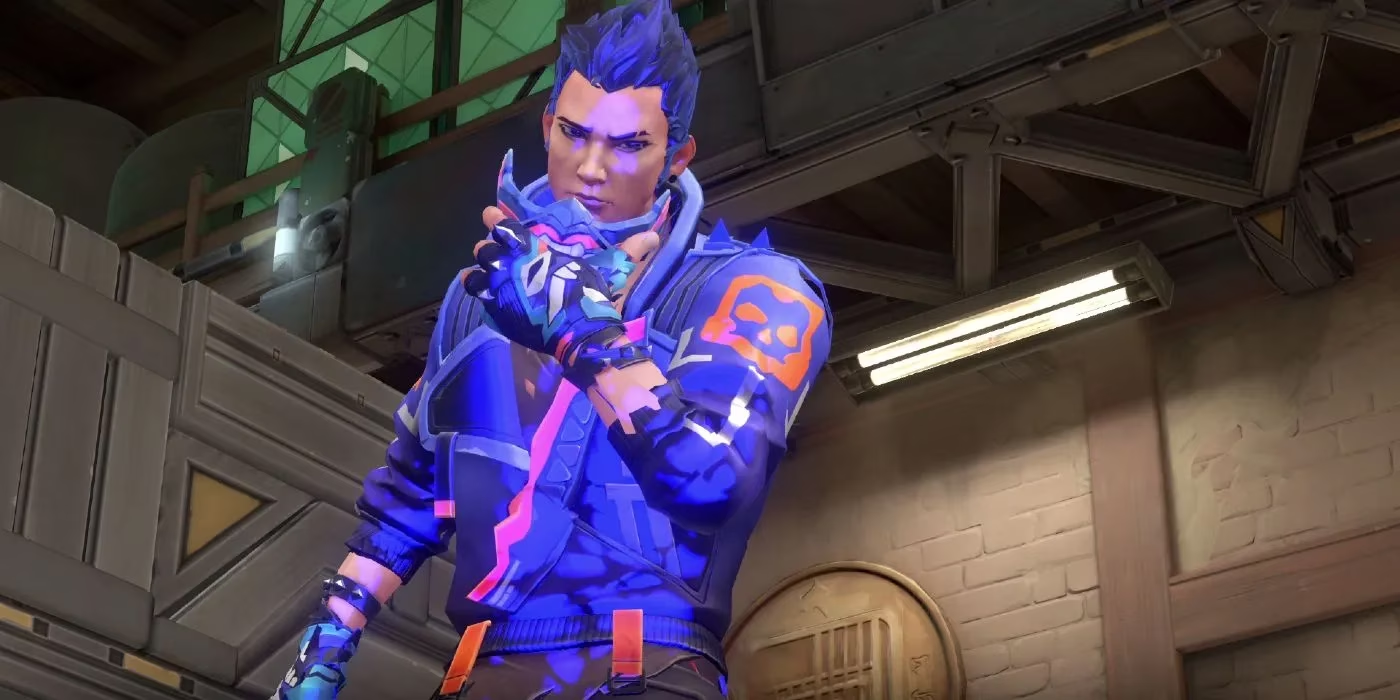
Yoru is classified as a Duelist, which means his job is to seek out engagements and create space for his team. However, he's not your typical 'run in and frag out' duelist like Phoenix or Reyna. He's what the community calls a 'Lurker Duelist' or a 'Flank Specialist'. He excels at operating independently, applying pressure across the map, and breaking the enemy's defensive or offensive structure from unexpected angles.
Optimal Team Compositions
Yoru's independence means he can fit into many team comps, but he truly shines with certain synergies:
-
With Initiators (like Sova, Fade, or the newer agents): Their information-gathering tools (recon darts, prowlers, etc.) give Yoru the intel he needs to plan devastating flanks with Gatecrash or Dimensional Drift.
-
With Controllers (like Omen, Brimstone, Astra): Their smokes can mask the sound and visual cue of his Gatecrash tether, making his teleports even more unpredictable.
-
As a Secondary Duelist: Pairing Yoru with a more frontal-assault duelist (like Raze or Neon) creates a terrifying pincer threat. While the main duelist pushes a site head-on, Yoru is already setting up to hit the defenders from the side or behind.
Role on the Team: The Master of Mischief
You are not the primary entry fragger. Your role is to sow confusion, gather information, and capitalize on the chaos. A typical round might look like this:
-
Lurk/Presence: At the round start, you might go to the opposite site of your team's main push, using Fakeout to make noise and force the defenders to respect your presence.
-
Information & Flank: As your team executes on a site, you use Gatecrash to send a tether for a deep flank or Dimensional Drift to scout the other site for rotates.
-
Capitalize: Once the enemy is fully committed to defending against your team's execute, you strike from their blind spot, using Blindside and Gatecrash to secure crucial kills on distracted enemies.
It's a playstyle that requires immense game sense, patience, and communication. You need to know when to commit and when to simply be a threatening presence. A good Yoru doesn't always need to get kills to win the round; sometimes, just making the enemy waste time and resources looking for you is victory enough.
In conclusion, Yoru in 2026 is not for the faint of heart. He demands creativity, map knowledge, and a deep understanding of player psychology. But for those willing to put in the time, he offers one of the most uniquely rewarding and stylish playstyles in Valorant. He's the agent that turns the game into a chess match where you're playing three moves ahead, and the board is the enemy team's mental state. Now get out there and start bending dimensions!