
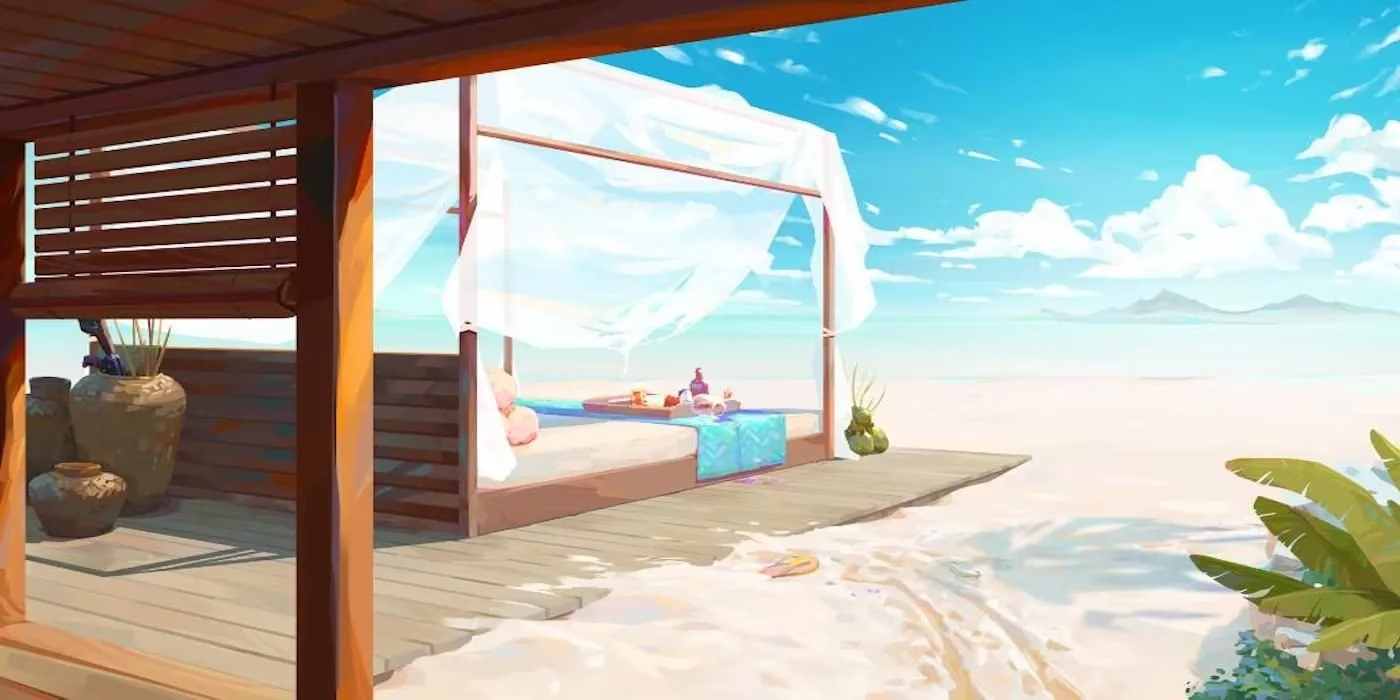
It’s 2026, and looking back, I still remember the buzz when Riot Games first started teasing Breeze. The tropical theme was such a refreshing shift from the icy, industrial vibe of Icebox—like swapping a parka for a Hawaiian shirt mid-game, you know? The official tweets didn't give much away about the release date, but the name "Breeze" whispered promises of something lighter, airier. I remember the anticipation was palpable, a collective holding of breath in the community. We were all craving something new to shake up the tactical landscape, and after half a year with Icebox, the hope was that Breeze would be the breath of fresh air its name suggested.
The Big Reveal and Initial Reactions
When the Vietnamese trailer surfaced—thanks to some dedicated fans and leakers—the first glimpse was... well, let's just say it was a mixed bag. I didn't understand a word of the narration, but the visuals spoke volumes. My initial reaction? "Oh boy, here we go again." The map design immediately echoed Icebox's controversial DNA. We saw those vast, open fields again, punctuated mostly by vertical cover like crates and pillars. It felt less like a tactical chessboard and more like a playground with a thousand different angles to worry about. For a player like me who enjoys methodical, corner-clearing gameplay, the trailer hinted at a pace that felt more 'run-and-gun' than 'stop-and-pop.' It was a vibe, for sure, but not necessarily the one I was hoping for. Part of me was excited for the change; another part was already mentally preparing for the chaos.
Learning the Layout: A Love-Hate Relationship
Jumping into Breeze on its release with Episode 2 Act 3 was an experience. The community's feedback on Icebox's verticality and open sightlines seemed to have been... noted, but not exactly heeded. Breeze doubled down. The map is gorgeous, don't get me wrong—lush greens, sandy beaches, ruined temples. But playing it? That's a different story.
-
The Sites (A and B): They are spacious. Holding a site often means watching three or more entrances simultaneously. It demands incredible team coordination and utility usage. Smoking feels more like an art form here.
-
Mid: This is the heart of the map's pace. Controlling mid is crucial, but it's also a sniper's alley and a duelist's dream. It creates this frantic energy that can be exhausting but undeniably thrilling.
-
The Vertical Game: Just like Icebox taught us, looking up and down is non-negotiable. The rope ascents and elevated positions add layers of complexity that can feel rewarding or utterly frustrating, depending on which end of the Operator you're on.
Playing Breeze forced me to adapt. My usual, cautious playstyle had to make room for moments of bold, aggressive pushes. It was less about holding tight angles and more about dynamic control of space. I had to learn new line-ups, new post-plant positions, and develop a sixth sense for flanks. It was a steep learning curve, and honestly, it took a while for the map to grow on me.
The Legacy and Evolution
Five years later, Breeze holds a unique place in Valorant's map pool. It's the map you either love for its explosive potential or... tolerate. Riot did listen to some Icebox feedback—the visual clarity is better, and the themes are distinct—but the core philosophy of large, open engagements remained. In the grand scheme of things, Breeze served its purpose: it broke the monotony. It challenged the meta and forced agents with area denial (like Viper or Astra) into the spotlight. It became a staple in competitive play, a true test of a team's adaptability and strategic depth.
Looking at the map pool in 2026, Breeze is now a veteran. Newer maps have come with their own twists, but Breeze's tropical, wide-open design remains iconic. It's a reminder of a time when Valorant was still exploring its identity in the tactical shooter space. Was it a perfect successor to Icebox? Not for everyone. But did it leave a lasting impression? Absolutely. It taught us that sometimes, change doesn't mean fixing what's "broken," but rather offering a different kind of challenge. Playing it now feels like revisiting an old, slightly chaotic friend—you remember the rough patches, but you appreciate the unique memories you made there. In the end, Breeze was exactly what its name promised: a shift in the air, a change in pressure. Whether that breeze felt refreshing or like a looming storm depended entirely on your playstyle. And maybe... that was the point all along.