
It's 2026, and looking back, the buzz around 5G gaming felt like a distant promise just a few short years ago. I remember the excitement and skepticism swirling in equal measure. Could a wireless network truly transform how we play? Yet, here I am, having witnessed the quiet evolution from hype to reality. The journey began with announcements that seemed almost too ambitious, like the partnership between Verizon and gaming giants such as EA. Back then, the vision was clear: to build a new foundation for mobile gaming, but the path forward was shrouded in questions. Would this be a revolution for all, or would it leave many players behind, waiting for the technology to catch up? The seeds planted in those early partnerships have grown into something I now experience every day on my device.
The Foundation: Verizon's 5G Gaming Network

The cornerstone of this new era was, without a doubt, Verizon's aggressive push into the gaming space. They didn't just offer faster internet; they built a dedicated 5G Gaming Network. Their strategy was brilliant—partner directly with the titans of the industry to understand what we, the players, truly needed. Their collaboration with EA was a masterstroke. I vividly recall the launch of EA SPORTS Madden NFL Mobile on this new network. The promise was to use that high-speed, low-latency connection to set new standards. And you know what? It delivered. Gone were the frustrating lag spikes during a crucial fourth-down play. The experience became seamless, almost console-like in its responsiveness. It made me wonder: if this was possible for Madden, what else could be transformed?
But EA wasn't the only partner. Verizon also joined forces with Riot Games, the minds behind Valorant. This partnership was twofold: enhancing the technical backbone for future mobile adaptations and investing in the people who make esports thrive. Riot’s new program, supported by Verizon, focused on training and mentoring the next generation of female esports casters. This wasn't just about infrastructure; it was about building a more inclusive and skilled community from the ground up.
Leveling Up the Competitive Scene
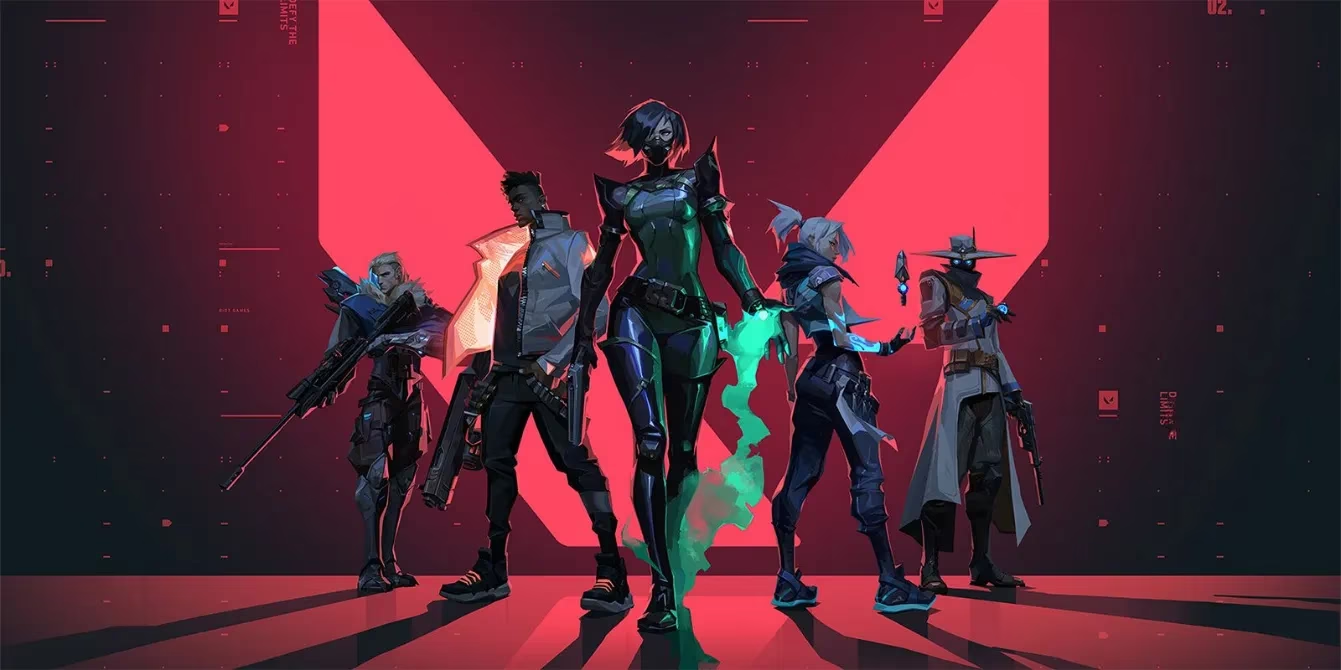
The impact wasn't limited to casual play. The competitive esports scene received a massive boost. Verizon teamed up with legendary organizations like Dignitas and Team Liquid. The goal was simple: give these teams a technological edge. In high-stakes matches where milliseconds decide victory or defeat, reliable, ultra-fast 5G connections became as crucial as a player's reflexes. I followed tournaments where analysts highlighted how these partnerships minimized network-related disadvantages, allowing pure skill and strategy to shine. It transformed how we watched and how teams prepared. The playing field, at least technologically, was being leveled.
Perhaps the most inspiring part of Verizon's initiative was its commitment to diversity and education. The Verizon Game Forward Scholarship program was launched with a powerful mission: to increase female representation in gaming and STEM fields. The program did more than just write checks; it funded the creation of tech centers on partnering HBCU campuses, making cutting-edge resources available to all students. Scholarship recipients even got access to the Verizon 5G Gaming Center in Los Angeles. This holistic approach addressed a critical need—ensuring the future of gaming is built by a diverse set of minds. Isn't that how true innovation happens? By bringing different perspectives to the table?
The Mobile Gaming Landscape Today
Reflecting on 2026, the mobile gaming landscape is almost unrecognizable from five years ago. What started as a trickle of AAA titles like Madden and Call of Duty on mobile has become a flood. The combination of powerful hardware and ubiquitous, reliable 5G networks has blurred the line between platform. We're no longer talking about 'mobile versions' but unified, cross-platform experiences. The advancements in Mobile Edge Computing (MEC) that Verizon championed meant complex game logic could be processed closer to the user, reducing latency to near-zero. This tech, once a buzzword in press releases, is now the invisible engine powering my gaming sessions on the train, in a park, or at a cafe.
However, it's crucial to acknowledge that this journey wasn't without its hurdles. Back in 2021, a significant question loomed: what about players without access to 5G? Would they be excluded from this new golden age? While coverage has expanded dramatically, bridging the digital divide remains an ongoing challenge. The industry's growth has, thankfully, pushed for more affordable data plans and wider network rollouts, but the promise of universal access is a work in progress.
The Verdict: A Connected Future
So, what's my takeaway from living through this 5G gaming revolution?
-
Performance is Paramount: The dream of console-quality gaming on mobile is no longer a dream. It's my everyday reality.
-
Community is Key: The focus on supporting esports teams and creating scholarship programs showed that technology is only as good as the community it serves.
-
Inclusion Drives Innovation: Efforts to boost diversity in gaming aren't just moral imperatives; they are essential for the industry's creative and technical growth.
The partnerships forged by Verizon, EA, Riot Games, and others were the catalysts. They moved beyond marketing to create tangible ecosystems. As I queue for my next match, I'm not just connecting to a server; I'm tapping into an infrastructure built on speed, inclusivity, and competitive integrity. The question from 2021—"How many will be left out?"—still echoes, driving continued efforts to make this incredible gaming future accessible to everyone. The game, as they say, has truly changed.