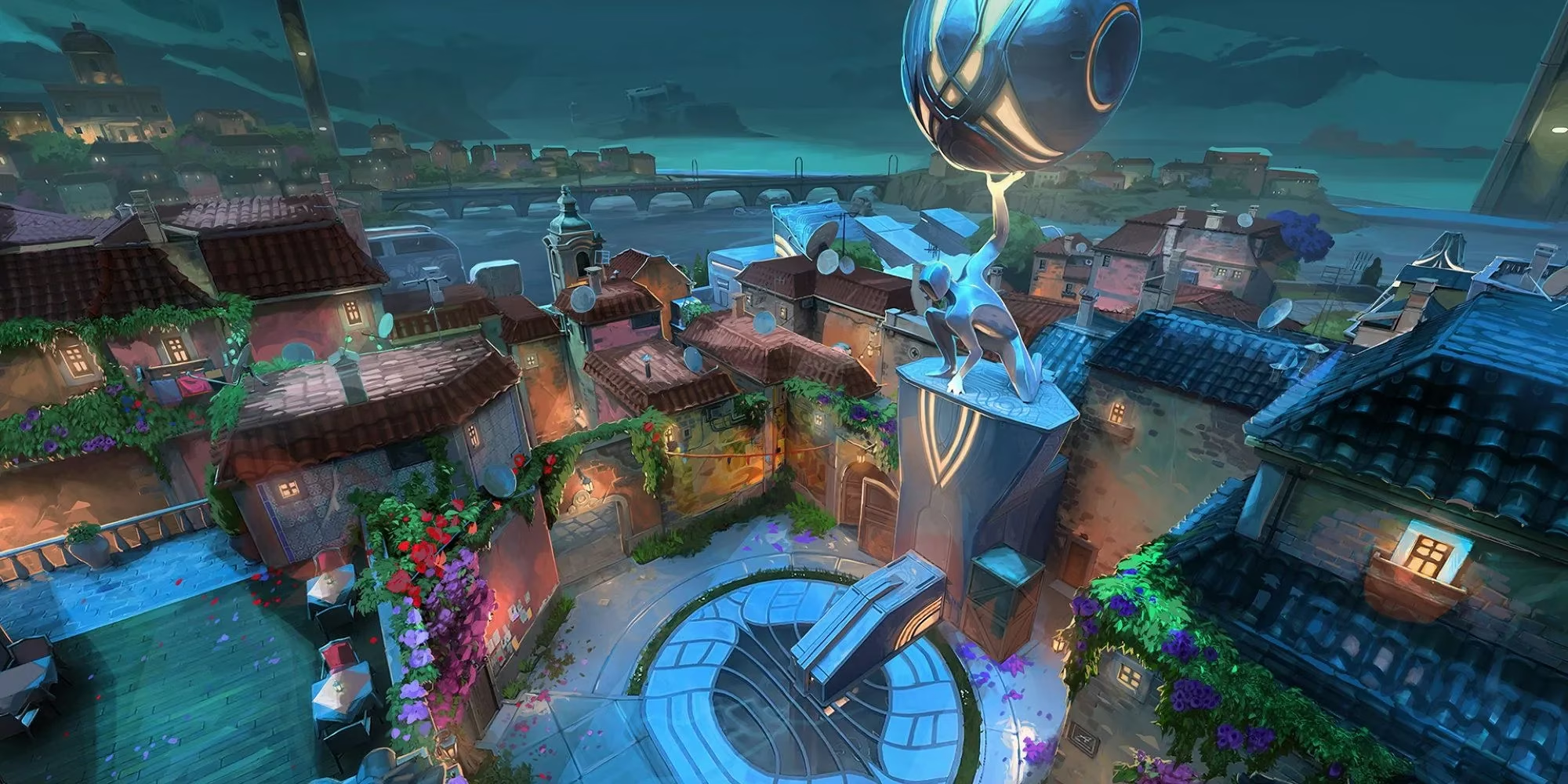
As a dedicated agent who's scaled the heights of Icebox and navigated the chaotic corridors of Fracture, I thought I'd seen it all. But standing here on the spawn point of Pearl, Valorant's eighth map, feels different. The air is thick, not with tension, but with a strange, humid stillness. Through the shimmering blue-green curve of Omega Kingdom's colossal dome above me, I can see schools of fish lazily drifting where sunbathers once lounged. This isn't just another battlefield; it's a museum of a drowned world, a climate change diorama preserved in resin. The launch of Episode 5, Act 1 back in June 2022 feels like ancient history now, but Pearl's haunting beauty and its story of human resilience against a rising ocean have only grown more poignant with time.
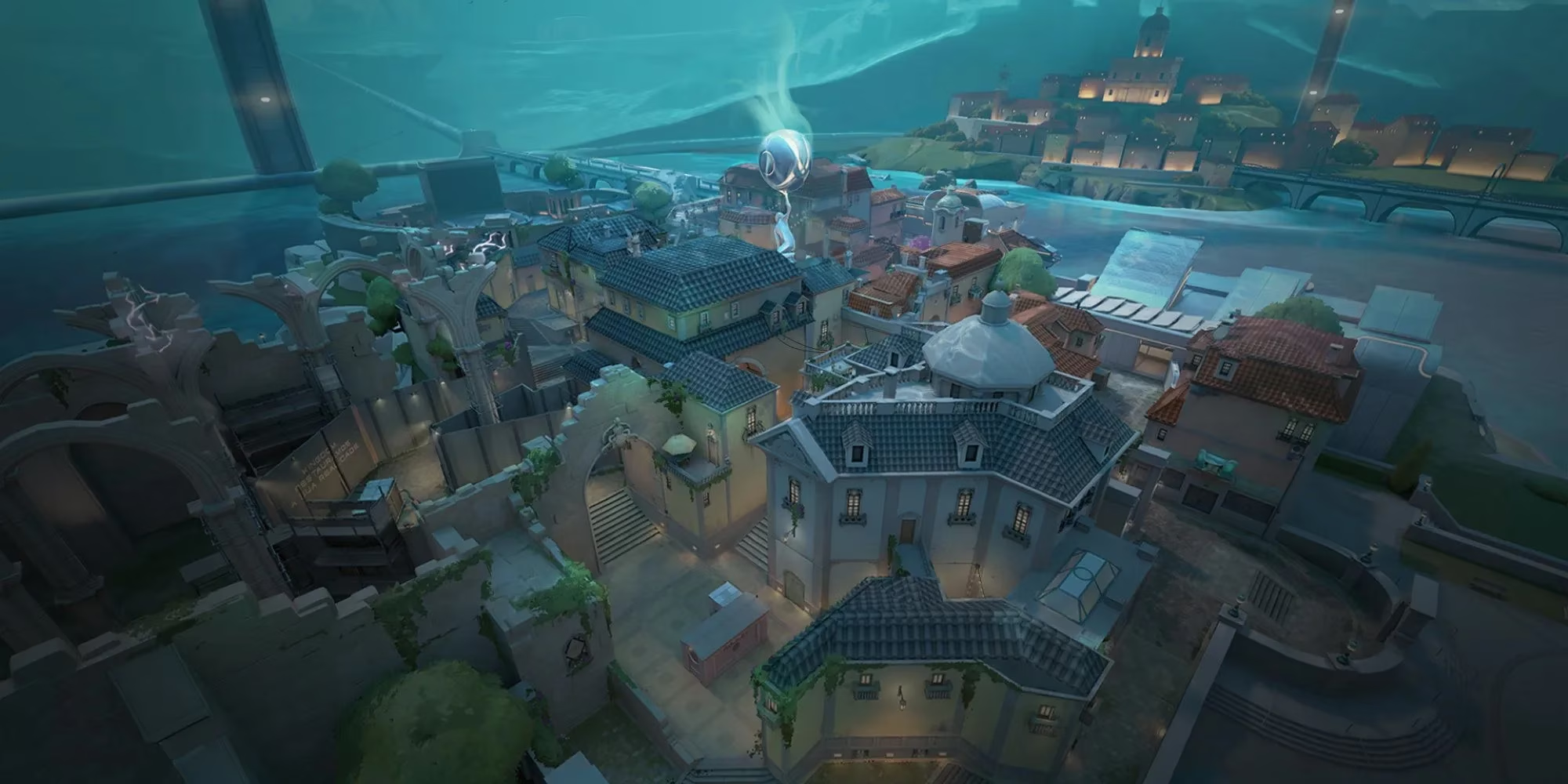
My boots echo on the polished cobblestones of what was once a bustling Portuguese plaza. The inspiration for this place, as the developers shared, was a brilliant—and terrifying—fusion: an old underwater concept married to a vision of a major city flooded by climate change. Placing it in Portugal unlocked something special. The Omega Earth version of Kingdom Industries didn't just abandon this place when the seas rose; they encased it. They built a gargantuan geodesic dome over the entire village like a snow globe for a lost civilization, a desperate terrarium holding back the apocalypse. Walking through the streets, the visual juxtaposition is stunning. Sleek, industrial Kingdom piping and fortifications snake around centuries-old azulejo tiles and ornate stonework, creating an atmosphere that is at once futuristic and achingly historical. It feels less like a corporate takeover and more like a technological embrace, a life-support system for architecture.
The Deceptively Simple Dance of Three Lanes 😌
After the vertical puzzles of Icebox and the sprawling, windy avenues of Breeze, the design team wanted something more direct. And on the surface, Pearl delivers. It presents itself with an almost classical simplicity:
-
Three main lanes: A Site, Mid, and B Site.
-
No gimmicks: No teleporters to warp you across the map, no ascender ropes for sudden verticality, no mechanically operated doors to control sightlines.
This simplicity, however, is a beautiful trap. Without those rotational crutches, every decision feels heavier, like moving a piece in a high-stakes chess match played on a sinking ship. The map designer, Joe Lansford, said it demanded "committed engagements." He wasn't kidding. Pushing into Mid feels like stepping into a silent film, where every footfall is deafening and every corner holds a potential, irreversible confrontation. The strategic depth comes not from gadgets, but from pure, unadulterated spatial awareness and post-plant positioning. It forces a kind of raw, fundamental Valorant that I hadn't realized I missed.
Echoes of Portugal in the Silence 🎵
The commitment to authenticity here is incredible. Riot didn't just copy architectural styles; they brought in real Portuguese artists to create the murals that adorn the walls. Faded, beautiful graffiti of sea creatures and old maritime symbols blend with the environment, telling silent stories. And the music... the haunting, ambient tracks that pulse through the map's speakers were also crafted by Portuguese musicians. It creates a soundscape that is melancholic and strangely peaceful, a stark contrast to the gunfire that inevitably erupts.
Lansford mentioned he listened to a lot of the experimental band The Body while designing Pearl, and their track "Nothing Stirs" inspired a specific, hidden part of the map. I've spent hours looking for it. Is it in the quiet, algae-filled fountain near B site? Or in the perfectly still puddle in a back alley of A, reflecting the dome's light like a liquid diamond? Finding it became a personal quest, a meta-game within the game. This map isn't just played; it's sensed. The oppressive quiet of the dome makes the eventual crack of a Sheriff shot ring out like a thunderclap in a cathedral.
A Map That Ages Like a Fine, Flooded Wine 🍷
Playing Pearl in 2026, years after its release, has given me a new perspective. In a world where climate change has gone from a distant threat to a daily reality, its thematic weight has shifted from a speculative "What if?" to a sobering "What now?" The dome is no longer just a cool sci-fi set piece; it feels like a plausible monument to human adaptation—or desperation. The gameplay, too, has settled. The community has peeled back its deceptively simple layers, discovering intricate smoke setups, daring one-way angles, and post-plant holds that are as elegant and complex as a watchmaker's mechanism.
Pearl is a masterpiece of environmental storytelling. It’s a love letter to Portugal, preserved under glass. It’s a tactical playground that rewards fundamentals over flash. Most of all, it’s a quiet, persistent reminder of the world just outside our own games, pressing in on all sides. Every round here is a fight for control, not just of a bomb site, but of a tiny pocket of air in a world reclaimed by the sea. To play on Pearl is to walk through a dream of the past, fighting for a future, one precise headshot at a time.