
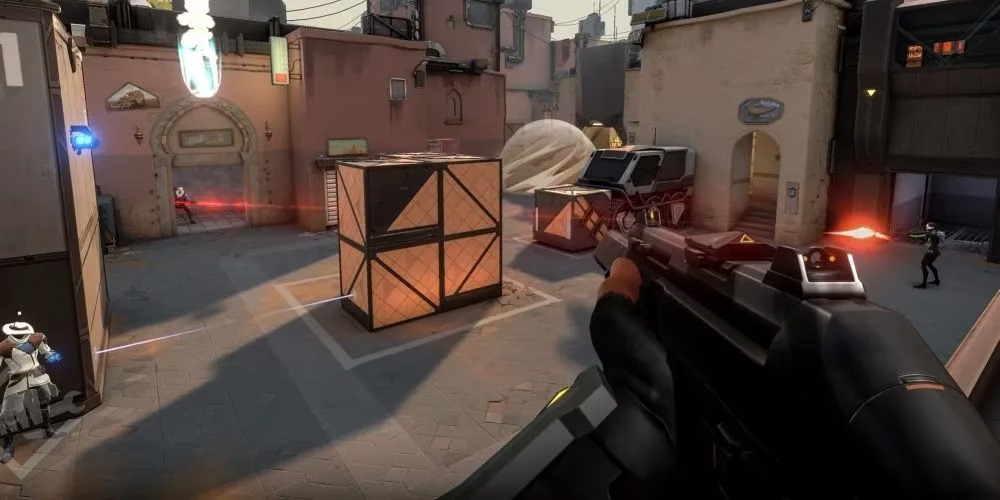
In the high-stakes digital playgrounds of 2026, where virtual bullets fly and space magic reigns, one truth remains universal: nobody likes a cheater. 🚫 While Riot Games once tried the diplomatic approach, embedding a secret recruitment pitch for hackers right into Valorant's famed anti-cheat software, it seems the call to join the 'good guys' fell on deaf, nefarious ears. The plague of aimbots and wallhacks persisted, festering not just in Valorant's precise tactical arenas but also within the sprawling cosmic battles of Destiny 2. Tired of playing whack-a-mole, the gaming titans have decided to bring down the hammer—legally speaking. In a move that has the gaming community cheering, Bungie and Riot Games have formed an unlikely alliance, joining forces to file a landmark joint lawsuit aimed at decapitating one of the most notorious cheat-providing hydras in the business: GatorCheats and its alleged mastermind, Cameron Santos.
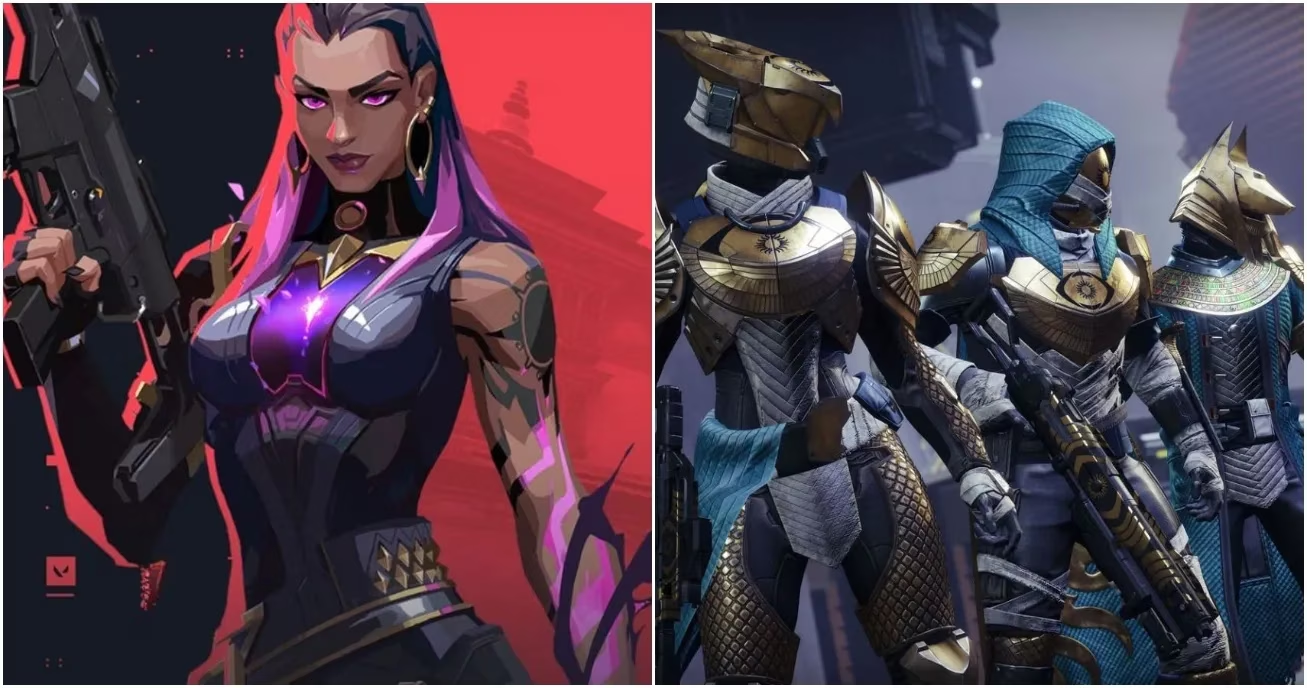
The Lawsuit: A Tale of Trafficking and Interference
According to court documents that recently surfaced, this legal offensive was launched in the Central District of California. The complaint paints a picture of Santos not as a lone wolf script kiddie, but as a sophisticated digital arms dealer. The suit alleges he orchestrated the development, sale, and distribution of a whole portfolio of malicious software designed to corrupt the competitive integrity of popular multiplayer titles. The core accusations are severe and multi-pronged:
-
Trafficking in Circumvention Devices: Essentially, selling tools designed explicitly to bypass the sophisticated security and anti-tamper measures (like Riot's Vanguard) that the developers painstakingly built.
-
Intentional Interference with Contractual Relations: This is a spicy one. The argument here is that by enabling cheating, Santos actively interfered with the binding Terms of Service agreements that every player accepts. These agreements form a contract between the player and the developer, which cheaters, aided by Santos's products, blatantly violate.
-
Unfair Competition: From a business standpoint, GatorCheats is framed as an illegitimate competitor who undermines the legitimate business of Riot and Bungie by degrading the quality and fairness of their products.
The distribution network was reportedly as modern as it was shadowy, utilizing encrypted channels like Telegram and Discord for direct sales, with a more public storefront on the GatorCheats website itself.
The Cheat Economy: Subscriptions to Sanctioned Mayhem
This wasn't some charity operation for disgruntled gamers. The lawsuit sheds light on a lucrative, subscription-based business model. Access to these digital performance enhancers didn't come cheap:
| Subscription Tier | Approximate Cost | What It Buys |
|---|---|---|
| Monthly Pass | ~$90/month | Temporary access to cheats for a specific game. |
| Lifetime Access | Up to $500 | Permanent, all-in-one access to a suite of hacks for multiple games. |
Pricing was allegedly dynamic, scaling with a game's popularity. The hotter the title, the higher the price tag for the tools to ruin it. Bungie and Riot's legal teams suspect this operation generated "tens or even hundreds of thousands of dollars" in revenue, which in turn caused "millions of dollars" in damages to the companies through lost player trust, increased security costs, and drained developer resources spent on anti-cheat warfare instead of new content.
Bungie's Long War and The Hydra Problem
For Bungie, this lawsuit is the latest salvo in a protracted campaign. Just last year, the studio famously flexed its legal muscles by issuing a cease-and-desist to another cheat provider, PerfectAim. The move worked—PerfectAim took down its Destiny 2 offerings. However, it also highlighted the frustrating, hydra-like nature of the cheat industry. In a twist of irony, PerfectAim reportedly then emailed its displaced customer base, directing them to... you guessed it, alternative providers like GatorCheats. This game of whack-a-mole demonstrated that taking down one site often just funnels business and attention to another, making the targeted, joint approach against a major figure like Santos a potentially more effective strategy.
What Riot and Bungie Want: Maximum Pain
This isn't just a slap on the wrist. The plaintiffs are going for the jugular. They are asking the court for:
-
A permanent and complete shutdown of all of Cameron Santos's operations related to cheat development and distribution.
-
The maximum statutory damages allowable under the law. This is a financial nuclear option designed not just to recoup losses but to send a seismic, wallet-emptying message to the entire underground cheat economy.
The goal is clear: to make an example of GatorCheats. It's a declaration that developing and selling cheats is no longer a risky-but-profitable gray market gig, but a legally perilous career choice that could attract the combined legal firepower of multiple billion-dollar gaming franchises.
The Bigger Picture: A New Era of Enforcement?
As we move deeper into 2026, this lawsuit could mark a turning point. For years, the battle against cheats has been fought primarily with code—anti-cheat software getting smarter, cheats evolving to bypass it, in a endless digital arms race. This legal maneuver opens a second, parallel front: the courtroom. If successful, it could establish a powerful precedent, encouraging other studios to collaborate and pursue not just the software, but the individuals and businesses profiting from it. The message is evolving from "We will detect and ban you" to "We will find you, sue you, and bankrupt you." For the vast majority of players who just want a fair fight, whether in Valorant's tense, one-life rounds or Destiny 2's Trials of Osiris, this alliance might just be the best in-game update they've received all year. 🎮⚖️