
In the dynamic and ever-evolving world of esports, Riot Games, the colossal developer behind the global sensation Valorant, has once again ignited a fiery debate with its latest competitive initiative. The announcement of the VCT Game Changers, a groundbreaking female-only tournament, has sent shockwaves through the community, drawing both fervent support and vehement criticism. The studio, no stranger to controversy, has emphatically come to the defense of this bold move, framing it as a crucial step toward inclusivity and diversity in the professional gaming arena. While some decry it as exclusionary, Riot's top brass paints a picture of a necessary sanctuary, a competitive space designed to uplift and showcase talent from demographics that have historically faced monumental barriers in the cutthroat world of esports. This clash of perspectives unfolds against a backdrop of Riot's own tumultuous recent history, making this tournament not just a competition, but a statement.
A Sanctuary in a Storm: Defending the VCT Game Changers
Following the tournament's reveal, a vocal segment of the community erupted on platforms like Reddit, branding the initiative as discriminatory and contrary to the spirit of open competition. In response, Riot's developers and executives launched a formidable counter-offensive, articulating a vision far beyond simple segregation. Coleman Palm, Valorant's Insights and Strategy developer, passionately declared the aim was to "support the communities of women who exist in Valorant and highlight incredible players of those communities." This wasn't about exclusion, he argued, but about targeted amplification in an ecosystem where female and marginalized gender players are often overshadowed.
Nathan H., Riot's head of video production, provided an even more pointed rationale. He highlighted the stark reality that certain genders face a labyrinth of "social and political forces" that make the path to professional play exponentially more difficult. The VCT Game Changers, therefore, is conceived as a vital "avenue" free from these oppressive pressures—a dedicated platform where skill can flourish without the added weight of systemic bias. 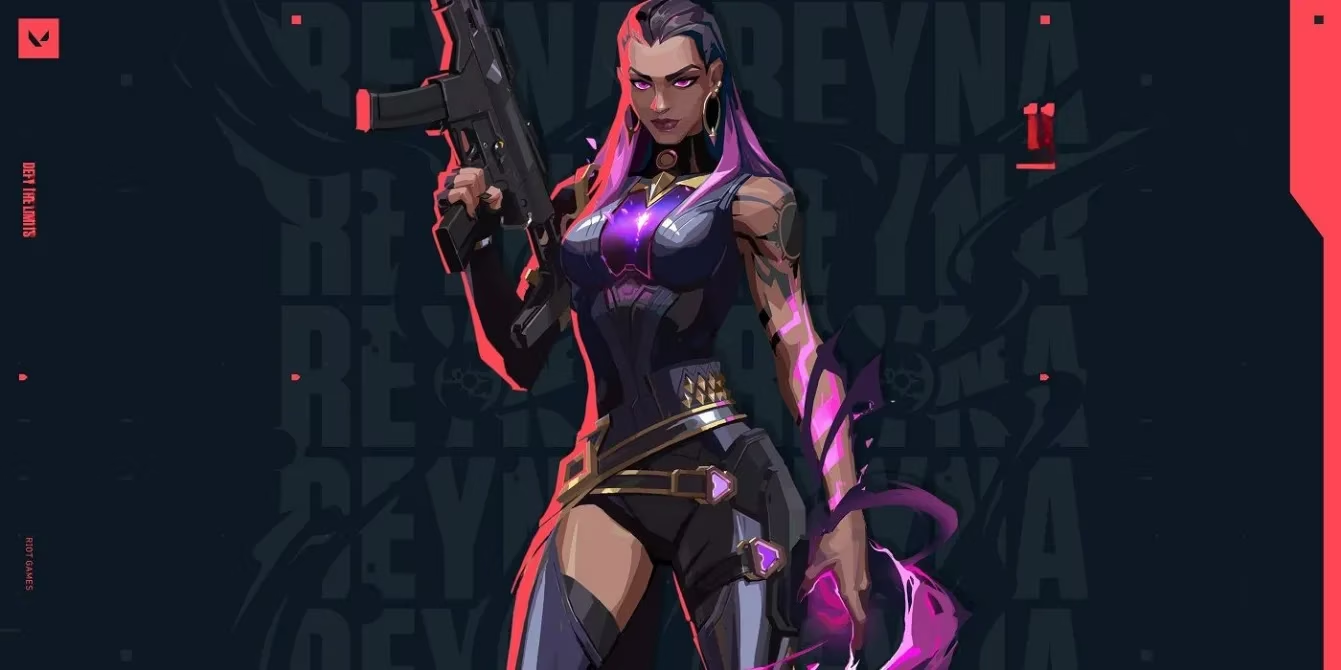
Beyond the Arena: Riot's Rocky Road to Redemption
The timing of this initiative is impossible to ignore. Over the past year, Riot Games has been embroiled in a maelstrom of negative publicity, primarily stemming from lawsuits and allegations from employees—many of them women. These cases painted a picture of a toxic workplace culture, with the lawsuit against CEO Nicolo Laurent by his former assistant over sexual harassment allegations standing as a particularly damning chapter. This context transforms the VCT Game Changers from a mere tournament into a symbolic gesture of corporate accountability and a public-facing effort to mend fractured trust.
For a company striving to rehabilitate its image, especially among female players and professionals, this tournament represents a tangible, if incremental, step toward demonstrating a commitment to change. It's a clear signal that Riot is attempting to translate internal reckonings into external action within its flagship title.
The Valorant Ecosystem: Constant Evolution for All Players
This focus on inclusivity aligns with Riot's broader strategy for Valorant, which has rocketed to the pinnacle of competitive shooters since its 2020 debut. The developer's philosophy hinges on relentless evolution based on player feedback:
-
Map Revamps: Remember the controversial Split map? Riot completely reworked it in early 2025 based on community outcry, showcasing their willingness to overhaul even foundational elements.
-
Innovative Game Modes: The introduction of limited-time modes like "Escalation"—a frenetic, weapon-progression mode inspired by classics like Call of Duty's Gun Game—keeps the casual experience fresh and thrilling. While initially fleeting, its roaring success guaranteed its permanent return to the mode rotation.
-
Agent Balancing & Accessibility: Continuous tweaks to the diverse roster of Agents ensure the meta remains dynamic. Riot meticulously ranks agent difficulty, ensuring there are viable entry points for newcomers (like the straightforward Sage) and high-skill ceilings for veterans (like the deceptive Astra).
The Verdict: A Step on a Long Journey
The VCT Game Changers tournament is, undeniably, a polarizing masterpiece. Critics see a problematic division; proponents see a necessary catalyst for long-term equality. The tournament's core objectives are multifaceted:
| Objective | Expected Outcome |
|---|---|
| Promotion | Elevate the visibility of top female and marginalized-gender competitors. |
| Fostering | Nurture a professional pipeline that currently lacks robust infrastructure. |
| Normalization | Make diverse professional teams a standard, not an exception, in esports. |
Ultimately, this initiative is a single, albeit loud, note in Valorant's ongoing symphony. It exists alongside Riot's other relentless efforts to keep the game engaging—from introducing breathtaking (and expensive 😉) cosmetic bundles like the legendary Elderflame skins to refining core gameplay. The true test will be whether this "game-changing" tournament is merely a performative gesture or the foundation for sustained, structural support that genuinely diversifies the highest echelons of Valorant esports. Only time will tell if this bold gambit pays off in creating a more inclusive and spectacular competitive landscape for all.