
As a long-time FPS grinder, I've been diving deep into the Valorant scene since it exploded onto the scene. It's wild to think it's been around for a few years now, and the evolution from 2021 to 2026 has been a trip. But you know what's never changed? The eternal debate between the old Counter-Strike guard and Riot's tactical shooter. The core friction point, especially for legends who built their reflexes in Valve's arena, is that aiming in Valorant just feels... off. It's like putting on a new pair of shoes that are almost your size, but not quite. And nobody embodies this feeling more than the GOAT himself, Shroud.
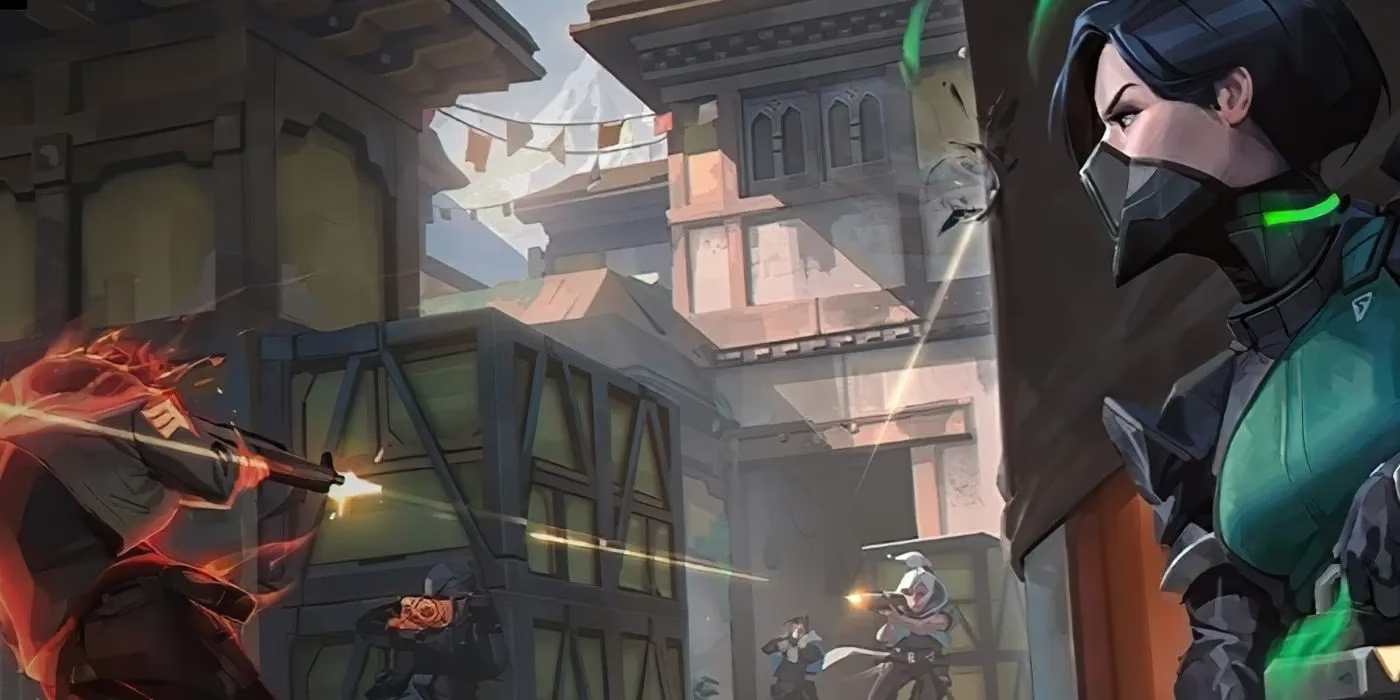
Remember that classic clip from a few years back? Shroud, the CS:GO pro-turned-streaming deity, was live, trying to lock onto heads in Valorant. The frustration was palpable. He kept aiming low, missing shots that would have been crispy one-taps in CS. Between rounds, he voiced what so many of us felt: "Dude, in this game you've gotta aim so high... it's uncomfortable." 😩 That single line became a meme and a battle cry for the transitioning pros. It wasn't just him, either. Legends like Summit1g and Erik Flom have all echoed similar sentiments over the years. Summit found the frags came too easy, while Flom dissected the fundamental mechanical difference.
So, what's the real deal? Why does aiming in Val feel like you're fighting the game sometimes? Let's break it down for the 2026 meta.
The Core Clash: Predictable Spray vs. Mysterious Bloom 🎯
In Counter-Strike, gunplay is a science. It's brutal, unforgiving, but ultimately predictable. Every single weapon has a memorizable spray pattern. You learn it, you master it, it becomes muscle memory. You pull down, then slightly adjust left or right. It's a vertical climb that flattens out. This knowledge is the dividing line between a Gold Nova and a Global Elite. High-level CS is all about spray control during those extended, heart-pounding duels.
Now, enter Valorant. Riot threw the textbook out the window. Instead of set patterns, we have "bloom" (as Flom called it). Think of it like this:
-
CS:GO Spray: A precise dance you choreograph. 🩰
-
Valorant Bloom: Throwing confetti within a general cone. 🎊
You have general parameters—the first few shots are laser accurate, then the recoil kicks in—but the exact path those bullets take within that recoil cone is randomized. This single design choice is a massive philosophical shift. It intentionally lowers the mechanical skill ceiling for gun mastery. You can't just memorize a spray and beam someone across the map with a Phantom like you could with an M4. This, combined with Valorant's generally lower Time-To-Kill (TTK), is why it often gets that "casual-friendly" label (even if the ranked grind feels anything but casual!).
The 2026 Perspective: Intentional Design or Lingering Friction? 🤔
Fast forward to today. Has this changed? Not really, and that's likely by design. Riot's goal was never to make CS:GO 2.0. Valorant was built from the ground up to be a hybrid—a tactical shooter infused with hero-based abilities. The gunplay had to be accessible enough to let the strategic, ability-based gameplay shine. If the gun mechanics were as punishing as CS, the barrier to entry would be immense, and agents with supportive kits might feel useless.
This "leveling of the playing field" is a double-edged sword:
Pros:
-
✅ New players aren't instantly demoralized by unlearnable spray patterns.
-
✅ Gunfights are more about crosshair placement, burst control, and positioning than pure spray transfer.
-
✅ It emphasizes the "tactical" in Tactical Shooter, making utility and teamwork paramount.
Cons (for the CS veterans):
-
❌ It can feel "uncomfortable" and less rewarding for ingrained muscle memory.
-
❌ Losing a duel to a seemingly random spray can feel cheap.
-
❌ The skill expression in pure aiming is different, arguably shallower.
Shroud's Legacy and The Scene Today 🌟
Despite his initial, and ongoing, mechanical gripes, Shroud's impact on Valorant can't be overstated. Back in the day, he was one of the biggest voices encouraging CS:GO pros to make the jump, citing the scene's potential, better wages for players, and its fresh appeal. He saw the future. And look at the scene now in 2026! We have orgs, leagues, and players who are pure Valorant products, and former CS legends who have adapted and thrived.
Shroud himself still pops into the game, though usually with a mix of awe at some plays and the occasional, hilarious frustrated rant about the gunplay. He's living proof you can acknowledge the design differences, critique them, and still enjoy the ecosystem Riot has built.
Final Thoughts from a Washed-Up Aim Trainer 🥲
As someone who spent years in CS:GO community servers practicing sprays, transitioning to Valorant's bloom was a headache. My brain was wired for one logic, and the game demanded another. But here's the truth in 2026: they're different games. Comparing them directly is like comparing chess to checkers because they're both played on a board. Valorant's aiming system is a pillar of its identity—it's what allows the vibrant agent abilities and intricate team plays to be the star of the show.
So, is Shroud right? Absolutely. For someone with his background, aiming does feel uncomfortably high and unpredictable. But that discomfort is the price of admission for Valorant's unique, ability-driven tactical spectacle. The game isn't trying to be CS, and after all these years, we shouldn't expect it to be. Now, if you'll excuse me, I need to go practice my burst firing... because my spray is still throwing confetti everywhere. 💀