
In the high-stakes world of esports, where milliseconds and pixel-perfect precision decide champions, sometimes the most significant drama isn't scripted by players but by a quirky piece of in-game code. The Valorant Champions 2022 tournament in Istanbul was supposed to be a celebration of peak competitive play, a dazzling display of international talent clashing for glory. For the most part, it delivered, with narratives of rivalry and redemption unfolding across the stage. Then, during a critical match between XSET and FunPlus Phoenix (FPX), the narrative was hijacked not by a player's clutch play, but by a confused little robot. The infamous Killjoy turret bug, a known but largely ignored quirk in Valorant's machinery, suddenly found itself center stage in a controversy that left two top teams feeling like they'd been thrown into a malfunctioning teleporter, unsure of where—or even who—they would emerge as.
The Bug That Roared
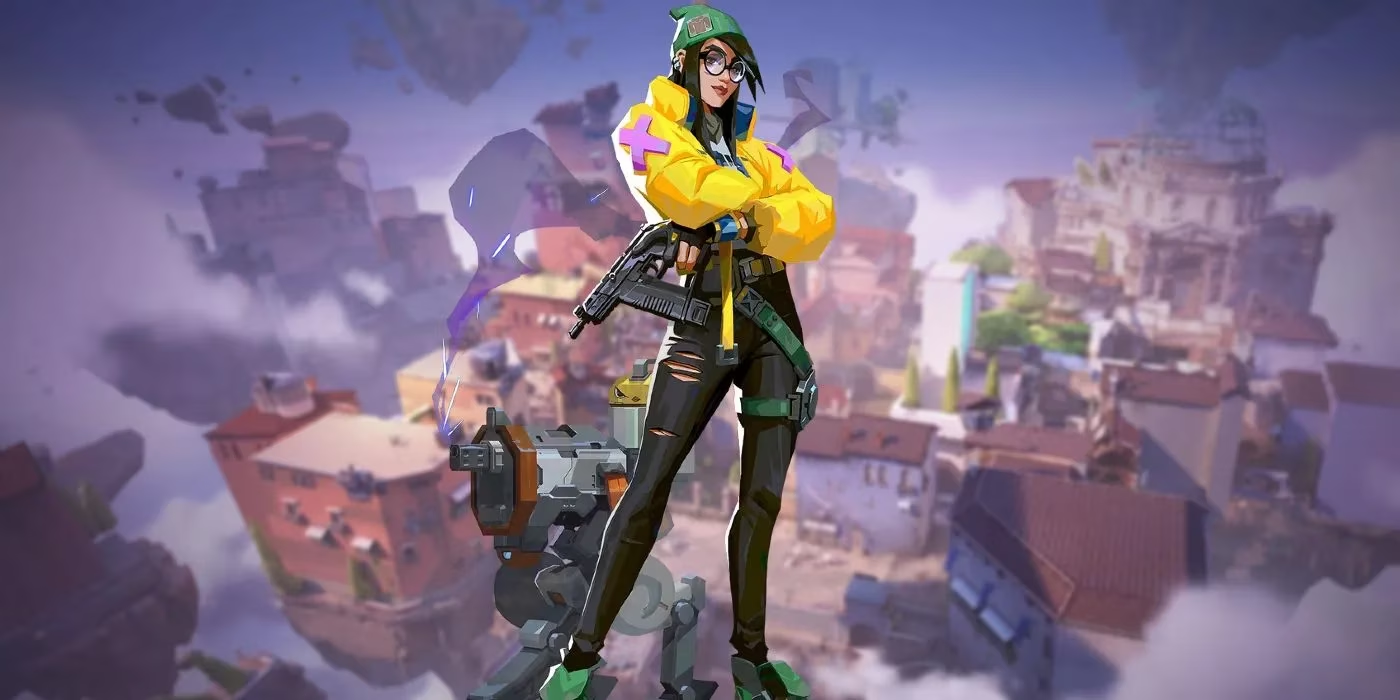
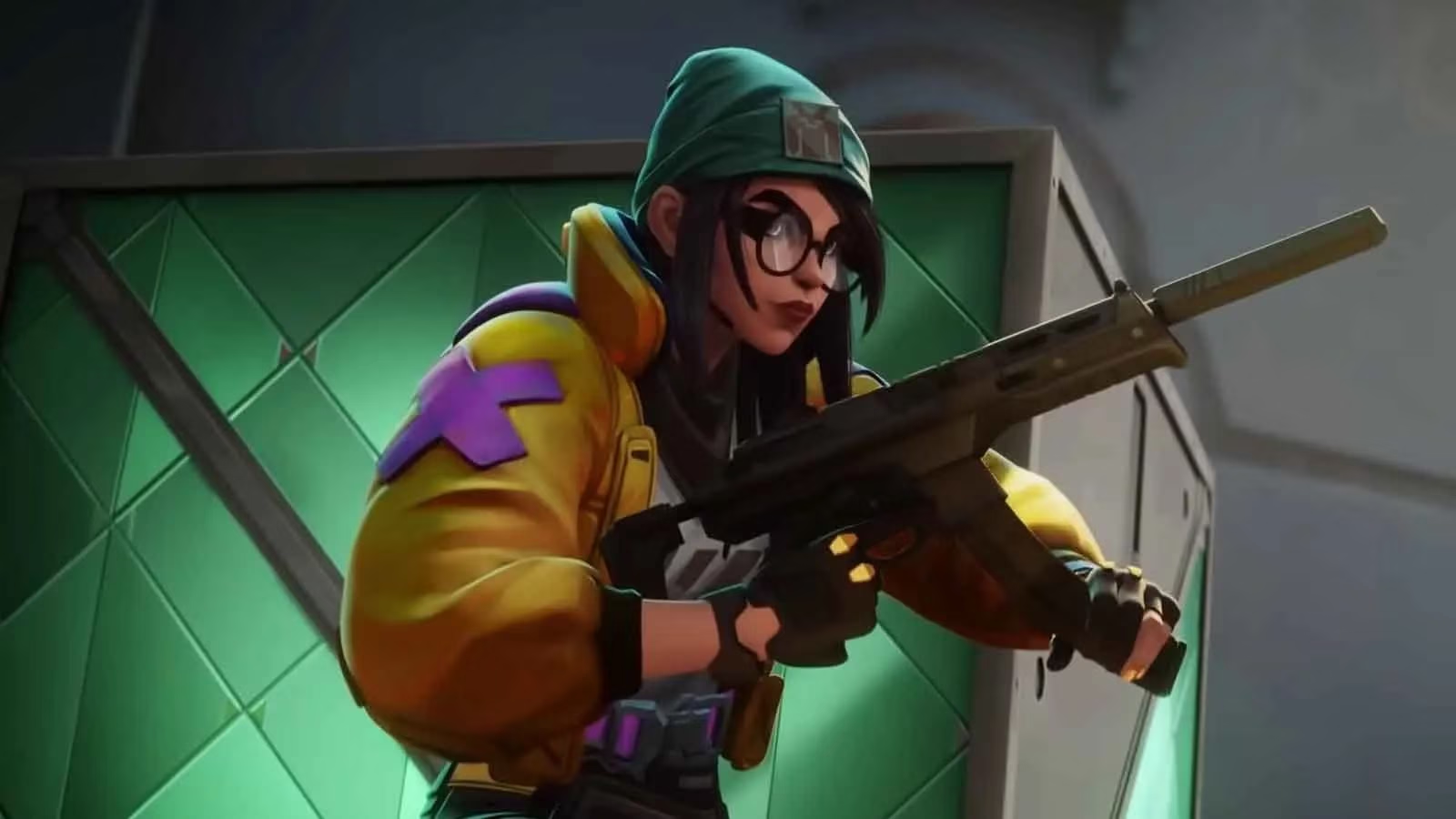
The bug itself is deceptively simple. Killjoy's automated turret, a loyal sentry meant to guard flanks, sometimes suffers from a case of digital amnesia. If an enemy agent peeks into its line of sight and ducks back into cover before the turret finishes its three-bullet salvo, the mechanical guardian does a hard reset. It swivels back to its original, placid facing direction, as if to say, "Enemy? What enemy? I was just admiring this wall." This hiccup is about as common in high-level play as a misplaced smoke, and historically, it's been treated with the same shrug—a minor glitch in the matrix, less disruptive than other accepted competitive oddities. However, in the dying moments of the third map between XSET and FPX, this minor glitch became the plot twist nobody wanted.
In the final, decisive round, with XSET's tournament life on the line, the turret's misleading swivel provided false intelligence, drawing attention to an empty corner. The round—and the series—ended in FPX's favor. Cue the victory celebration. But then, the tournament admins from Riot Games hit pause. What followed was an agonizing, hour-long delay, a period of radio silence from officials that stretched longer than a Jett player's patience waiting for an Operator. To the viewers and FPX, it appeared XSET, still smarting from a previous controversial match, was throwing a Hail Mary challenge to replay the round. The court of public opinion convened instantly and mercilessly on social media.
A Communication Blackout Creates Collateral Damage
Here's where Riot's handling of the situation went from clumsy to catastrophic. Their failure to communicate the investigation's origin to the teams, the players, or the fans created a vacuum, and nature—especially internet nature—abhors a vacuum. It was filled with speculation, accusation, and toxicity. XSET was painted as the villain, a team trying to salvage defeat with a technicality, their reputation becoming as fragile as a Phoenix's ult in a Viper's pit. FPX, forced to reset their emotional high and replay a round they thought they'd already won, were justifiably furious, their victory feeling as hollow as a headshot on a dead body.
It wasn't until post-match interviews that the truth emerged, like a Sova recon bolt finally revealing the hidden enemy. XSET had not requested the review; they were as blindsided as everyone else, already in their post-loss discussion when Riot summoned them back. The decision to replay the round came solely from the tournament officials. This lack of clarity was a disservice to everyone. It turned what should have been remembered as a thrilling, chaotic series—a testament to Valorant's competitive spirit—into a single-issue scandal. Both teams lost in the court of public perception: XSET to unfounded villainy, and FPX to being labeled sore winners, all while navigating a situation as confusing as trying to predict the next Chamber teleport location.
The Precedent Problem: Opening Pandora's Toolbox
The immediate fallout was bad enough, but Riot's ruling set a precedent as slippery as a well-oiled keyboard. By deciding to replay a round due to a long-standing, known bug, they inadvertently opened a door many believe should have remained sealed. The message, whether intended or not, was clear: if a bug might have influenced a critical round, it could be grounds for a replay. This creates a nightmare scenario for future tournaments. Coaches and analysts would be foolish not to scour every VOD, frame by frame, searching for any minor graphical glitch, physics irregularity, or ability interaction that didn't look "perfect." The game could devolve into a post-match litigation simulator, where victories are debated in admin rooms long after the arena lights dim.
Valorant is a complex beast, a symphony of interacting abilities, maps, and mechanics. Bugs are an inevitable part of that ecosystem, and some even become part of the accepted "tech" used by professionals. Riot's patch notes for the turret were famously vague, stating it should "more effectively" track enemies, not that it must do so flawlessly every single time. This ambiguity, combined with their sudden strictness in a high-profile match, highlighted a core failure. In a sport where careers and legacies are on the line, transparency and consistent rules aren't just nice-to-haves; they are the bedrock of competitive integrity.
The Road Ahead: Apologies and Accountability
Looking toward 2026, the lessons from this fiasco must be more than just a footnote in Valorant's history. The immediate steps are clear:
-
Direct Apology: Riot owes explicit, public apologies to both XSET and FPX players for the impossible position and unjust scrutiny they were placed under.
-
Bug Protocol: A clear, public protocol must be established for handling in-game bugs during tournaments. What constitutes a "replay-worthy" bug? Who decides? How is it communicated?
-
Agent Integrity: If a bug is deemed serious enough to alter match outcomes, the relevant agent or ability should be immediately reviewed for a fix or temporarily disabled from competitive play until a solution is found.
In the long term, Riot must build a more robust and player-first competitive framework. They can no longer afford to treat such incidents as one-off administrative errors. The ecosystem has matured, and with it, the expectations for professionalism and care. The goal should be an environment where players feel safe to compete at their peak, knowing the rules are clear and the officials are competent communicators, not silent arbiters. The 2022 Killjoy turret incident should be remembered not for the chaos it caused, but as the catalyst that forced Valorant's competitive scene to grow up. After all, in a game about planting bombs and defusing them, the last thing anyone needs is for the tournament rules themselves to be the ticking time bomb.