
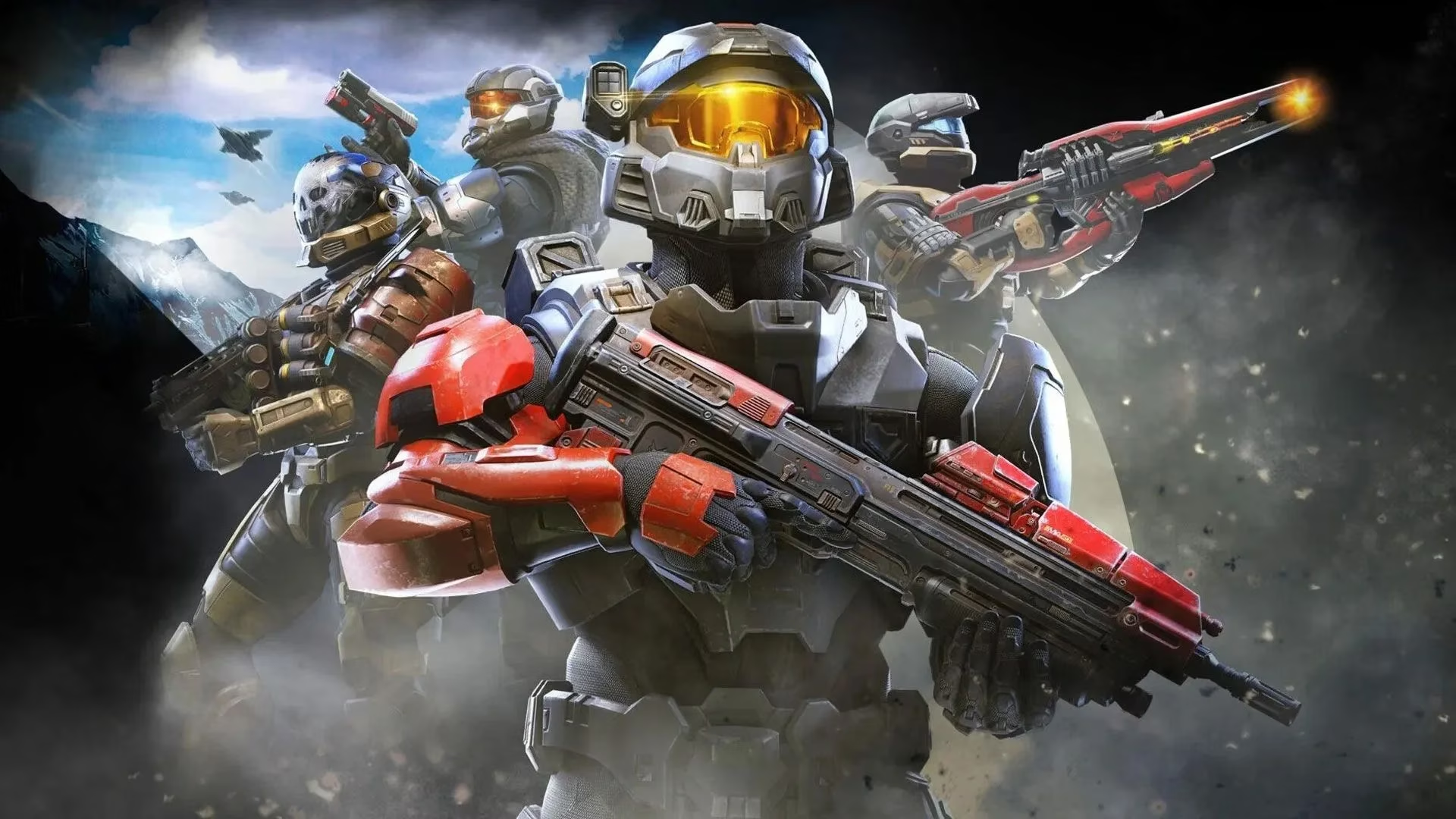
Ever tried to just play a game? For many women, it feels like navigating a maze with no exit. A recent incident, all too familiar, saw a small streamer playing Halo Infinite get absolutely piled on after a perfectly normal in-game death. The comments? The classics: "This is why women shouldn’t play Halo," "Go and play Valorant or something." And that last one... oof, it hits different. Because if you've ever peeked behind the curtain, you know that telling a woman to go play Valorant is like telling someone to escape a fire by jumping into a volcano. It’s a no-win scenario, a loop that just keeps spinning.
The "Solution" That's the Problem
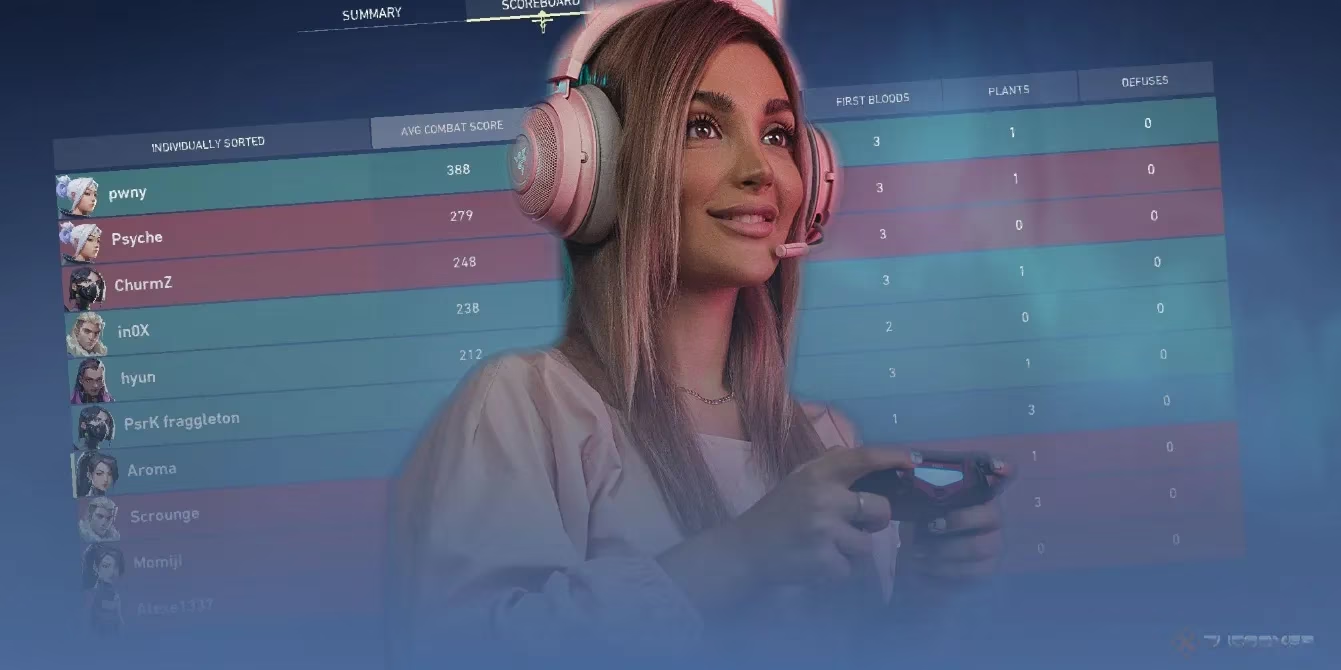
So, you get harassed in Halo. The advice? Go play Valorant. But here's the kicker: one of the executive producers who helped make Valorant admitted she doesn't even solo queue in her own game. The harassment is that bad. Riot employees have shared clips of the absolute garbage women face—hit on, insulted, the whole nine yards. So, if Valorant is out, what's next? Fortnite? Please. With its famously... vibrant... community, that's basically a non-starter too. So the loop is complete: Halo → Valorant → Fortnite → back to Halo, all while being told you don't belong anywhere. It's exhausting, and honestly, kinda pathetic.
The Silence Strategy (And Why It's Not a Fix)
For safety, many players, including the author, adopt a simple strategy: total silence. Mute the mic, mute the chat. Is it ideal for teamwork? Not really. But who ruined the team dynamic in the first place? Spoiler: it wasn't the person just trying to exist and play the game. The author, a trans woman, notes how perception changes everything. When read as male online, support is more common. When read as female? Targeted. It's not a perfect rule, but the thumb is definitely on the scale. This isn't about being "bad at games"; it's about navigating a space where your very presence is sometimes treated as a provocation.
So Where Do Women "Belong"?
Society, media, and a constant drip-feed of harassment have pushed many women toward single-player, narrative, or cozy games. And there's nothing wrong with that. Animal Crossing is a masterpiece, fight me. The problem is when that becomes the only perceived option. The idea that a gritty military shooter is more of a "real game" than a colorful life sim is, frankly, laughable. Games are games. But the choice should be genuine, not forced. The current reality for many is: try a competitive shooter, face a wall of noise, and eventually just... stop. The cycle wins.
Why One Bad Apple Spoils the Bunch
Here's the real gut-punch of online gaming as a woman. It doesn't matter if 99 guys are cool. All it takes is one voice saying, "You don't belong here." Then three things happen, like clockwork:
-
Someone else loudly agrees.
-
The silent majority stays silent. Why risk being called a 'white knight' when you're just trying to relax?
-
You, the target, lose interest. The game loses a player. The community shrinks, becoming more homogenous.
And then you might try Valorant, and the whole sad song starts over.
It's 2026, and this loop feels older than some classic game consoles. The platforms change, the graphics get better, but this core experience for many women remains stuck on repeat. The conversation has moved forward in some spaces, but in the heat of an online match, it can feel like we're decades behind. So what's the answer? There's no easy one. But recognizing the loop is the first step to breaking it. Maybe the real game isn't Halo or Valorant at all—it's trying to find a space where you can just play.