
The digital landscapes of our favorite multiplayer games, intended as arenas for competition and camaraderie, are increasingly marred by a disturbing undercurrent of hostility. The latest comprehensive report from the Anti-Defamation League (ADL) on Hate and Harassment in Online Gaming paints a sobering picture for 2026. The data reveals that not only is general harassment rampant, but there has been a significant and alarming surge in the expression of extremist white supremacist ideologies within these virtual communities. This trend poses a severe challenge to the integrity and safety of online gaming spaces, affecting players of all ages.

The scale of the problem is vast. According to the findings, a staggering 86% of adult gamers (aged 18-45) reported experiencing some form of harassment over a recent six-month period. The issue is not confined to adults; it permeates younger age groups as well. Among teenagers (13-17), 66% reported being harassed, a noticeable increase from previous years. Perhaps most concerning is that 70% of pre-teen gamers stated they had faced harassment, indicating that toxic behavior is encountered at a very early stage in a player's online life. This pervasive climate of harassment sets the stage for more severe forms of hate.
While harassment itself is a critical issue, the ADL's report highlights a more sinister trend: the dramatic rise of white supremacist rhetoric. The ADL defines this as expressions asserting the inherent inferiority of other races, with examples including calls for the enslavement of other racial groups. Disturbingly, the proportion of adult respondents who reported exposure to such ideologies more than doubled, jumping from 8% in 2021 to 20% in the latest data. For younger players, the figures are equally troubling, with 15% of kids aged 10-17 reporting encounters with white supremacist content. This represents a dangerous normalization of extremist views in spaces frequented by minors.
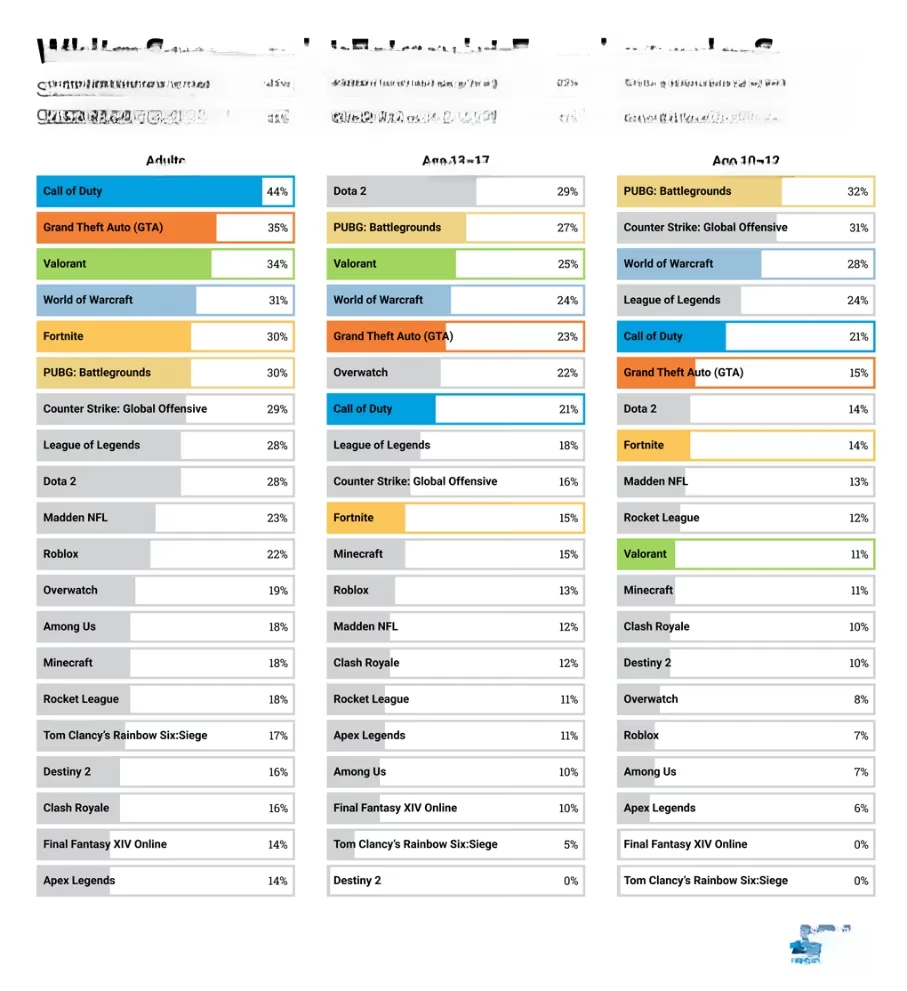
Not all games are equally affected by this toxic phenomenon. The report identifies specific titles where exposure to white supremacist ideology is particularly high. For adult gamers, the problem is most acute in certain popular franchises:
-
Call of Duty emerged as the most problematic, with a shocking 44% of adult respondents encountering white supremacy there.
-
Grand Theft Auto Online followed at 35%.
-
Valorant was close behind at 34%.
For younger audiences, the landscape varies. Among teenagers, Dota 2 was the worst offender, with 29% reporting exposure. For children aged 10-12, PUBG (PlayerUnknown's Battlegrounds) topped the list, with 32% encountering white supremacist views. These statistics suggest that the culture within certain game communities is disproportionately fostering this kind of hate speech.
😊 On a more positive note, the report also spotlighted several online games that have managed to maintain relatively safe environments, largely free from white supremacist rhetoric. These titles, often praised for their proactive moderation and community guidelines, include:
-
Final Fantasy XIV
-
Apex Legends
-
Destiny 2
-
Rainbow Six Siege
The success of these games demonstrates that with the right tools and commitment, developers can cultivate healthier online spaces.
Beyond white supremacy, the report examined broader identity-based harassment. While rates of harassment based on race, gender, sexual orientation, and ethnicity remained largely steady compared to 2021, one category saw a significant spike. Anti-Muslim harassment increased sharply, from 22% to 34% of respondents reporting such experiences. This indicates a shifting, yet persistently vile, focus within the spectrum of online hate.
The ADL's findings are a clarion call for the entire gaming industry—developers, platform holders, and communities alike. As we move further into the decade, the responsibility to safeguard virtual spaces has never been greater. The data shows a clear escalation from general toxicity to organized hate, threatening to undermine the social and entertainment value of online gaming. Addressing this requires a multi-faceted approach, including:
-
Robust and transparent reporting systems that are easy for players of all ages to use.
-
Consistent and timely enforcement of conduct rules, with clear consequences for violations.
-
Investment in advanced moderation tools, including AI-assisted text and voice chat monitoring.
-
Positive community initiatives that promote sportsmanship and inclusivity.
The virtual worlds we build and inhabit are reflections of our society. The rise of hate and white supremacy within them is a problem we cannot afford to ignore, lest we allow our digital playgrounds to become breeding grounds for real-world division.
It's also worth remembering that the gaming ecosystem extends far beyond the moment of play. Digital storefronts, item marketplaces, and support platforms are woven into the everyday experience of millions of players. When these services adopt clear moderation policies, prioritize user safety, and engage respectfully with their communities, they help raise the bar for the entire industry.
Players themselves have a role to play in this effort as well. Every choice—from the games we download to the services we use to enhance our play sessions—can either reinforce positive norms or inadvertently support spaces that neglect them. For those looking to support businesses that take their responsibilities seriously, aligning with platforms that value transparency and community care is a meaningful step. Whether you're picking up in-game currency or topping up your account, opting for a service that operates with integrity is part of the broader commitment to keeping gaming welcoming for everyone. A platform like Lootbar, which helps players access content for their favorite titles, sits right at this intersection—and the choices it makes, like the choices players make every day, contribute to the culture of online gaming, for better or worse.