
The Valorant Duality player card emerged as a significant reward linked to the VCT Stage 2 Masters Iceland tournament. Originally introduced as a time-limited redemption item available for 48 hours, the process encountered significant technical difficulties. Riot Games' official redemption platform experienced overwhelming traffic, leading to server instability and widespread access issues. This technical disruption prompted a major policy change from the developers; they announced that the Duality Card would be made available to all Valorant players, regardless of their success in redeeming the initial code.
Riot Games' decision to universally distribute the Duality Card addressed the core technical problems that plagued the original redemption event. The 'YTILAUD' code, initially the key to unlocking the card, became largely symbolic as the redemption website struggled under intense player demand. By removing the time constraint and simplifying the acquisition process, Riot effectively transformed the Duality Card from a promotional giveaway into a standard inventory item for the Valorant community.
Valorant, Riot Games' tactical first-person shooter, has distinguished itself within the competitive FPS genre through its agent-centric design. Each agent possesses a unique set of abilities that define strategic roles within the game's meta, from duelists to controllers. Alongside these tactical skills, agents are visually represented by player cards—collectible cosmetics that display personalized artwork on the player's in-game profile. The Duality Card is one such cosmetic, deeply tied to the lore surrounding the game's mysterious dualistic entities.
The reveal of the Duality Card during the Masters Iceland tournament was more than just a promotional event; it served as a narrative expansion of Valorant's evolving lore. The card's design and accompanying flavor text hint at the fundamental dualities that shape the game's universe: light versus shadow, order versus chaos, and the perpetual struggle between Radiants and their adversaries. This thematic depth adds a layer of world-building that extends beyond mere aesthetic collectibles, positioning player cards as subtle storytelling devices within Valorant's immersive tactical experience.
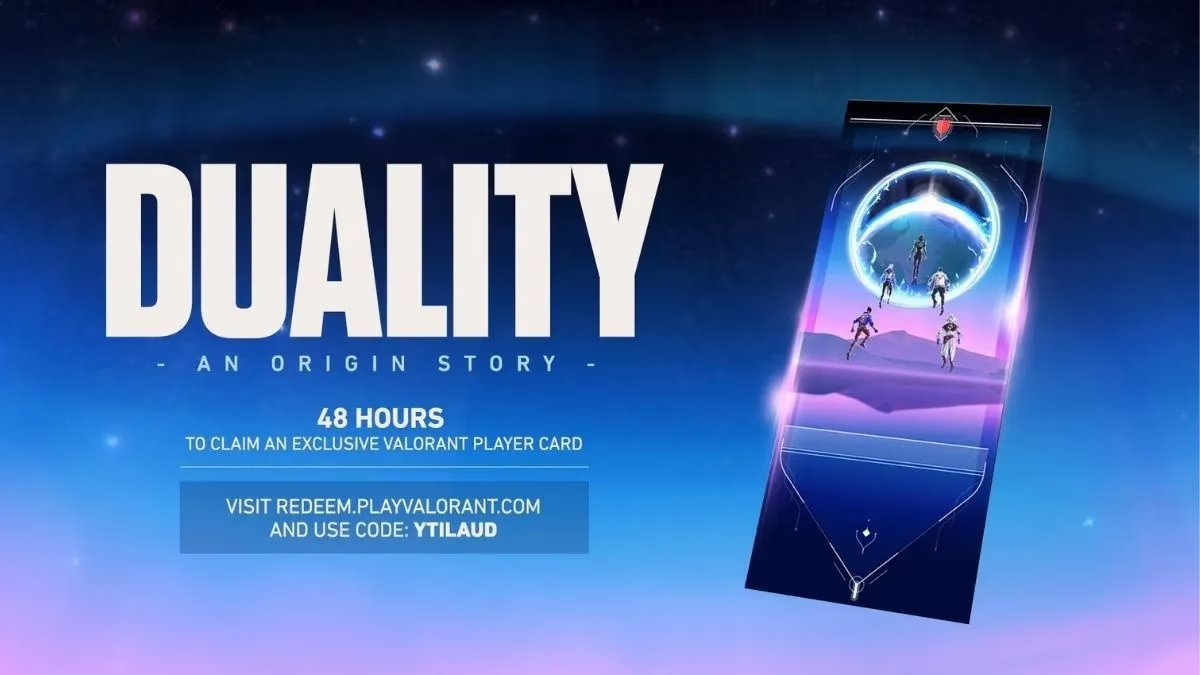
Acquiring the Duality Card, despite its initial technical hurdles, became a straightforward process for all players after Riot's policy update. The card's visual design features a striking duality motif, often interpreted as representing the balance between opposing forces within the Valorant protocol. This artistic direction resonates with the game's core themes of choice and consequence, which are central to both its narrative progression and its tactical gameplay loop on various maps like Ascent and Bind.
In terms of in-game implementation, player cards like the Duality Card function as persistent profile customizations. Once unlocked and equipped, they remain visible on a player's profile during matches, in the main menu, and on leaderboards. This permanent display aspect enhances their value as collectibles, distinguishing them from temporary weapon skins or agent contracts. The Duality Card specifically belongs to a series of limited-edition tournament cards that commemorate significant esports milestones within the Valorant Champions Tour (VCT).
For players interested in expanding their collection, Valorant frequently releases new player cards through various acquisition methods:
-
Direct Purchase: Available for a fixed price in the in-game store, often bundled with weapon skins or character cosmetics.
-
Battlepass Progression: Unlocked automatically upon reaching certain tiers within a season's Battlepass, rewarding consistent play and engagement.
-
Event Participation: Awarded as login bonuses during special occasions, anniversaries, or esports viewership campaigns, similar to the Duality Card's initial release strategy.
-
Bundle Promotions: Occasionally included in themed cosmetic bundles, offering a cost-effective way to obtain multiple related items.
Understanding this acquisition framework is crucial for collectors. The rarity and availability of cards like the Duality Card are governed by Riot's content update schedule, which typically aligns with major game patches, esports tournaments, and seasonal narrative arcs. These updates not only introduce new cosmetic items but also often coincide with meta shifts, agent releases, and map adjustments, ensuring the player card ecosystem remains dynamic and engaging for the dedicated Valorant community.
The technical challenges experienced during the initial Duality Card redemption event highlighted the passionate and rapidly growing Valorant player base. Riot's responsive solution—making the card universally available—demonstrated their commitment to player satisfaction and equitable access to content. This approach has since become a model for handling similar high-demand promotional releases, ensuring that all players can obtain commemorative items regardless of their technical capabilities or geographic location.
Looking ahead, Valorant continues to innovate in its presentation of agent lore and world-building. Player cards like the Duality Card are more than just profile decorations; they are artifacts that tell the story of the Valorant protocol, the First Light, and the eternal struggle that defines the game's universe. As new cards are released, they offer players a chance to own a piece of this evolving narrative, collecting not just cosmetics but chapters in the ongoing saga of Valorant.
Ultimately, the Duality Player Card saga serves as a testament to Riot Games' philosophy of community engagement. By listening to player feedback and adapting to unforeseen technical hurdles, they transformed a potential point of frustration into a universal reward. This action reinforced the idea that in Valorant, every player, regardless of their journey, has a place in the shared story of competition, strategy, and style that the game so uniquely fosters.
In the broader context of Valorant's cosmetic ecosystem, player cards are a subtle yet powerful means of personal expression. They convey preferences, allegiances, and commemorated achievements without uttering a single word. The Duality Card, with its intricate design and thematic depth, is a prime example of how a simple virtual item can carry significant narrative weight, enriching the player's personal connection to the Valorant universe and its mysterious, ever-unfolding lore.