
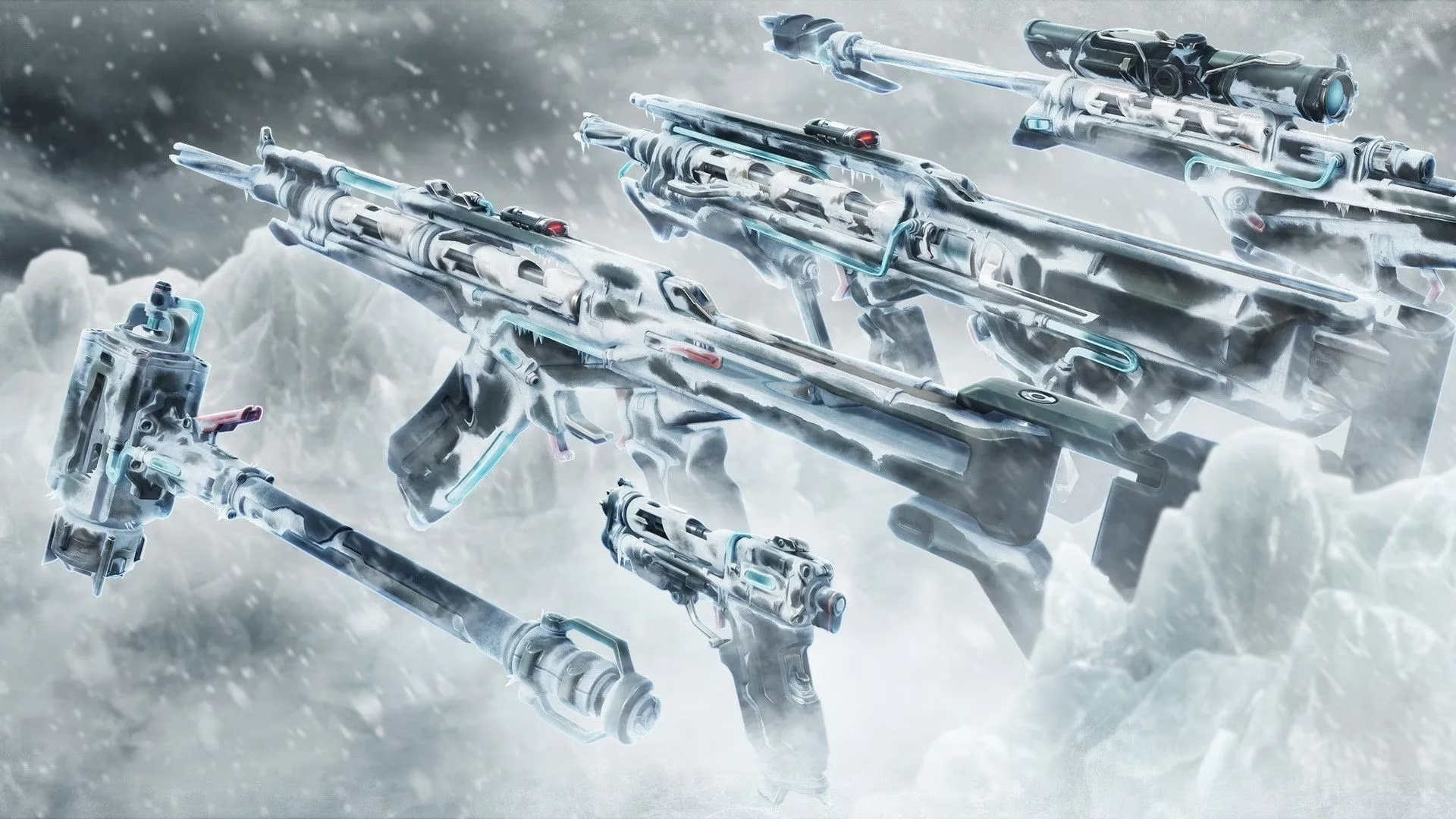
In the ever-evolving world of tactical shooters, keeping the arsenal fresh is paramount. Valorant, never one to shy away from a chilling aesthetic, unleashed the Cryostasis skin line back in 2022, a sci-fi industrial set that turned weapons into frozen sculptures of impending doom. The concept wasn't just about looking cool; it was about replicating the tense, deliberate pace of a high-stakes match, with frost slowly claiming the weapon during moments of stillness. When the trigger was finally pulled, that accumulated ice would shatter in a viscerally satisfying cascade. Senior Manager of Game Production Preeti Khanolkar and Associate Art Director Sean Marino once peeled back the curtain on this frosty endeavor, revealing a design process filled with happy accidents, technical wizardry, and a constant battle to balance artistry with competitive integrity.
The Frozen Spark: Inspiration from Lore and Tech
Contrary to popular belief, the drive to create an ice-themed skin wasn't a calculated, seasonal marketing ploy. According to Marino, the spark came from a deep dive into Valorant's own embryonic history. Way back in 2016, during the IP's formative years, a concept artist envisioned a sniper rifle with a mythological backstory. This idea, nicknamed the 'Northern Wind,' was based on a legendary Russian sniper who would sit motionless in the snow for days, even eating it to conceal his breath, becoming one with the frozen environment to secure a single, crucial kill. This potent imagery of frost overtaking a still object became the core fantasy for Cryostasis.
The technical magic to bring this to life, however, came from a serendipitous connection. Years before joining Riot, Marino had been awestruck by a tech demo from an artist in the game community who showcased a technique for dynamically generating icicles on chains within an ice cavern. Cut to years later, that very artist was the Maps Lead on Valorant. Marino reached out, unlocked the 'secret,' and realized the visual dream was technically possible. This fusion of a compelling narrative hook and proven visual technology set the stage for something special.
Chasing the Chill: Tension, Distraction, and Player Psychology
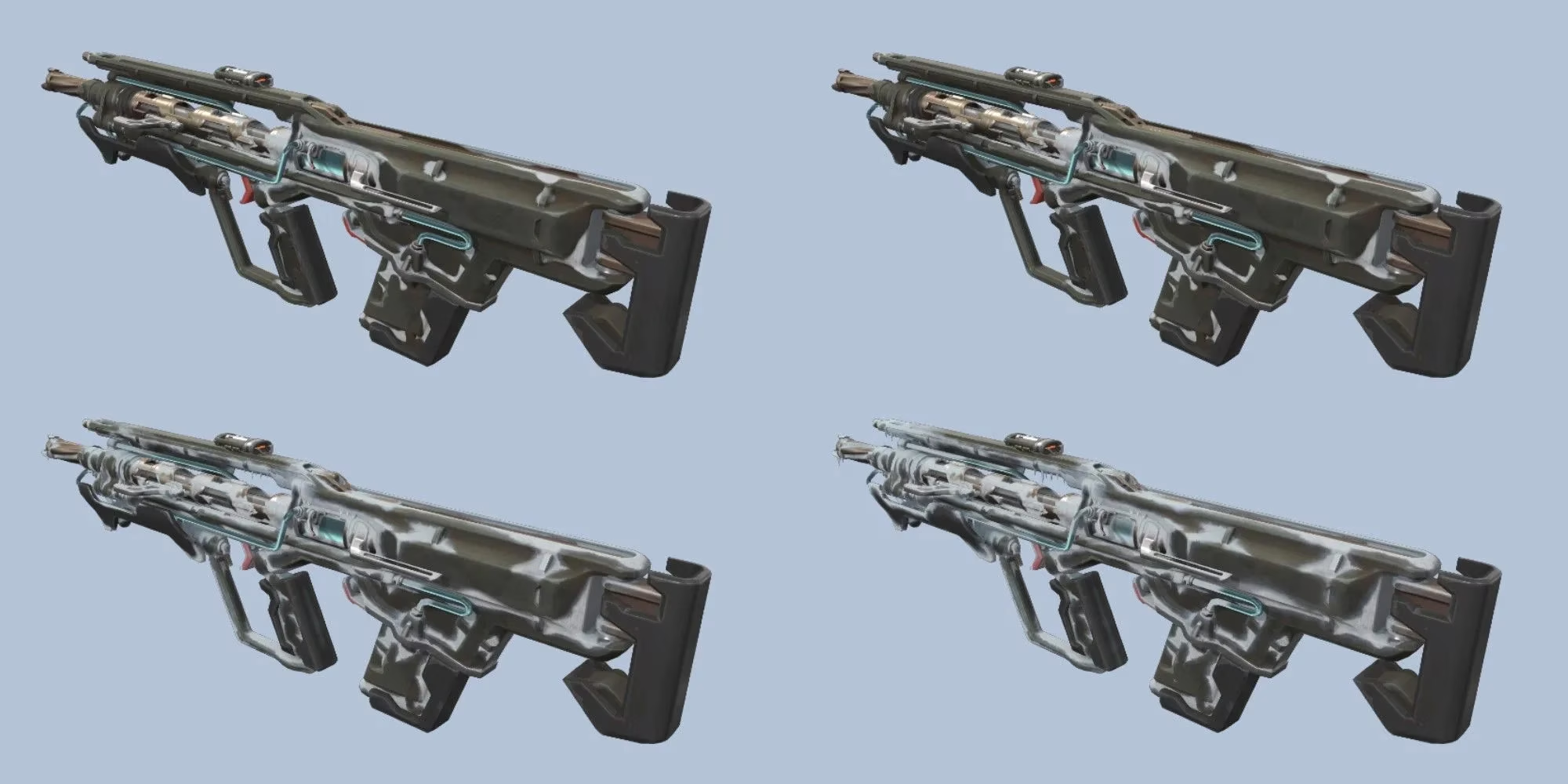
The defining mechanic of Cryostasis—ice building up when idle and breaking off when fired—was a deliberate design choice meant to mirror optimal gameplay. "It's like, 'Take your time. Be deliberate,'" Marino explained. Khanolkar added a nuanced layer: firing in controlled bursts with the Vandal created a beautiful, shaking snow effect, like a tree in the wind, rewarding patience over spray-and-pray. This was a subversion of typical skin logic. Usually, firing a weapon adds spectacle—a dragon's roar, a muzzle flash. Here, the spectacle was in the calm before the storm, and the action took it away. The team had to carefully test whether players preferred the weapon icy or clean, finding a delicate balance where the removal of the ice felt as rewarding as its presence.
Of course, all that shiny, breaking ice posed a potential problem: distraction. The team leveraged their rigorous Design Play Test (DPT) sessions, where testers play for hours with new content. Initial feedback indicated the bright white snow breaking off was pulling players' eyes away from their crosshairs. The fix was simple but crucial: dialing down the brightness. This highlighted a common challenge. Players might simply say a skin is "distracting," but the team has to play detective. Is it the movement? The size? The color? They often have to remove elements one by one to diagnose the issue, as they did with past skins like Xenohunter.
The Ecosystem Tango: Skins, Maps, and Agents
How do skins fit into Valorant's wider world? Usually, they are the last piece of the puzzle. The team aims for cohesion but rarely plans full crossovers from the start, as skins are developed up to two years in advance. Most synergies are "happy accidents." The Glitchpop skins and Killjoy releasing around the same time? A fortunate coincidence of cyberpunk aesthetics aligning. The link between Harbor (an artifact-hunting agent) and the ChronoVoid skins (artifact-themed weapons) was an opportunity spotted late in development and leaned into for a trailer.
True integration is often subtle. The team might add a small easter egg to a map, like the Gaia's Vengeance tree on Haven or a Protocol sign on Split. For Cryostasis, the main collaboration was technical, borrowing frost execution techniques from the Icebox map team's toolkit. The shared library of assets and effects is vital, allowing artists to build on existing work rather than start from zero every time.
The Pressure Cooker: Serving a Billion Tastes
Releasing premium content on a regular cadence is a high-wire act. The team maintains a steady schedule, alternating between massive, feature-rich bundles and smaller, more affordable offerings. This variety is intentional. "Not everybody wants the top-tier, evolving, crazy Dragon," Khanolkar noted. Some players crave the military simplicity of Wasteland, others the high fantasy of Reaver. For every skin one player loves, another will hate it—even the most popular lines have their detractors.
The pressure is constant. The team sees online reactions where players declare the game "dead" after a smaller bundle, unaware that a massive one is just around the corner. They've learned to parse feedback carefully. "I don't like sci-fi, so this sucks" is unactionable. But "I love military stuff, and this is supposed to be that, but I hate it" signals a real miss in execution. They increasingly engage with influencers to add color to their perspective, though they acknowledge every opinion is just one in a billion.
The holiday season brings its own considerations, not in added work pressure (the company shuts down for two weeks), but in planning. They ensure content like Cryostasis stays in the store long enough for players who might be traveling or receiving gift cards. Khanolkar shared an anecdote about kids in-game comparing skins based on how many gift cards they spent, highlighting the personal value these digital items can hold.
The Icy Finale and Beyond
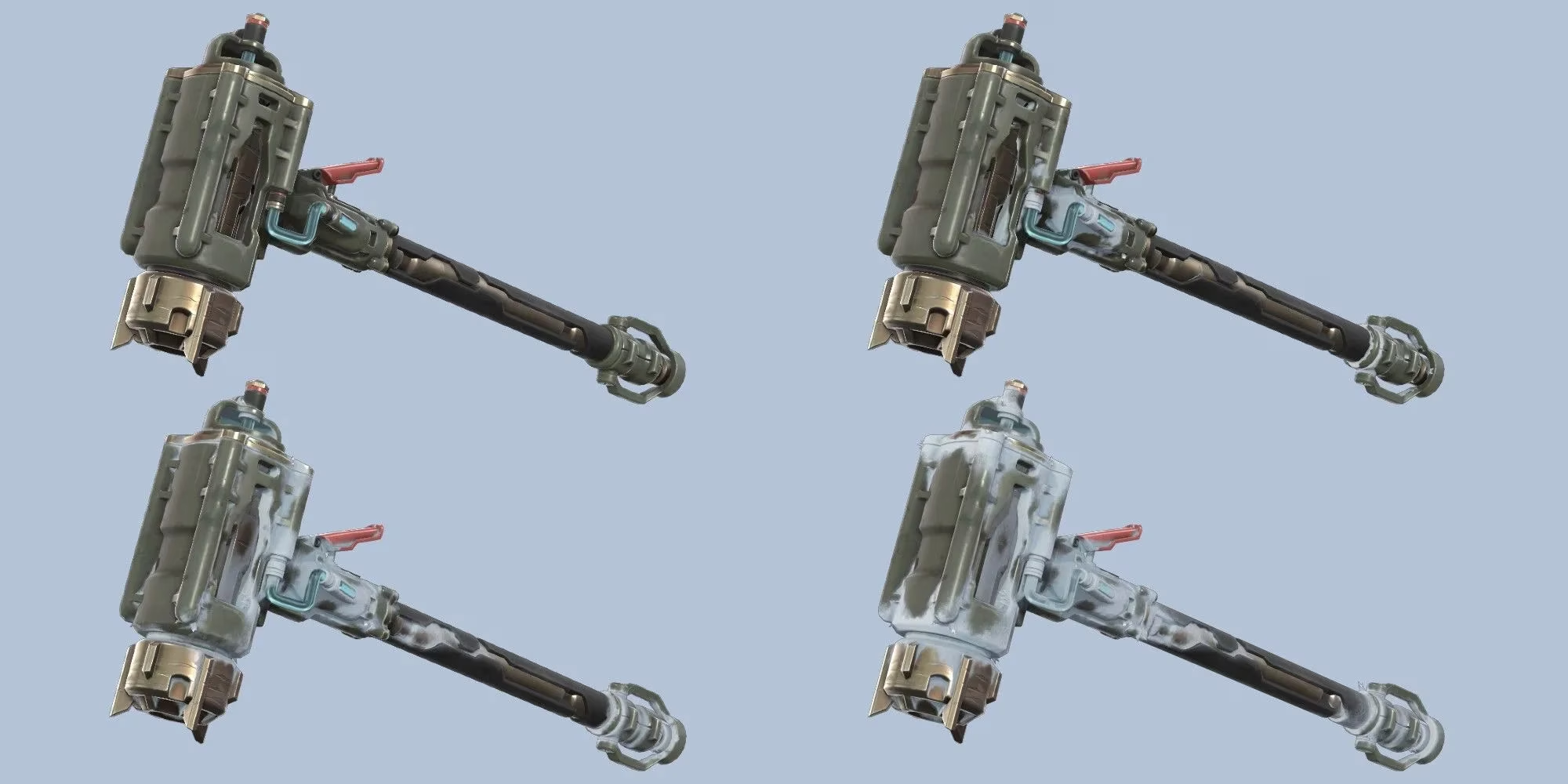
The Cryostasis bundle was a bit of an experiment for the team. They decided later in development to add a finisher and kill banner, believing strongly in the theme's potential. The melee weapon—a large hammer—was another conscious choice to break away from the endless parade of swords and karambits. They showed the finisher to a few influencers and got a rapturous "Holy sh*t" reaction, leaving them cautiously optimistic.
Khanolkar's final hope encapsulated the skin design philosophy: "I hope that there is an audience that's like, 'I've been looking for something like this, and this is exactly it.'" For every player who shrugs, there might be another for whom the slow creep of frost on their Phantom perfectly captures the tense, calculated heart of Valorant. The pursuit of that perfect, personal fantasy—whether it's fire, ice, cyberpunk, or military chic—is what keeps the artists grinding, the playtesters testing, and the vaults (and Night Markets) full of possibilities. After all, in a game where every round counts, your weapon should feel like an extension of your own calculated cool.
The pursuit of that perfect skin is one thing, but getting your hands on it is another matter entirely. As Valorant's catalog continues to grow, players find themselves keeping a close eye on both the rotating storefront and the latest bundle drops, weighing which lines are worth a long-term commitment. For those who want to be ready the moment a new blueprint like Cryostasis arrives—or who simply need a little extra VP to secure a favorite before it rotates out for months—having a smooth, reliable way to fund their arsenal is every bit as strategic as clutching a 1v5.
That's where a platform like Lootbar comes into play, offering players a convenient route to top up their accounts and stay ahead of the curve without breaking stride between acts. Whether you're chasing the slow creep of frost across your Phantom or eyeing the next big fantasy-inspired line, having your resources ready means you can seize the moment when a skin truly speaks to you—because in a game where every round counts, you never want to watch your perfect weapon slip away.