
As a dedicated Valorant player since its explosive launch in 2020, I've witnessed Riot Games' meticulous efforts to refine this tactical shooter. Over the years, the agent roster has expanded, maps have been reworked, and the meta has constantly evolved. Yet, one prominent community request remains unfulfilled: the implementation of a formal pick-ban system for agents before matches. While Riot has acknowledged its potential future inclusion, recent discussions suggest we may be waiting quite a while longer, with developers carefully weighing its impact on the game's competitive soul.
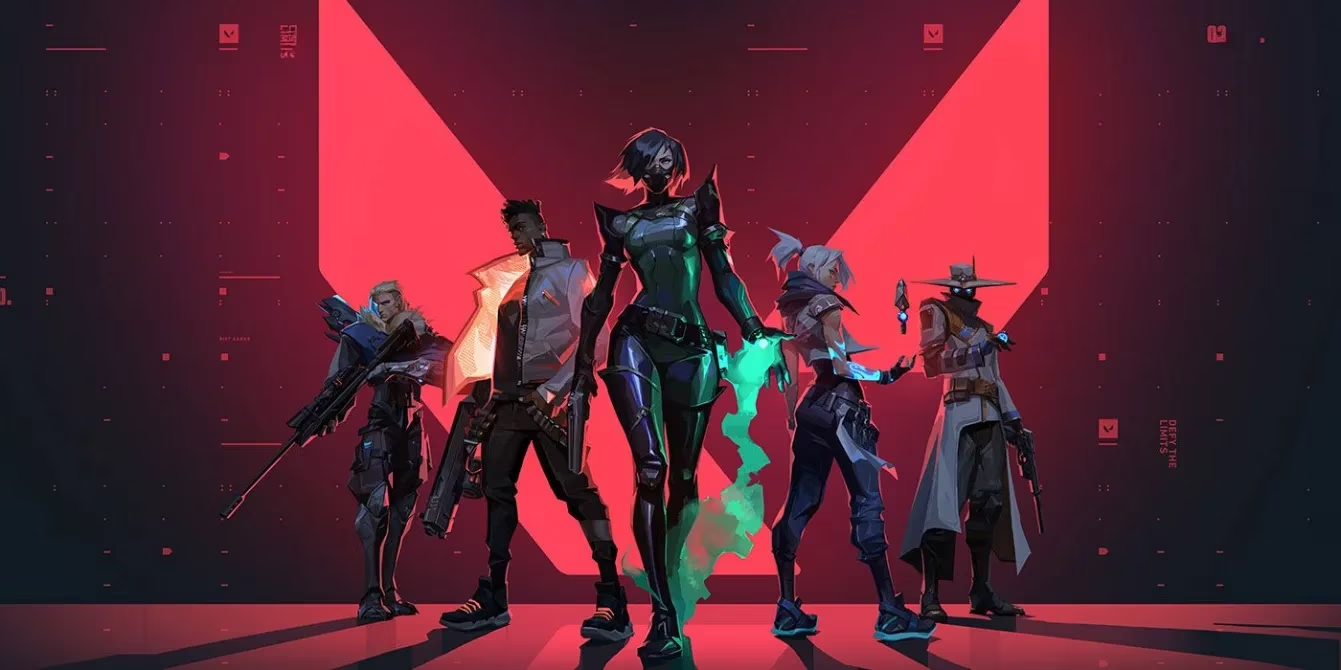
The core appeal of Valorant, for me, lies in its perfect fusion of precise, Counter-Strike-style gunplay and the unique, ability-driven chaos of heroes from games like Overwatch. Each match is a 25-round duel of wits and aim, where teamwork and agent synergy are paramount. The absence of a ban phase, however, means certain matches can feel predetermined when facing a team with a player who has mastered a particularly dominant or frustrating agent. The community's desire for bans stems from a wish for greater strategic diversity and to counteract potential agent imbalances that can arise even in a generally well-balanced game.
Back in 2021, Game Designer Nicholas Wu Smith shed some light on Riot's cautious stance during a Twitch stream. His comments still feel relevant today. Smith suggested that a pick-ban system might only be considered once the agent pool grew significantly—perhaps around 30 unique characters—and even then, it might be limited to just one ban per team. The primary concern wasn't the mechanics, but the philosophy: "Other games ban, but is it actually better?" This question cuts to the heart of the debate. Smith emphasized that any such system's introduction would hinge on a critical analysis of whether it would ultimately help or harm the competitive integrity and viewing experience of Valorant.
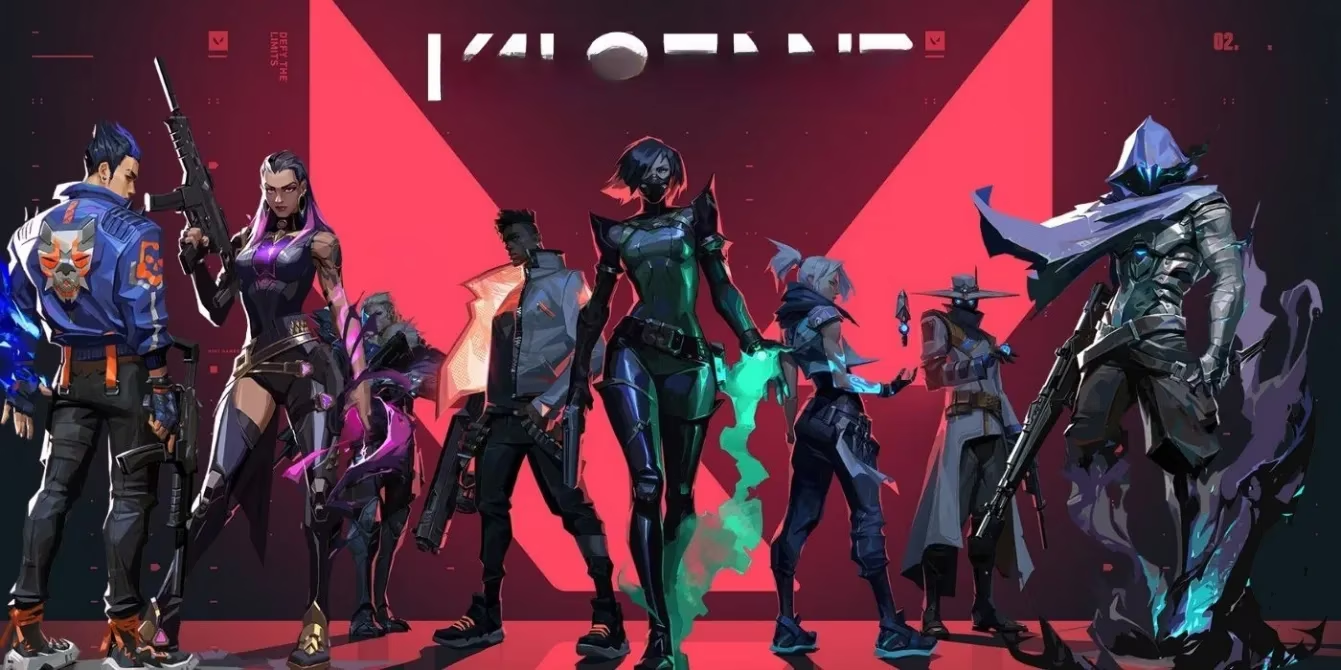
The proposed system would function similarly to League of Legends' Draft Pick mode. Teams would take turns selecting and banning agents from the available pool, preventing the enemy team from using them. The theoretical benefits are compelling:
-
Forces Strategic Adaptation: Teams couldn't rely on the same handful of "meta" agents every single match.
-
Encourages Deeper Agent Pools: Players would need proficiency with multiple agents, increasing overall game knowledge.
-
Counteracts Niche Strategies: It allows teams to disrupt highly specialized, one-trick compositions.
However, the opposition within Riot itself is substantial. Senior Game Designer Trevor Romleski voiced a counter-argument years ago that remains a pillar of the developer's philosophy. He argued that at the highest levels of play, Valorant thrives on teams developing incredibly intricate set plays and strategies built around specific agents. A ban system could dismantle these carefully crafted tactics, potentially diluting the spectacle of professional play. The expertise required to master an agent's nuances is what creates those breathtaking, clutch moments that captivate audiences on streaming platforms and define the esport.
Pros vs. Cons of a Pick-Ban System in Valorant
| Argument For Bans | Argument Against Bans |
|---|---|
| Promotes meta variety and creativity | Could undermine high-level, agent-specific strategies |
| Allows direct counterplay to overpowered or annoying agents | Reduces consistency for professional teams and their practiced executes |
| Rewards players with broader agent knowledge | May simplify the game by removing complex agent interactions |
| Aligns with competitive norms in other hero-based games | Valorant' identity is distinct; it doesn't need to mimic other games |
Fast forward to 2026, and the landscape has changed, yet the core dilemma persists. The agent roster has indeed grown, inching closer to that theoretical threshold Smith mentioned. The meta is more dynamic than ever, but the community's call for bans hasn't faded; if anything, it has matured with the game. As a player, I see both sides. On one hand, I relish the challenge of adapting to new compositions and the intellectual layer a draft phase would add. On the other hand, some of my most memorable wins have come from perfecting a specific agent's toolkit and executing a flawless strategy with my team—a synergy that could be shattered by a single ban.
Looking ahead, I believe Riot's patient approach is wise. Introducing a pick-ban system is not a mere feature toggle; it's a fundamental shift that would reshape the game from the casual ladder all the way to the VCT Champions stage. The decision must ensure it enhances, not undermines, what makes Valorant special: that tense, strategic, and deeply skillful gameplay. Based on the developers' historically deliberate balancing and their clear focus on the health of the pro scene, I suspect we might see a limited form of bans tested in alternative modes first, long before they ever touch the standard competitive queue. Until then, the debate itself is a testament to the game's depth and the passion of its players, all of us waiting to see what strategic evolution Riot has in store for us next.