
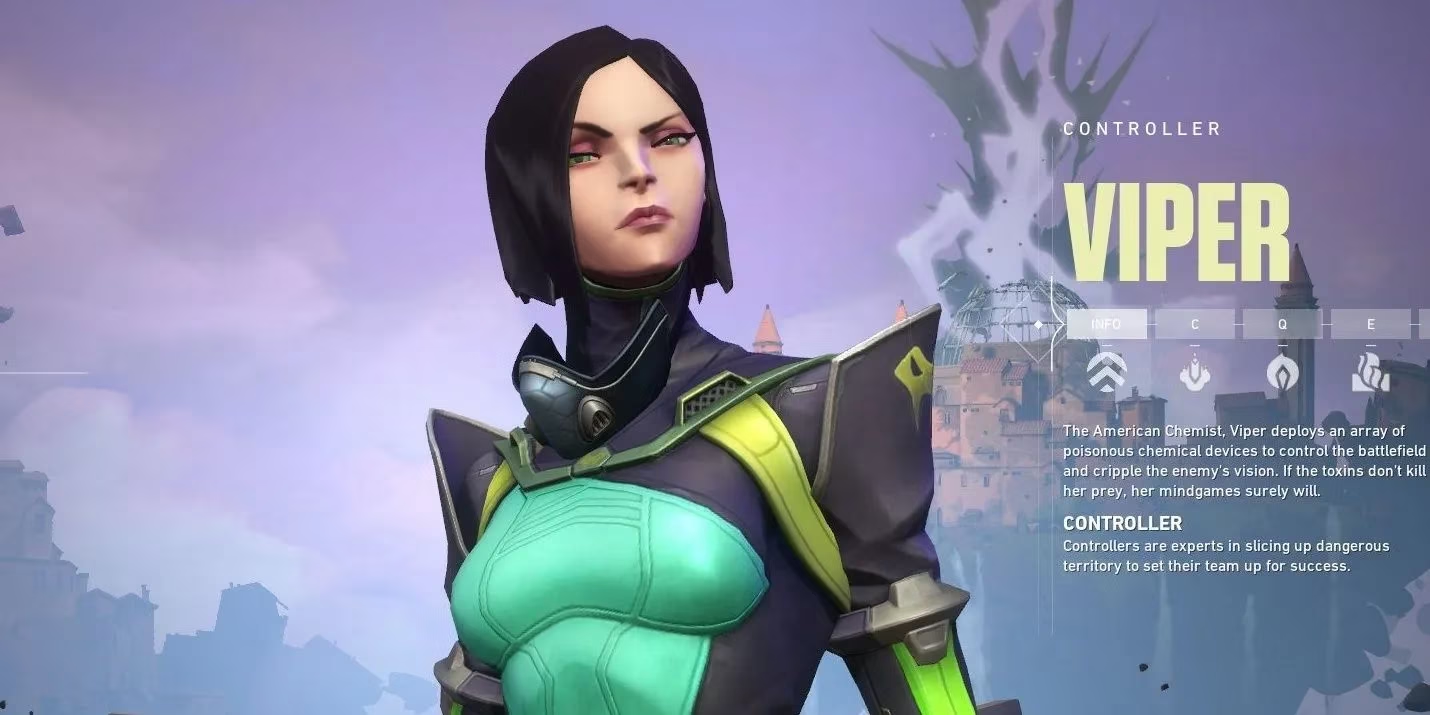
The smell of ozone and chemicals is a constant companion in my lab, a scent far more familiar to me now than any other. My name is Sabine, but in the heat of battle, they call me Viper. I was there at the beginning, in the unsettling quiet after First Light reshaped our world. I've seen Radiants rise, some for good, others... not so much. My story isn't just about toxins and clouds of decay; it's a tale of transformation, from a past I seldom discuss to becoming a founder of the very Protocol that now defines my present. What drives a scientist to trade a healer's touch for a poisoner's sting? Let me tell you.
6. The Controller's Domain
My effectiveness, like any agent's, is a calculation. A formula of map geometry, team strategy, and the cold calculus of offense versus defense. I've found my optimal environments are often the claustrophobic ones—maps like Ascent, Bind, or the now-retired Split with its three sites. In these spaces, my Toxic Screen becomes more than an ability; it's a surgical tool to divide the battlefield, cutting enemy sightlines and allowing my team to seize control. While I can hold a site on defense, my true potential is unlocked on the attack. The ability to blind with a wall of venom, or lay a Snake Bite upon the spike to create an impassable pool of acid, is invaluable for securing a plant. And my ultimate? Viper's Pit. Within that swirling, toxic mushroom cloud, the enemy's health plummets to a fragile sliver, their outlines glowing like targets in a shooting gallery. For my team, it's a haven. For the enemy, it's a tomb. A near-guaranteed victory when pushing a site.
5. The American Chemist: More Than a Moniker
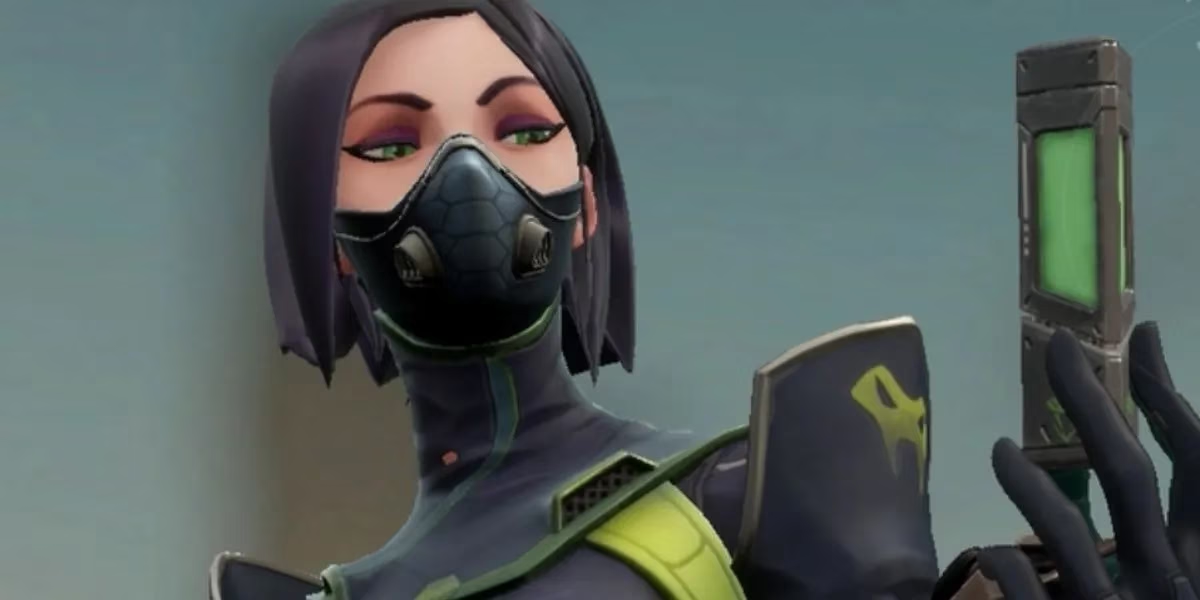
'The American Chemist' is not just a title from a biography file; it's a testament to a lifetime of study. My work has always been about understanding molecular structures, about the delicate balance between stability and volatility. The old battle pass card... yes, the one that showed me facing Reyna. The lower half, showing a woman holding a child's hand, sparks questions I'd rather leave unanswered. Was it Reyna? Someone else? The implication of manipulation, of altered biology, hangs in the air like one of my poison clouds. The animosity between Reyna and me is no secret. It's a cold, calculated tension, born from a past that involved more than just rivalry on the battlefield. Sometimes, the most potent toxins aren't brewed in a lab, but forged in broken trust.
4. A Toxic Arsenal: My Tools of the Trade
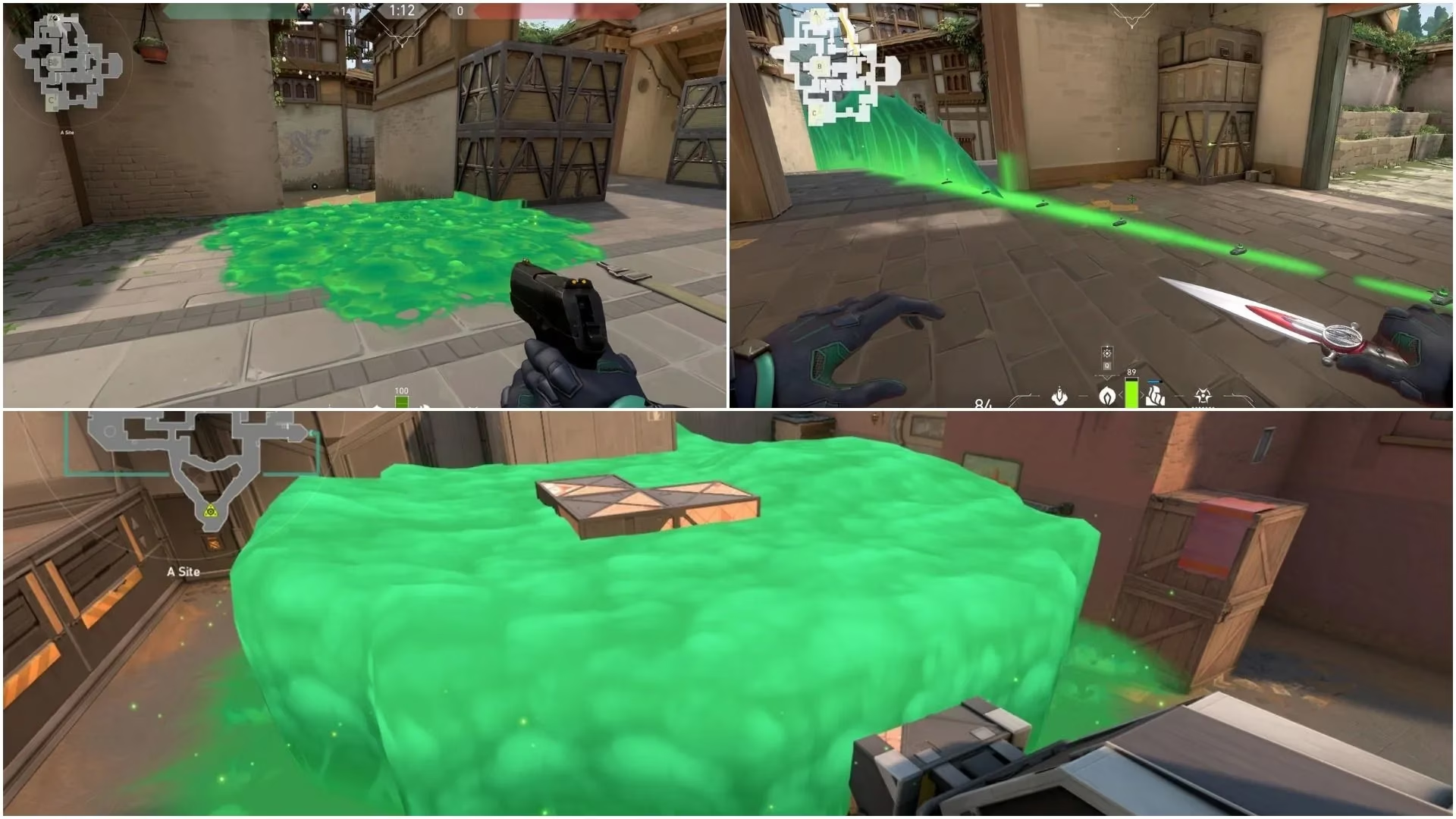
My reputation is built on a foundation of corrosive science. Every ability is an extension of my research:
-
Snake Bite: A vial of concentrated acid. Its primary function is area denial, particularly for spiked bombs. Watching an enemy hesitate before diving into that sizzling pool is a small, personal victory.
-
Poison Cloud: A deployable emitter that projects a large, lingering gas cloud. It's a tool for obscuration and area control, though it requires careful management of my suit's toxin fuel reserves.
-
Toxic Screen: A long, towering wall of noxious fumes. It functions similarly to the cloud but on a grander, linear scale. The key weakness is the same—fuel management. I cannot sustain it indefinitely.
-
Viper's Pit (Ultimate): My magnum opus. This ability creates a massive, domed cloud of toxins. Inside, enemies are decayed, disoriented, and highlighted. My rule within the Pit is simple: I must remain inside to sustain it. It becomes my kingdom, and intruders are unwelcome guests.
3. A Founder's Burden: Building the Protocol
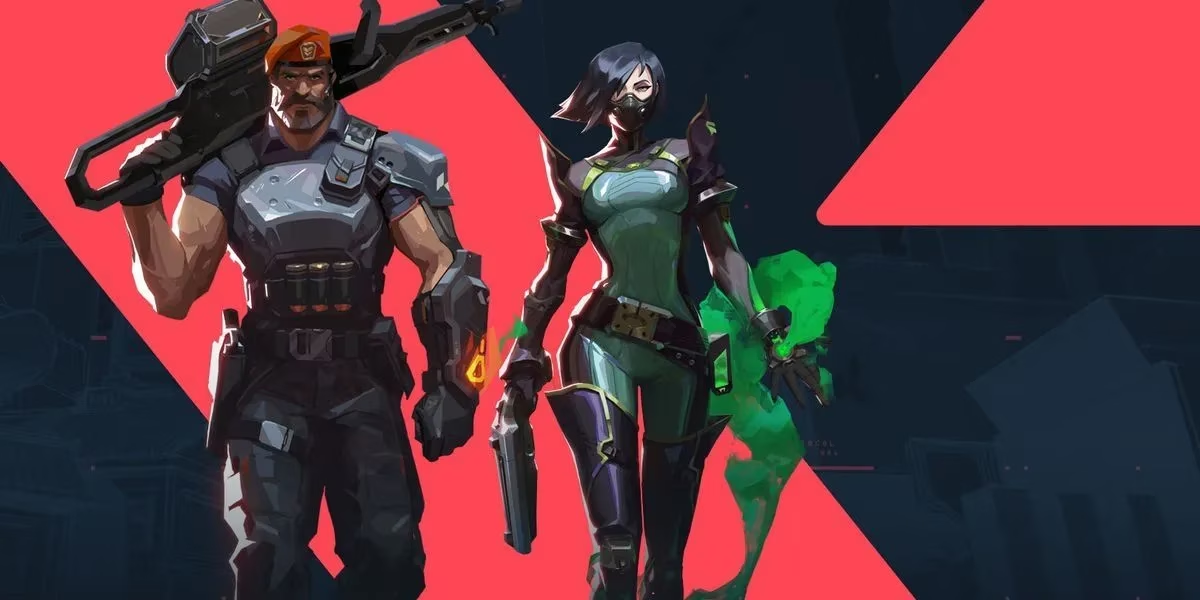
After First Light, the world was chaos. Radiants emerging everywhere, some using their powers to sow discord. Brimstone and I saw the need for a response—a organized, precise response. Thus, the Valorant Protocol was born from our shared conviction. We began recruiting unique individuals, those who could wield their radiance as a weapon for stability. While Brimstone often takes the public-facing leadership role alongside Sage, the Protocol's bedrock was laid in my lab and his war room. My contributions are less about inspiration and more about infrastructure: containment protocols, ability analysis, and, yes, the development of countermeasures. Founding something means being responsible for it, forever. Even when you'd rather just focus on your experiments.
2. The Echo of a Healer's Touch
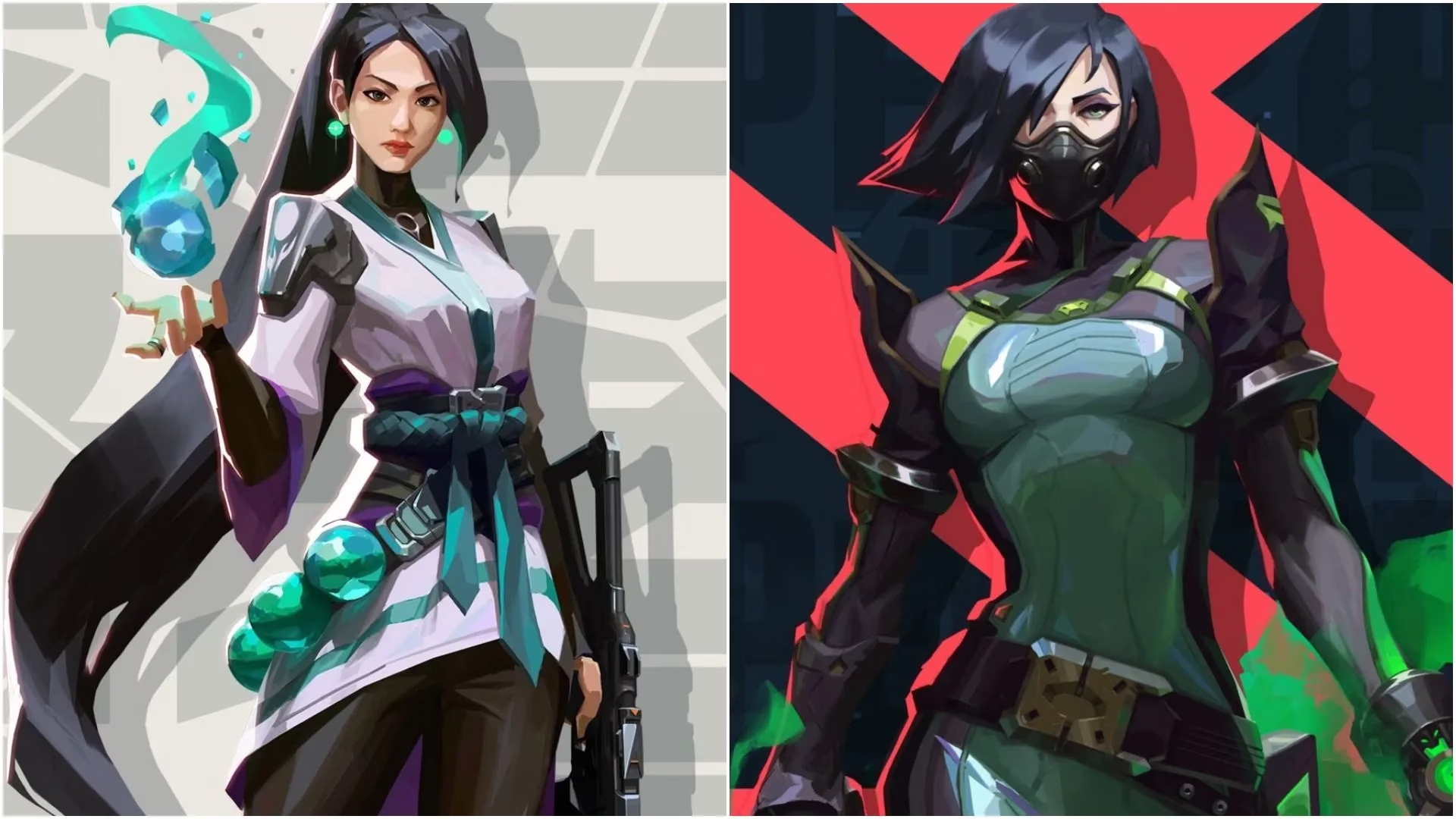
Omen's taunts during matches... 'Just think, Sabine. You used to heal with your skill. Funny.' He knows. A few of them do. There was a time before the toxins, before the mask became a second skin. My knowledge of chemistry and biology was once directed toward mending, not rending. Sage and Skye are the team's recognized healers now. Phoenix has his fiery rejuvenation. But I walked a different path. What could drive someone to invert their purpose so completely? Was it a failed experiment? A personal loss so profound it twisted compassion into cynicism? The answers are locked away, as secure as any hazardous material in my vault. The woman who healed is a ghost in the machine of Viper. Sometimes, I wonder if she's still in here, somewhere.
1. The Metamorphosis: From Worst to First and Back Again
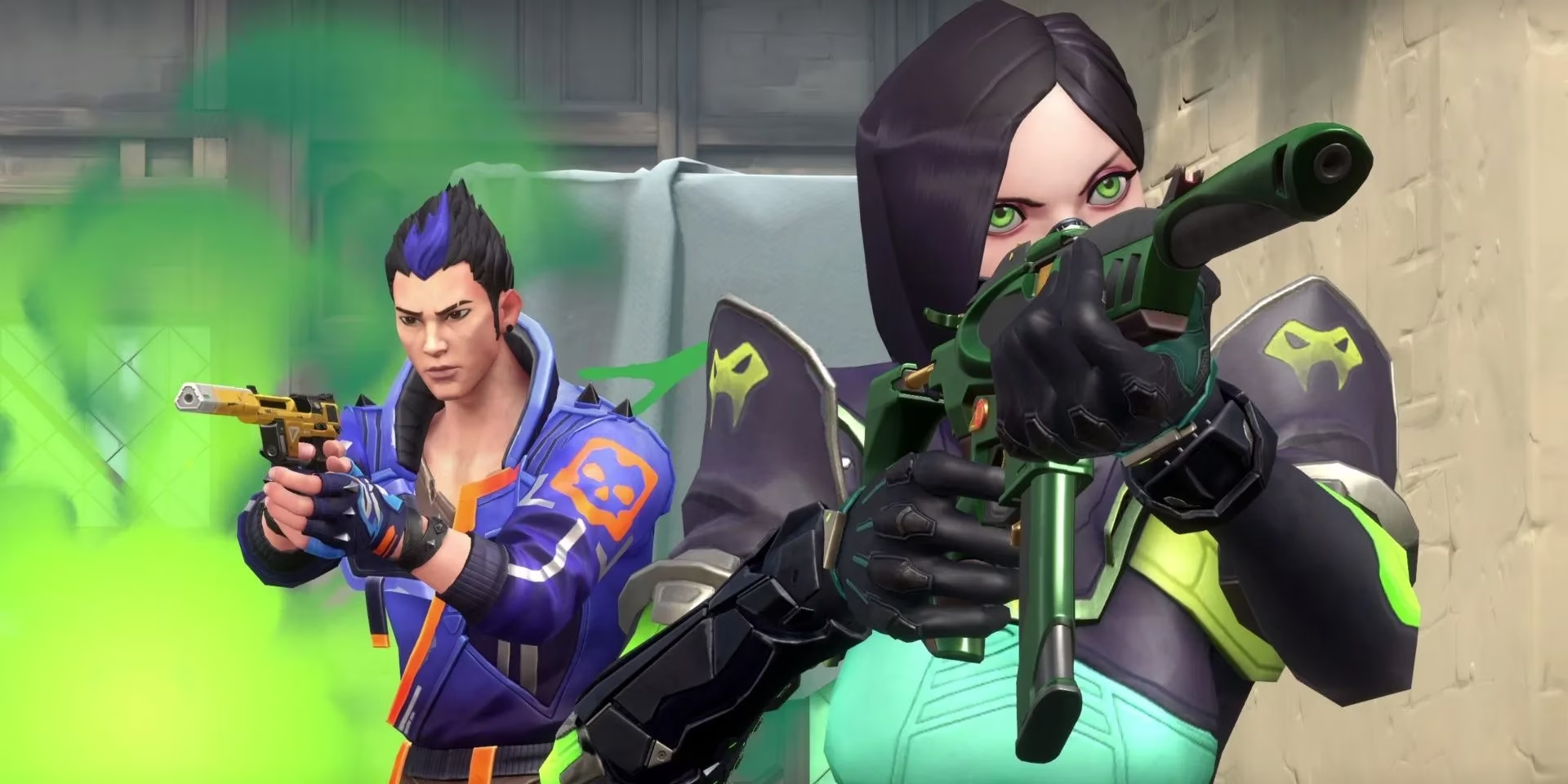
My journey in the Valorant meta has been its own kind of experiment. Upon the Protocol's public deployment, I was... underwhelming. The decay effect from my abilities was a mere tickle. Players, from professionals to casuals, dismissed me. I was a controller who couldn't control, relegated to basic gunplay. Then came the pivotal patch. My decay damage was buffed significantly, to a minimum of 50 for crossing my clouds or wall. Overnight, I transformed from a liability to a menace. My tools finally had teeth. The battlefield became a series of toxic checkpoints I could enforce. That period of supremacy, however, was rebalanced. A subsequent patch reduced the decay damage to 30. A necessary nerf, they called it. To me, it was just another variable in the equation. It taught me a valuable lesson: in the Valorant Protocol, power is never absolute. It's always subject to change, to balance. Just like the chemical reactions I spend my life studying. The climb from obscurity to dominance and the subsequent adjustment is a cycle I understand all too well. After all, isn't that the story of my life?