
In the ever-shifting theater of Valorant, where shadows duel with light and strategies are woven from silence and sound, a long-awaited metamorphosis stirs for the agent Yoru. Once heralded with fervent anticipation at his debut, the dimensional duelist found his resonance fading amidst the symphony of other agents. His steps, meant to deceive, often echoed into emptiness; his gateways, portals to potential, felt sluggish and exposed. By 2026, the architects of this world, heeding the collective whisper of the community, have sculpted a profound renaissance for the rogue from Japan, promising to reforge his essence into a true master of misdirection and calculated chaos.
The Art of Deception: Reforging the Mirage
At the core of Yoru's revival lies a fundamental reimagining of his deceptive arts. The once-simple auditory trick of Fakeout, which projected phantom footsteps, has been transcended. In its place blooms a more potent and visually striking illusion. The developers have conjured a spectral doppelganger, described poetically as 'a carbon copy of Yoru.' This ethereal decoy strides forward with purposeful intent, a perfect mirror of the agent's own gait and form.
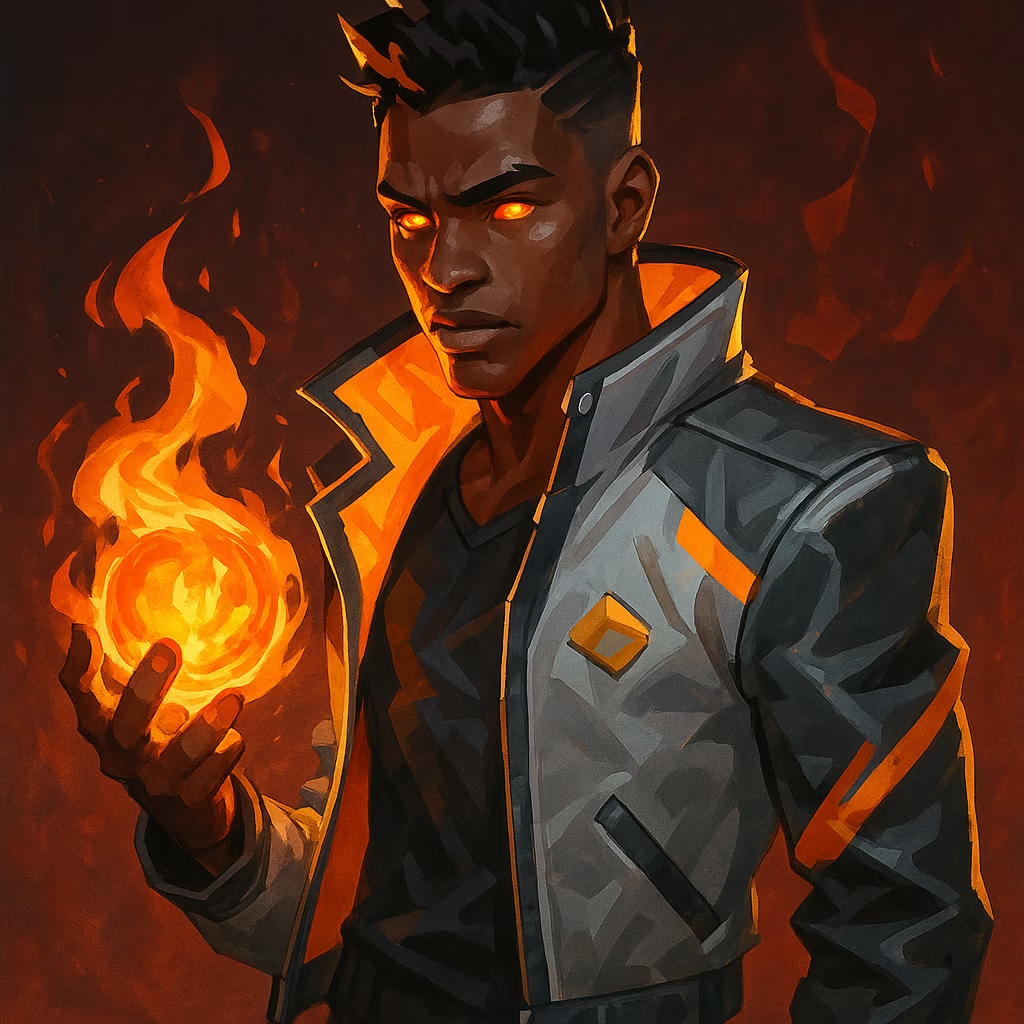
Its true power, however, is realized not in its journey, but in its demise. When pierced by enemy fire, the construct does not merely vanish—it detonates. This brilliant tactical shift transforms a simple distraction into a perilous trap. Enemies must now weigh the cost of dispatching a phantom, their gunfire potentially betraying their position or, worse, becoming the catalyst for their own disorientation. The mirage gains teeth, and the line between hunter and prey deliciously blurs.
Gatecrash: A Swift and Silent Whisper
The signature Gatecrash ability, Yoru's tether to the unexpected, has been honed for greater subtlety and speed. Its velocity through the air has been amplified by a significant 20%, allowing the tether to snake towards its destination with newfound urgency, reducing the window for enemy reaction.
More crucially, the aura of its presence has been muted. The range at which foes can detect its faint, telltale shimmer has been deliberately reduced. This refinement turns the tether from a noticeable ripple in the air into a nearly imperceptible whisper, a secret thread woven through the battlefield known only to Yoru until the moment he chooses to pull upon it and manifest elsewhere.
The Masterstroke: The Echo of a Gateway
The most ingenious addition to Yoru's kit is the introduction of the Fake Teleport. This capability elevates his mind games to a sublime level. From a distance, Yoru can now trigger the auditory and visual spectacle of a full teleportation—the distinctive sound rupture and spatial tear—without ever committing his physical form.
This single ability creates a symphony of doubt:
-
🎭 Forces Rotations: A team hearing a teleport behind their lines must decide: is it a feint or a fatal flank?
-
⏳ Wastes Utility: Precious mollies, flashes, and scans might be expended on an empty corner.
-
🧠 Psychological Dominance: The constant threat of a teleport that may or may not be real erodes enemy confidence and fractures their focus.
It is the ultimate expression of his theme, allowing Yoru to be everywhere and nowhere at once, a ghost haunting the periphery of his enemies' perception.
The Journey to Realization: A Work in Progress
These visions of a reborn duelist, as outlined by the developers in their communiqué, remain in the delicate phase of internal alchemy. They are concepts being tempered and balanced within Riot's creative forges. The community, which had long vocalized its desire for Yoru to ascend to his promised potential, now watches with bated breath. While no specific date was etched in stone, the anticipation solidified around the promise of deployment in the year following the announcement. By 2026, these changes are not mere speculation but the refined tools of a modern-day trickster.
The Duelist Reborn: Impact on the Meta
The implications of this rework ripple across the meta of Valorant:
| Aspect | Old Yoru | New Yoru (2026) |
|---|---|---|
| Deception | Predictable audio cues | Multi-layered visual & audio traps |
| Flank Potential | Slow, detectable tether | Faster, stealthier gateway initiation |
| Mind Games | Limited to footsteps | Full-spectrum feints (teleport, decoy) |
| Teamplay | Largely solo-focused | Can create space via potent distractions |
His role evolves from a sometimes-clunky infiltrator to a premier space creator and information denier. He doesn't just enter a site; he manufactures chaos before the first bullet is fired. Teams must now listen not just with their ears, but with a skeptical mind, questioning every shadow and every sound.
Conclusion: The Phantom Finds His Footing
In the grand narrative of Valorant, where each agent is a verse in an ongoing epic, Yoru's chapter is being powerfully rewritten. Riot Games, in its role as storyteller and shaper of worlds, has listened to the chorus of its players. The rework is a testament to the dynamic dialogue between creator and community. These changes promise to cloak Yoru not in weakness, but in potent, bewildering mystery. He is no longer the duelist who fell short of the melody; he is being remastered as the composer of dissonance, ready to orchestrate confusion and claim victory from the heart of a beautifully crafted lie. The stage is set for the phantom to finally, truly, perform.