
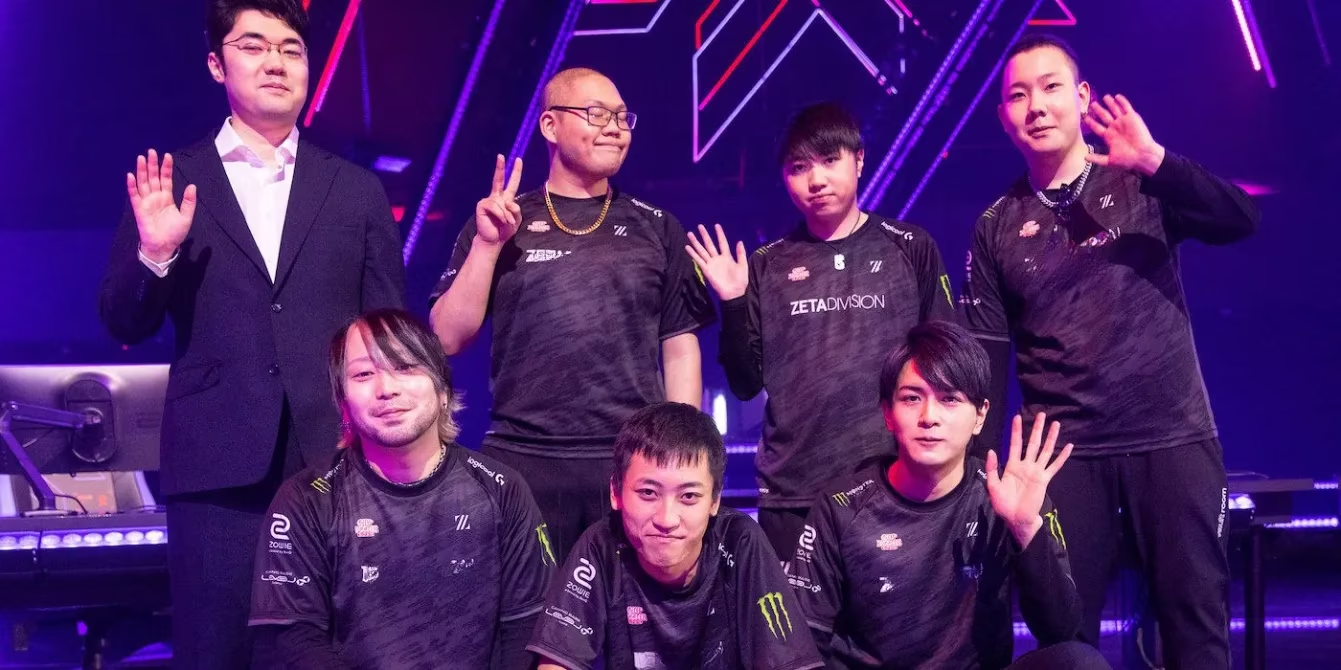
As a long-time esports fan, I still remember the excitement back in 2024 when ZETA DIVISION first broke onto the international stage. It feels like just yesterday, but here we are in 2026, and the landscape of competitive Valorant has evolved so dramatically. The journey of that pioneering Japanese team wasn't just a single victory; it was a catalyst that changed the entire APAC region's standing in the global scene. Think about it—before their legendary playoff run, how many of us truly considered Japan a powerhouse in tactical shooters? Their success proved that with the right strategy and raw skill, any region could compete at the highest level.
The Match That Changed Everything
Let's rewind to that pivotal Valorant Masters match against Ninjas in Pyjamas. The tension was palpable, wasn't it? The score was nail-bitingly close: 13 rounds to 12. In Valorant, you need to win by a two-point margin, making every single round a heart-stopping affair. The hero of the hour was undoubtedly Koji "Laz" Ushida. His clutch performances and masterful gunplay under extreme pressure were what ultimately sealed the deal for ZETA. That victory did more than just advance them in the tournament; it sent shockwaves through the community. For the first time, a Japanese team was trending number one on Twitter for an esports achievement. It was a moment of immense national pride and a clear signal to the world: Japan had arrived.
Valorant's Recipe for Competitive Success
So, what makes Valorant such a perfect esports title, even now in 2026? It's that brilliant fusion of genres. Riot Games took the hero-based abilities from games like Overwatch and married them to the tense, tactical gunplay of classics like Counter-Strike. This created a unique strategic sandbox. Every round starts with a crucial decision:
-
Agent Selection: Choosing from a diverse roster, each with unique abilities (smokes, flashes, recon, etc.).
-
Economy Management: Using the buy menu to purchase weapons, shields, and abilities based on your team's funds.
This "mix-and-match" system means no two rounds are ever the same. Teams can create endless tactical loadouts, leading to incredibly innovative and unpredictable pro matches. Remember the controversy at the very first Valorant Champions in 2021? The Brazilian team Vivo Keyd used a Cypher Camera exploit, which led to a forfeit. Incidents like that, though rocky, showed how deeply players were exploring the game's mechanics to find an edge—a testament to its strategic depth.
The Community and Its Guardians
A game's competitive integrity is only as strong as its community standards, right? Valorant, being one of the youngest and fastest-growing esports, has had to learn this quickly. The developers at Riot have shown a strong commitment to maintaining a positive environment. A prime example from a few years back involved streamer IShowSpeed. After a viral clip showed him launching into a sexist and toxic rant against a female player, Valorant producer Sara Dadafshar took swift action. He was banned not just from Valorant, but from all Riot Games titles. This sent a powerful message: toxic behavior, regardless of popularity, has no place here. As we look at the healthier, more inclusive community in 2026, it's clear that such decisive actions were foundational.
ZETA's Legacy and the Future
ZETA DIVISION's qualification was more than a playoff spot; it was a historic achievement that paved the way for greater Japanese and broader APAC representation in Valorant esports. Their intense, close-fought matches showcased the sheer competitive spirit Riot's shooter inspires. Fast forward to today, and we see their legacy alive. The APAC region is now a consistent threat at international events, with multiple teams from Japan, Korea, and Southeast Asia regularly challenging the established giants from EMEA and the Americas.
As for ZETA themselves, their journey made every fan wonder: "How far can they go?" While roster changes and new challengers are part of the 2026 scene, their pioneering spirit is forever etched in Valorant history. They proved that in this dynamic game, where strategy meets sharpshooting, any team with dedication and innovation can make history. The story of ZETA DIVISION is a reminder that in esports, today's underdog can be tomorrow's champion, shaping the meta and inspiring a whole new generation of players.